Evidence #541 | April 22, 2026
Book of Moses Evidence: Theme of Righteousness
Post contributed by
Scripture Central
Abstract
A theme of righteousness is developed in Moses 6–7. On several levels, the nuances of this theme and the variety of its applications match its contextual usage in extrabiblical Enochic sources.One recurring theme in the Book of Moses is that of righteousness. The message of the text seems to be that righteousness was first had among Adam and his faithful posterity and that Enoch transmitted this righteousness to the Zion community of his day. Furthermore, the text prophesies that righteousness would once again be poured out upon Zion in the last days.
While the concept of “righteousness” is ubiquitous throughout scripture, it shows up in a concentrated way in the Enoch-focused chapters of Moses 6–7, where forms of this term are used thirteen times. In contrast, “righteousness” isn’t mentioned even once in any of the remaining six chapters of the Book of Moses. This suggests, perhaps, that this theme might be particularly at home in ancient traditions involving Enoch and his ministry. And, indeed, that is precisely what one finds in extrabiblical sources. The sections below explore the development of this theme in extant Enochic lore.
The Righteousness of Enoch
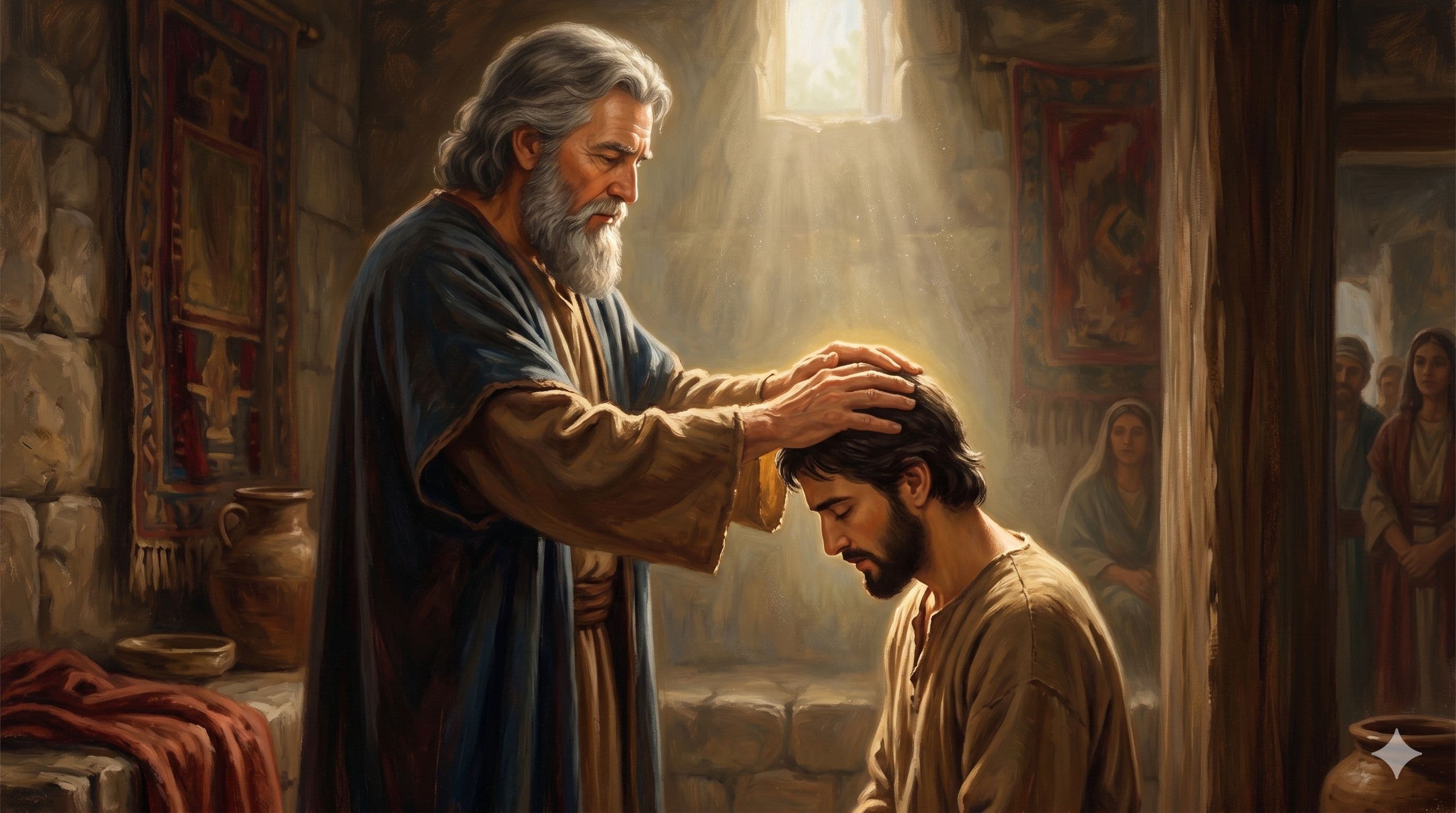
Shortly after Enoch is first introduced into the narrative in the Book of Moses, we read that “Jared taught Enoch in all the ways of God. And this is the genealogy of the sons of Adam, who was the son of God, with whom God, himself, conversed. And they were preachers of righteousness” (Moses 6:23). Later, when introducing himself to the people, Enoch again brought up this detail: “I came out from the land of Cainan, the land of my fathers, a land of righteousness unto this day” (Moses 6:41). In other words, Enoch’s background involved both a location and a society who were righteous, implying that Enoch himself inherited and perpetuated a righteous tradition. It seems clear that this attribute is fundamental to his identity, as it is one of the first things said about him in both introductions.
According to John Reeves and Annette Reed, “The adjective ‘righteous’ (Greek δίκαιος, reflective of Hebrew צדיק or Aramaic קשיט) is the epithet that is most popularly associated with the figure of Enoch and is one that is well attested throughout all strata of the literature.”1
For example, the book of 1 Enoch opens as follows: “And Enoch, the blessed and righteous man of the Lord, took up (his parable) while his eyes were open and he saw” (1 Enoch 1:2).2 Likewise, one manuscript version of 2 Enoch opens with the heading “From the book of righteous Enoch” while another variant opens with “The life of righteous Enoch” (2 Enoch 1a).3 In 3 Enoch, the Lord declared, “And this one [Enoch-Metatron] whom I have removed from them is the choicest of them all and worth them all in faith, righteousness, and fitting conduct” (3 Enoch 6:3).4
In the book of Jubilees, we read, “On account of [Noah’s] righteousness in which he was perfected, his life on earth was more excellent than (any of) the sons of men except Enoch” (Jubilees 10:10).5 In the Cologne Mani Codex, Enoch is reported as stating, “I am Enoch the righteous.”6 The Testaments of the Twelve Patriarchs repeatedly labels Enoch as “the Righteous” or gives him similar titles:
- “For the house which the Lord shall choose shall be called Jerusalem, as the book of Enoch the Righteous maintains.”7
- “For in the books of Enoch the Righteous I have read the evil things you will do in the last days.”8
- “I say these things, my children, because I have read in the writings of holy Enoch that you also will stray from the Lord.”9
- “From the words of Enoch the Righteous I tell you that you will be sexually promiscuous like the promiscuity of the Sodomites and will perish.”10
A rabbinic text known as Sefer ha-Ḥešeq simply declares that “Enoch the righteous was made into an angel.”11 As reported in Bereshit Rabbati, “The Sages say (that) Enoch was the first of the righteous ones.”12 Midrash ’Aggadah, yet another Jewish source, declares that “Because he was righteous, the Holy One, blessed be He, removed [Enoch] from human society and made him an angel; namely, Metatron.”13
Islamic sources also emphasize the piety of Enoch (known as Idris). Mention of his diligent and unparalleled “service” (various forms of religious observance) are frequent in such texts:
- “Mention in the book Idris, for he was a righteous one, a prophet; and We raised him to a lofty place” (Q 19:56–7).14
- “And he (Enoch) was a diligent devotee (of God): more service would ascend from him (i.e., Enoch) each day than would ascend from the rest of the descendants of Adam.”15
- “More service would ascend from him (i.e., Enoch) in a day than would ascend from (the other) humans in a month.”16
- “As for Idris, God revealed to him: ‘It is time for Me to raise you up! Each day you perform just as much service as (that of) the rest of humanity, and I want you to add to (your) service!’”17
Righteous Instruction from a Righteous Lineage
In Moses 6–7, the righteousness of Enoch is seen as an outgrowth of his being born into a righteous lineage: “And Jared taught Enoch in all the ways of God. … And they were preachers of righteousness, and spake and prophesied, and called upon all men, everywhere, to repent; and faith was taught unto the children of men” (Moses 6:21–23). Enoch also declared, “I came out from the land of Cainan, the land of my fathers, a land of righteousness unto this day. And my father taught me in all the ways of God” (Moses 6:41). Thus, righteousness was an attribute of the fathers that was transmitted to children by teaching them the “ways of God.”18 A similar constellation of ideas turns up in several Enochic traditions.
After Enoch was lifted up in a vision in 1 Enoch, he saw “the place for the elect and righteous ones. And there I saw the first (human) ancestors and the righteous ones of old, dwelling in that place” (1 Enoch 70:4).19 In the next chapter, an angel declared to Enoch, “You, son of man, who art born in righteousness and upon whom righteousness has dwelt, the righteousness of the Antecedent of Time will not forsake you” (1 Enoch 71:14).20
As part of Enoch’s instruction to his children in 1 Enoch, the theme arises multiple times:21
- “Then he (Enoch) spoke to all of them, children of righteousness, and said, ‘Hear, all you children of Enoch, the talk of your father and listen to my voice in uprightness’” (1 Enoch 91:3)22
- “But walk in righteousness, my children, and it shall lead you in the good paths; and righteousness shall be your friend” (1 Enoch 91:4)23
- “Now I shall speak unto you, my children, and show you the ways of righteousness and the ways of wickedness” (1 Enoch 91:18)24
- “Now listen to me, my children, and walk in the way of righteousness, and do not walk in the way of wickedness” (1 Enoch 91:19)25
- “Now, my children, I say to you: Love righteousness and walk therein! For the ways of righteousness are worthy of being embraced” (1 Enoch 94:1)26
- “Now to you, those righteous ones, I say: Do not walk in the evil way, or in the way of death! Do not draw near to them lest you be destroyed! But seek for yourselves and choose righteousness and the elect life!” (1 Enoch 94:3–4)27
In Jubilees 8:37–39, we read about the righteousness of “plants” (a metaphor for righteous posterity) in connection to Enoch:
And in the seventh year make its release so that you might release it in righteousness and uprightness. And you will be righteous and all your plants will be upright, because, thus, Enoch, the father of your father, commanded Methuselah, his son, and Methuselah (commanded) Lamech, his son. And Lamech commanded me everything which his fathers commanded him. And I am commanding you, my sons, just as Enoch commanded his son in the first jubilees.28
In the Greek Legend of Isaiah, we read, “And I saw there all the righteous ones since Adam: Abel the righteous, Seth the righteous, Yared the righteous, and Enoch the righteous, and all of those descended from them who were righteous.”29 According to a Jewish source known as Sefer ha-Yashar, “Enoch … effected justice and righteousness for all his people. He supervised their progress in the ways of the Lord.”30 Another Jewish text reports that a rabbi “once fasted for a number of days until the angel whom he was dreaming responded to him (about the meaning of the verse) ‘This is the inheritance of the servants of the Lord and their righteousness’ (Isa 54:17): This is the supernal tradition which was transmitted to Enoch.”31
As mentioned in the Testament of Abraham, “this one who exhibits proofs is Enoch, the teacher of heaven and earth and the scribe of righteousness.”32 An Islamic source declares that “Enoch … is (the same figure as) Idris the prophet. He enjoined his offspring to be faithful in the worship of God and to practice righteousness and true religion.”33
Dwelling in Righteousness
In Moses 6:57, it is emphasized that unless mankind repents, “they can in nowise inherit the kingdom of God, for no unclean thing can dwell there, or dwell in his presence.” This theme is then developed further in Moses 7:16–18, which describes the people dwelling in righteousness and God (or his presence) dwelling with them: “the Lord came and dwelt with his people, and they dwelt in righteousness. … And the Lord blessed the land, and they were blessed upon the mountains, and upon the high places, and did flourish. And the Lord called his people Zion, because they were of one heart and one mind, and dwelt in righteousness.”
Later, the earth cried, “When will my Creator sanctify me, that I may rest, and righteousness for a season abide upon my face?” (Moses 7:48). To some extent, this passage holds an anthropomorphic view of righteousness, as if it were a holy being who could reside upon the earth and thereby sanctify it. This correlates well with the description in Moses 7:65: “Enoch saw the day of the coming of the Son of Man, in the last days, to dwell on the earth in righteousness for the space of a thousand years.”
The theme of a righteous place of dwelling is likewise developed in detail in 1 Enoch 39, in which the righteous and holy beings in heaven are predicted to abide with those on the earth and “become one with the children of the people” (1 Enoch 39:1).34 Concerning the righteous dwelling places of these beings, Enoch declared,
There I saw other dwelling places of the holy ones and of the righteous ones and their resting places too. So there my eyes saw their dwelling places with the righteous angels, … and righteousness flowed before them. … And I saw a dwelling place underneath the wings of the Lord of the Spirits; and all the righteous and the elect before him shall be as intense as the light of fire. (1 Enoch 39:4–6)35
In 1 Enoch 45:6 we read, “For in peace I have looked (with favor) upon my righteous ones and given them mercy, and have caused them to dwell before me.” Likewise, in 1 Enoch 46:3 we encounter this description of the Son of Man: “And he answered me and said to me, ‘This is the Son of Man, to whom belongs righteousness, and with whom righteousness dwells.’”36 According to 1 Enoch 51:5, “the earth shall rejoice; and the righteous ones shall dwell upon her and the elect ones shall walk upon her.”37 In 1 Enoch 60:8, Eden is described as the place “wherein the elect and the righteous ones dwell, wherein my grandfather [i.e., Enoch] was taken, the seventh from Adam, the first man whom the Lord of the Spirits created.”38
In 1 Enoch 70:4 it is reported that Enoch was raised up to “the place for the elect and righteous ones. And there I saw the first (human) ancestors and the righteous ones of old, dwelling in that place.”39 Similar imagery arises in 1 Enoch 71:14: “You, son of man, who art born in righteousness and upon whom righteousness has dwelt …. Everyone that will come to exist and walk shall (follow) your path, since righteousness never forsakes you. Together with you shall be their dwelling places” (1 Enoch 71:14–16).40
An Islamic source states that “during the time of Idris [Enoch] the angels would pass among human beings and visit them in their settlements and places of gathering, for it was a blessed age in which righteousness was resident.”41
Enoch, the Scribe of Righteousness
In Moses 6:5–8, the themes of records and recordkeeping are introduced:
And a book of remembrance was kept, in the which was recorded, in the language of Adam, for it was given unto as many as called upon God to write by the spirit of inspiration; And by them their children were taught to read and write, having a language which was pure and undefiled. Now this same Priesthood, which was in the beginning, shall be in the end of the world also. Now this prophecy Adam spake, as he was moved upon by the Holy Ghost, and a genealogy was kept of the children of God. And this was the book of the generations of Adam. (Moses 6:5–8)
At the conclusion of this genealogical description, the text states, “And Jared taught Enoch in all the ways of God. And this is the genealogy of the sons of Adam …. And they were preachers of righteousness, and spake and prophesied, and called upon all men, everywhere, to repent; and faith was taught unto the children of men” (Moses 6:21–23). When introducing himself to the people, Enoch later stated: “I came out from the land of Cainan, the land of my fathers, a land of righteousness unto this day. And my father taught me in all the ways of God. … For a book of remembrance we have written among us, according to the pattern given by the finger of God” (Moses 6:41–46). Thus, when read in context, it can be understood that Enoch inherited a righteous tradition of recordkeeping and scribal activities. This point may be significant because one of Enoch’s epithets in extant sources is that of “scribe of righteousness.”
In 1 Enoch 12:2–3 it is reported that Enoch made his dwelling place with the righteous Watchers and holy ones in the heavens. We then read, “At that moment the Watchers were calling me. And they said to me, ‘Enoch, scribe of righteousness, go and make known to the Watchers of heaven’” (1 Enoch 12:3–4). Just a few chapters later, the Lord himself declared, “Do not fear, Enoch, righteous man, scribe of righteousness; come near to me and hear my voice” (1 Enoch 15:1).42
The title is also used in the Testament of Abraham: “And this one who exhibits proofs is Enoch, the teacher of heaven and earth and the scribe of righteousness. For the Lord sent them here in order that they might record the sins and the righteous deeds of every person.”43 Likewise, as reported in Pseudo-Titus, “From among the earliest people Enoch the righteous was appointed to write down the deeds of the first humans.”44 The title crops up again in the Apocalypse of Paul, in which Paul was met by a weeping man at the gates of Paradise: “And I asked the angel and said: ‘Lord, who is this?’ He answered me: ‘This is Enoch, the scribe of righteousness.’”45
According to Andrei Orlov, “It is quite possible that the title reflects not only the role of the elevated Enoch as an expert in writing, but his other roles, such as a righteous person, an expert in the ‘secrets of righteousness,’ and a witness of the divine judgment.”46 As concluded by John Collins, Enochic texts “often speak of a class of the ‘righteous and chosen’ and Enoch, the righteous scribe, must be considered their prototype.”47
It should also be noted that, similar to Moses 6, 1 Enoch connects righteousness with the study and reception of sacred scriptural records: “Again know another mystery!: that to the righteous and the wise shall be given the Scriptures of joy, for truth and great wisdom. So to them shall be given the Scriptures; and they shall believe them and be glad in them; and all the righteous ones who learn from them the ways of truth shall rejoice” (1 Enoch 104:12–13).48
Righteousness will Flood the Earth Like Water
In the context of the last days, the Lord declared in Moses 7:62, “And righteousness will I send down out of heaven; and truth will I send forth out of the earth, to bear testimony of mine Only Begotten; his resurrection from the dead; yea, and also the resurrection of all men; and righteousness and truth will I cause to sweep the earth as with a flood.”
Related imagery arises in 1 Enoch 10:18, which states that in the last days “the whole earth will be worked in righteousness, all of her planted with trees, and will find blessing.”49 An even stronger parallel—in which righteousness is metaphorized as water—can be seen in 1 Enoch 39:5: “So there my eyes saw their dwelling places with the righteous angels. … and righteousness flowed before them like water, and mercy like dew upon the earth” (1 Enoch 39:5).50
Salvation of the Righteous
In Moses 7:65–67, “Enoch saw the day of the coming of the Son of Man, in the last days, to dwell on the earth in righteousness for the space of a thousand years; … And the Lord showed Enoch all things, even unto the end of the world; and he saw the day of the righteous, the hour of their redemption.” As the Lord declared in Moses 7:62, “and righteousness and truth will I cause to sweep the earth as with a flood, to gather out mine elect from the four quarters of the earth, unto a place which I shall prepare, an Holy City, that my people may gird up their loins, and be looking forth for the time of my coming; for there shall be my tabernacle, and it shall be called Zion, a New Jerusalem.”51 This same element of a righteous or elect people being preserved or saved at the end times is prevalent in Enochic literature.
The very first verse of 1 Enoch opens with the following heading: “The blessing of Enoch: with which he blessed the elect and the righteous who would be present on the day of tribulation at (the time of) the removal of all the ungodly ones” (1 Enoch 1:1).52 In 1 Enoch 39:6–7 we likewise read, “And in those days my eyes saw the Elect One of righteousness and of faith, and righteousness shall prevail in his days, and the righteous and elect ones shall be without number before him forever and ever. … and all the righteous and the elect before him shall be as intense as the light of fire.”53 Numerous similar statements from 1 Enoch could be cited.54
This imagery also turns up in 2 Enoch 65:8: “And all the righteous, who escape from the LORD’s great judgment, will be collected together into the great age. And the great age will come about for the righteous, and it will be eternal.”55 Likewise, in 2 Enoch 66:7 we read, “How happy are the righteous who shall escape the LORD’s great judgment.”56
Title of “The Righteous”
In Moses 7:45 Enoch asked, “When shall the day of the Lord come? When shall the blood of the Righteous be shed, that all they that mourn may be sanctified and have eternal life?” Just two verses later, “Enoch saw the day of the coming of the Son of Man, even in the flesh; and his soul rejoiced, saying: The Righteous is lifted up, and the Lamb is slain from the foundation of the world” (Moses 7:47). We can thus see that “righteous” is used as a formal title for deity. In both of these instances, the title is specifically used in connection to the blood and suffering of the Son of Man.
In other passages, God is associated with righteousness in a more descriptive way. In Moses 7:16, the association may be chiastic in nature, under the assumption that “Lord” and “righteousness” are intentionally paired elements:
A | the Lord came | |
B | and dwelt with his people, | |
B | and they dwelt | |
A | in righteousness | |
The idea of the Lord ushering in a time of righteousness can also be seen in Moses 7:65: “Enoch saw the day of the coming of the Son of Man, in the last days, to dwell on the earth in righteousness” (Moses 7:65).
Similar descriptions of the Lord’s righteousness, as well as titles of righteousness being bestowed upon him, once again turn up in extrabiblical sources. Here is a survey of relevant passages:
- “At that moment I blessed the Lord of Glory and I said, ‘Blessed be my Lord, the Lord of righteousness who rules forever’” (1 Enoch 22:14)57
- “when the Righteous One shall appear before the face of the righteous” (1 Enoch 38:2)58
- “When the secrets of the Righteous One are revealed, he shall judge the sinners” (1 Enoch 38:3)59
- “And in those days my eyes saw the Elect One of righteousness and of faith, and righteousness shall prevail in his days” (1 Enoch 39:6)
- “After this, the Righteous and Elect One will reveal the house of his congregation. … And these mountains shall become (flat) like earth in the presence of his righteousness” (1 Enoch 53:6–7)60
- “Then I woke up and blessed the Lord of righteousness and gave him glory” (1 Enoch 90:41)61
- “The Righteous One shall awaken from his sleep; he shall arise and walk in the ways of righteousness; …. He will be generous to the Righteous One, and give him eternal uprightness; he will give authority, and judge in kindness and righteousness” (1 Enoch 92:3–4)62
- “When the Holy One, blessed be he, sits in judgment on the throne of judgment … he is covered all over with righteousness as with a coat of mail” (3 Enoch 28:7)63
- “the Holy One, blessed be he, will say then, … ‘For my own sake, for the sake of my own merit and righteousness, I shall deliver my arm, and by it save my sons from among the gentiles’” (3 Enoch 48A:8)64
Perhaps the most significant parallels can be seen between Moses 7:45–47 and 1 Enoch 47:1–4, which are color-coded in the chart below:
Moses 7 | 1 Enoch 47 |
45 And it came to pass that Enoch looked; and from Noah, he beheld all the families of the earth; and he cried unto the Lord, saying: When shall the day of the Lord come? When shall the blood of the Righteous be shed, that all they that mourn may be sanctified and have eternal life? 46 And the Lord said: It shall be in the meridian of time, in the days of wickedness and vengeance. 47 And behold, Enoch saw the day of the coming of the Son of Man, even in the flesh; and his soul rejoiced, saying: The Righteous is lifted up, and the Lamb is slain from the foundation of the world; and through faith I am in the bosom of the Father, and behold, Zion is with me. 48 And it came to pass that Enoch looked upon the earth; and he heard a voice from the bowels thereof, saying: Wo, wo is me, the mother of men; I am pained, I am weary, because of the wickedness of my children. | 1 In those days, there had arisen the prayer of the righteous, and the blood of the righteous one, from the earth into the presence of the Lord of Spirits. 2 In those days, the holy ones who dwell in the heights of heaven were uniting with one voice, and they were glorifying and praising and blessing the name of the lord of Spirits, and were interceding and praying in behalf of the blood of the righteous that had been shed, and the prayer of the righteous, that it might not be in vain in the presence of the Lord of Spirits; 4 And the hearts of the holy ones were filled with joy, for the number of <the righteous> was at hand; and the prayer of the righteous had been heard and (a reckoning of) the blood of the righteous one had been required in the presence of the Lord of Spirits |
Both of these passages feature angelic or glorified beings (Enoch during his theophany and the holy ones of heaven) who offered intercessory prayers in connection to the “blood of the righteous.” In some variants of 1 Enoch 47, this blood is both from the “righteous one” (presumably a messiah figure) as well as “the righteous” (presumably righteous saints, collectively speaking), whereas Moses 7:45 is specifically focused on the blood of “The Righteous” (i.e., the Son of Man).65 In both contexts, however, the blood of the messiah figure seems to epitomize the shedding of innocent blood, generally speaking.
In Moses 7:48, the earth itself can be heard crying out in response to this wickedness and bloodshed, which is mirrored by the blood and prayers that rise up and cry out from the earth in 1 Enoch 47:1–4. This correlation is corroborated by 1 Enoch 9:1–2: “and they saw much blood being shed upon the earth and all the oppression being wrought upon the earth. And they said to one another, ‘The earth, (from) her empty (foundation), has brought the cry of their voice unto the gates of heaven.’”66 It is also interesting that once the intercessory prayer is heard and responded to, the petitioners rejoice in each passage.
All of this is to say that the use of the title “the Righteous” in Moses 7:45–47 is quite remarkable. Not only does it closely match the title of “the righteous (one)” in 1 Enoch 47:1–4, but the relationship is reinforced by multiple lines of additional contextual parallels.
Conclusion
Extrabiblical sources repeatedly emphasize that Enoch was an especially righteous individual who inherited and perpetuated a tradition of righteous instruction, sometimes in connection with a sacred scribal tradition involving heavenly records. They also discuss the idea of Enoch and other holy beings dwelling in righteousness, sometimes in parallel to “The Righteous One” who dwells with them and facilitates the sanctification of their righteous domain. Finally, righteousness is regularly invoked in connection to themes of eschatological rapture and judgment, in which God’s true followers will be preserved in the end times, caught up to be with him, and live in a holy realm ever after. These details dovetail very nicely with the development of the theme of righteousness in Moses 6–7, suggesting that whoever authored the Book of Moses had a remarkably nuanced familiarity with ancient Enochic traditions.
For those seeking a non-miraculous explanation of this textual feature, perhaps the best solution would be to assume Joseph Smith had access to 1 Enoch, since the bulk of the parallels can be found in that source. This scenario is technically possible, since an English translation of 1 Enoch was published in 1821 by Richard Laurence. The problem, however, is that it had a limited initial print run and relatively few copies likely made it to the Americas. A few translated excerpts from the Book of the Watchers (1 Enoch 1–36) had achieved some circulation for decades prior to Laurence’s translation, but these would have only provided a small portion of the parallels identified throughout this article. A more likely scenario is that Smith could have encountered a general summary of the contents of 1 Enoch or the Book of Watchers in news reports or by word of mouth. Yet, once again, it is hard to imagine how he would have fully developed this theme of righteousness based on such surface-level exposure to Enochic lore.67
All in all, the possibility of Smith having a deep and ranging awareness of the contents of 1 Enoch in 1830 seems quite remote. His access to other texts, such as 2 Enoch and 3 Enoch, is even less plausible since they weren’t even known to Western scholars at the time. That being the case, the theme of righteousness presented in Moses 6–7 meaningfully functions as evidence of the text’s authenticity, as well as Joseph Smith’s prophetic calling.
Doctrine and Covenants
D&C 45:11
D&C 107:53
Book of Moses
Moses 6:23
Moses 6:41
Moses 7:16–19
Moses 7:45–48
Moses 7:62
Moses 7:65–67
- 1. John C. Reeves and Annette Yoshiko Reed, Enoch from Antiquity to the Middle Ages (Oxford University Press, 2018), 27.
- 2. Translation by E. Isaac, “1 (Ethiopic Apocalypse of) Enoch,” in The Old Testament Pseudepigrapha, 2 vols., ed. James Charlesworth (Doubleday, 1983–1985), 1:13.
- 3. Translation by Frances I. Anderson, “2 (Slavonic Apocalypse of) Enoch,” in The Old Testament Pseudepigrapha, 1:112–114.
- 4. Translation by Philip Alexander, “3 (Hebrew Apocalypse of) Enoch,” in The Old Testament Pseudepigrapha, 1:261.
- 5. Translation by O. S. Wintermute, “Jubilees,” in The Old Testament Pseudepigrapha, 2:76.
- 6. Cologne Mani Codex 58.6–60.12 (ed. Koenen-Romer); as cited in Reeves and Reed, Enoch from Antiquity to the Middle Ages, 171.
- 7. Translation by H. C. Kee, “Testaments of the Twelve Patriarchs,” in The Old Testament Pseudepigrapha, 1:792.
- 8. Translation by Kee, “Testaments of the Twelve Patriarchs,” 800.
- 9. Translation by Kee, “Testaments of the Twelve Patriarchs,” 812.
- 10. Translation by Kee, “Testaments of the Twelve Patriarchs,” 827.
- 11. Sefer ha-Ḥešeq §30 (ed. Epstein); as cited in Reeves and Reed, Enoch from Antiquity to the Middle Ages, 45.
- 12. Bereshit Rabbati (ed. Albeck); as cited in Reeves and Reed, Enoch from Antiquity to the Middle Ages, 228.
- 13. Midrash ’Aggadah (ed. Buber); as cited in Reeves and Reed, Enoch from Antiquity to the Middle Ages, 229.
- 14. This passage is from the Quran, as cited in Reeves and Reed, Enoch from Antiquity to the Middle Ages, 209; formatting slightly adjusted from original.
- 15. Pseudo-Aṣmaʿī, Nihāyat al-arab fī akhbār al-Furs wa’l-ʿArab (ed. Dānish-Pazhūh); as cited in Reeves and Reed, Enoch from Antiquity to the Middle Ages, 42.
- 16. Ibn Saʿd, Ṭabaqāt (ed. Sachau); as cited in Reeves and Reed, Enoch from Antiquity to the Middle Ages, 42.
- 17. Kaʿb al-Aḥbār apud Ṭabarī, Jāmiʿ al-bayān; as cited in Reeves and Reed, Enoch from Antiquity to the Middle Ages, 42.
- 18. See Scripture Central, “Book of Moses Evidence: Enoch, a Student of Righteousness,” Evidence 483 (February 26, 2025). See also D&C 107:53: “Three years previous to the death of Adam, he called Seth, Enos, Cainan, Mahalaleel, Jared, Enoch, and Methuselah, who were all high priests, with the residue of his posterity who were righteous, into the valley of Adam-ondi-Ahman, and there bestowed upon them his last blessing.”
- 19. Translation by Isaac, “1 (Ethiopic Apocalypse of) Enoch,” 49.
- 20. Translation by Isaac, “1 (Ethiopic Apocalypse of) Enoch,” 50.
- 21. See also 1 Enoch 71:14–16; 93:1–2.
- 22. Translation by Isaac, “1 (Ethiopic Apocalypse of) Enoch,” 72.
- 23. Translation by Isaac, “1 (Ethiopic Apocalypse of) Enoch,” 72.
- 24. Translation by Isaac, “1 (Ethiopic Apocalypse of) Enoch,” 73.
- 25. Translation by Isaac, “1 (Ethiopic Apocalypse of) Enoch,” 73.
- 26. Translation by Isaac, “1 (Ethiopic Apocalypse of) Enoch,” 75.
- 27. Translation by Isaac, “1 (Ethiopic Apocalypse of) Enoch,” 75.
- 28. Translation by Wintermute, “Jubilees,” 71. See also Jubilees 17:26: “And he blessed his Creator who created him in his generation because by his will he created him for he knew and he perceived that from him there would be a righteous planting for eternal generations and a holy seed from him so that he might be like the one who made everything.”
- 29. Greek Legend of Isaiah 2.26–7 (ed. von Gebhardt); as cited in Reeves and Reed, Enoch from Antiquity to the Middle Ages, 244.
- 30. Sefer ha-Yashar (ed. Dan); as cited in Reeves and Reed, Enoch from Antiquity to the Middle Ages, 159.
- 31. R. Isaac b. Jacob ha-Kohen, Ma’mar ‘al ha-aṣiluth ha-śem’olit §12 (ed. Scholem); as cited in Reeves and Reed, Enoch from Antiquity to the Middle Ages, 85.
- 32. T. Abraham 11:1–10 recension B (ed. James); as cited in Reeves and Reed, Enoch from Antiquity to the Middle Ages, 245.
- 33. Yaʿqūbī, Taʾrīkh (ed. Houtsma); as cited in Reeves and Reed, Enoch from Antiquity to the Middle Ages, 143.
- 34. Translation by Isaac, “1 (Ethiopic Apocalypse of) Enoch,” 30.
- 35. Translation by Isaac, “1 (Ethiopic Apocalypse of) Enoch,” 31. Note that the phrases “of the righteous ones” and “righteous angels” are from underlying variants found in the footnotes and therefore aren’t in the primary translated text. See Isaac, “1 (Ethiopic Apocalypse of) Enoch,” 30 (note 39d) and 31 (note 39f).
- 36. Translation by Isaac, “1 (Ethiopic Apocalypse of) Enoch,” 34.
- 37. Translation by Isaac, “1 (Ethiopic Apocalypse of) Enoch,” 37.
- 38. Translation by Isaac, “1 (Ethiopic Apocalypse of) Enoch,” 40. See also 2 Enoch 42:3.
- 39. Translation by Isaac, “1 (Ethiopic Apocalypse of) Enoch,” 50.
- 40. Translation by Isaac, “1 (Ethiopic Apocalypse of) Enoch,” 50.
- 41. Abū Ḥudhayfah apud Maqdisī, Kitāb al-bad’ wa’l-ta’rīkh (ed. Huart); as cited in Reeves and Reed, Enoch from Antiquity to the Middle Ages, 173. See also pg. 186 for an additional reference to this source.
- 42. Translation by Isaac, “1 (Ethiopic Apocalypse of) Enoch,” 19–21. See also 1 Enoch 14:1.
- 43. T. Abraham 11:1–10 recension B (ed. James); as cited in Reeves and Reed, Enoch from Antiquity to the Middle Ages, 245.
- 44. Pseudo-Titus, De dispositione sanctimonii (ed. de Bruyne); as cited in Reeves and Reed, Enoch from Antiquity to the Middle Ages, 39.
- 45. Apocalypse of Paul §20 (ed. James); as cited in Reeves and Reed, Enoch from Antiquity to the Middle Ages, 48. For the theme of weeping in this text, see Scripture Central, “Book of Moses Evidence: Themes of Weeping,” Evidence 525 (December 23, 2025).
- 46. See Andrei A. Orlov, The Enoch-Metatron Tradition, Texts and Studies in Ancient Judaism 107 (Mohr Siebeck, 2005), 55.
- 47. J. J. Collins, “The Sage in Apocalyptic and Pseudepigraphic Literature,” in The Sage in Israel and the Ancient Near East, ed. J. G. Gammie and L. G. Perdue (Eisenbrauns, 1990), 346.
- 48. Translation by Isaac, “1 (Ethiopic Apocalypse of) Enoch,” 85–86.
- 49. Translation by Isaac, “1 (Ethiopic Apocalypse of) Enoch,” 18. For more on this imagery as developed in 1 Enoch 10–11, see Scripture Central, “Book of Moses Evidence: Intertextuality with 1 Enoch and Psalm 85,” Evidence 534 (February 25, 2026).
- 50. Translation by Isaac, “1 (Ethiopic Apocalypse of) Enoch,” 31. Note that the phrase “righteous angels” is from an underlying variant found in the footnotes and therefore isn’t in the primary translated text. See Isaac, “1 (Ethiopic Apocalypse of) Enoch,” 31 (note 39f).
- 51. See also D&C 45:11: “Wherefore, hearken ye together and let me show unto you even my wisdom—the wisdom of him whom ye say is the God of Enoch, and his brethren, Who were separated from the earth, and were received unto myself—a city reserved until a day of righteousness shall come—a day which was sought for by all holy men, and they found it not because of wickedness and abominations.”
- 52. Translation by Isaac, “1 (Ethiopic Apocalypse of) Enoch,” 13.
- 53. Translation by Isaac, “1 (Ethiopic Apocalypse of) Enoch,” 31.
- 54. See 1 Enoch 10:21; 25:5–7; 38:1–5; 45:5–6; 48:1–7; 50:1–5; 51:2, 5; 53:7; 58:1–5; 62:12–15; 81:1–10; 100:5.
- 55. Translation by Anderson, “2 (Slavonic Apocalypse of) Enoch,” 192.
- 56. Translation by Anderson, “2 (Slavonic Apocalypse of) Enoch,” 194.
- 57. Translation by Isaac, “1 (Ethiopic Apocalypse of) Enoch,” 25.
- 58. Translation by Isaac, “1 (Ethiopic Apocalypse of) Enoch,” 30.
- 59. Translation by Isaac, “1 (Ethiopic Apocalypse of) Enoch,” 30.
- 60. Translation by Isaac, “1 (Ethiopic Apocalypse of) Enoch,” 37–38.
- 61. Translation by Isaac, “1 (Ethiopic Apocalypse of) Enoch,” 71.
- 62. Translation by Isaac, “1 (Ethiopic Apocalypse of) Enoch,” 74.
- 63. Translation by Alexander, “3 (Hebrew Apocalypse of) Enoch,” 283.
- 64. Translation by Alexander, “3 (Hebrew Apocalypse of) Enoch,” 301.
- 65. George W. E. Nickelsburg and James C. VanderKam, 1 Enoch 1: A Commentary on the Book of 1 Enoch Chapters 1–36, 81–108, ed. Klaus Baltzer (Fortress Press, 2001), 162.
- 66. Translation by Isaac, “1 (Ethiopic Apocalypse of) Enoch,” 16. Concerning the imagery in 1 Enoch 47:1–4, see Nickelsburg and VanderKam, 1 Enoch 1, 164: “The motif of human blood crying from the earth and the intercession of the holy ones derives from earlier tradition in 1 Enoch 7:6; 8:4; 9:1, 9–10.”
- 67. For discussions of the availability of 1 Enoch to Joseph Smith, see Jeffrey M. Bradshaw and Ryan Dahle, “Could Joseph Smith Have Drawn on Ancient Manuscripts When He Translated the Story of Enoch?: Recent Updates on a Persistent Question,” Interpreter: A Journal of Latter-day Saint Faith and Scholarship 33 (2019): 308–311; Colby Townsend, “Revisiting Joseph Smith and the Availability of the Book of Enoch,” Dialogue 53, no. 3 (2020): 41–71.