KnoWhy #849 | April 21, 2026
Why is Yom Kippur (the Day of Atonement) in the Fall at the End of the Harvest Rather Than Closer to the Spring Passover When Jesus was Sacrificed?
Post contributed by
Scripture Central
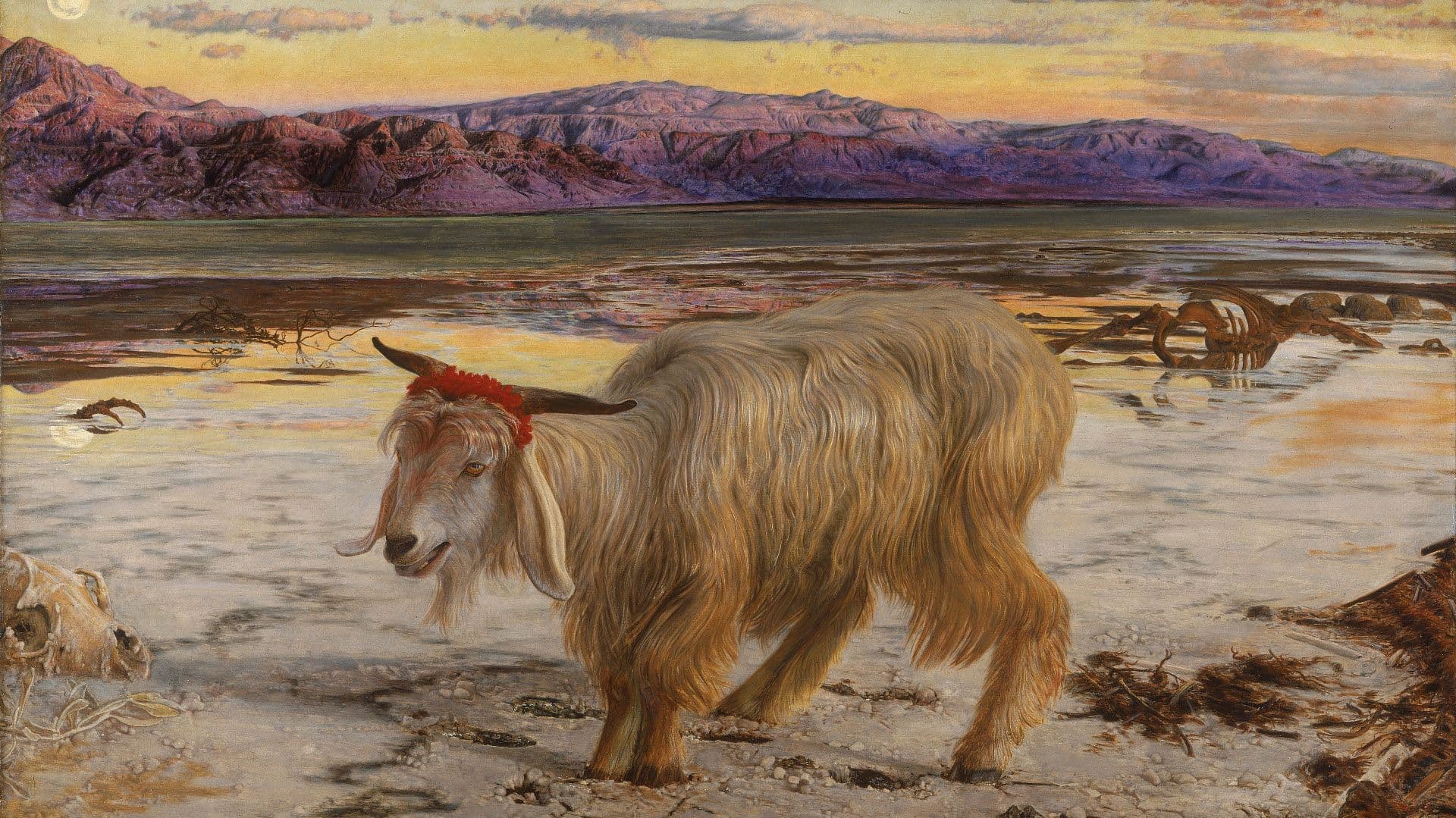
“For on that day shall the priest make an atonement for you, to cleanse you, that ye may be clean from all your sins before the Lord.” Leviticus 16:30
The Know
The word “atonement” in the Old Testament is a term used in various situations. Its root kâphar means "to cover" or "to wipe away" and was used in describing the effects of a variety of offerings or rituals that were performed for purposes such as reconciling relationships, purifying people or places, by "covering" an offense so that it no longer blocks the presence of God. Most of these rites of atonement were reactive—for example, “sin offerings” were made whenever a person or the community realized they had sinned. Inevitably, some sins were forgotten, hidden, or even committed without one knowing they had done anything wrong. These were not to be ignored, as they still were impediments and caused defilement. The annual holy day in the fall season, discussed in Leviticus 16 and referred to as the Day of Atonement, was a proactive, comprehensive purge that not only cleared away all remaining defilement but restored all things to their proper order.1 It was a celebration which Christians later saw as having prefigured the complete and far-reaching powers and effects of the atonement of Jesus Christ—many more than the principal means for obtaining forgiveness of personal sins.
Indeed, the Day of Atonement rituals in Leviticus 16 removed all accumulated forms of defilement and trespass, and they fully restored the sanctity of three main things—the priesthood, the tabernacle, and the people, both individually and as a whole. The ritual ceremonies began with the high priest offering and smearing the blood of a bull on the lid or covering of the Ark of the Covenant inside the Holy of Holies (the only day of the year the high priest could enter this area) as a sin offering. This would fully cleanse all the priests. He then would also offer a ram as a burnt offering, a whole offering burned to represent their total dedication to God (Leviticus 16:3, 6, 11–14). Next the high priest presented two goats as a sin offering for the people and a ram as a burnt offering to represent the people’s total dedication. He cast lots over those two goats to determine which goat was to be sacrificed to Yahweh, and which goat was to be cast out into the wilderness as the “scapegoat,” carrying away any final taint of wrongdoing. After sacrificing the bull and smearing its blood on the Ark for the priests, the high priest next sacrificed the goat for Yahweh and also brought its blood into the Holy of Holies, smearing it on the lid or cover of the Ark of the Covenant (Leviticus 16:5, 7–10, 15). He then used this goat’s blood to purify the tabernacle’s holy place as well as the altar in the temple courtyard (Leviticus 16:16–19). Lastly, the high priest completed the sin offering for the people by placing his hands upon the head of the scapegoat, confessing the sins of all the children of Israel over that animal (symbolically transferring the sins of Israel to the animal), then a man took that animal into the wilderness so “the goat will bear upon him all their iniquities to an uninhabited land, and he will let the goat go into the wilderness” (Leviticus 16:21-22).2
In addition to being a day for removing all sin from the people, the Day of Atonement (Yom Kippur) was also the day upon which began the Sabbatical years (every seventh year) and also the Jubilee years (each the fiftieth year upon the completion of the seventh-seventh year). These were years when debts were forgiven, servants were set free, and ultimately lands were restored to the descendants of the original ancestral owners (see Leviticus 25). It was truly a celebration of all things being made whole and restored to their proper/original order.
Yom Kippur was celebrated annually on the tenth day of the month of Tishri, which was the start of the civil year in ancient Israel, particularly for dating kings' reigns and legal contracts. The Mishnah (Rosh Hashanah 1:1) states: "On the first of Tishri is the new year for years, for Sabbatical years, for Jubilees, for planting, and for vegetables." This passage indicates that the counting of Sabbatical and Jubilee years followed the civil calendar, which began in Tishri. While Nisan (in the spring) was the first month on the religious calendar (Exodus 12:2), which was used for festival cycles and liturgical purposes, Tishri (in the fall) was the chronological and agricultural new year. The institution of the Sabbatical and Jubilee years was a civil-economic matter, not merely a religious one, reinforcing the preference for Tishri as the starting point, not only among the faithful followers of Jehovah in the ancient land of Israel but also among the Nephites in the New World, all of whom followed the law of Moses in great detail.3
Later rabbinic tradition, preserved in the Talmud (Rosh Hashanah 8a), affirms that the Sabbatical and Jubilee years begin in Tishri. The argument there is based partly on the fact that all agricultural prohibitions and releases of debts (Deuteronomy 15:1-2) were enacted at the end of the year, which meant the cycle started in Tishri. Furthermore, during the times of the Second Temple and the New Testament, the practice of land-rest observance and debt release followed the autumnal calendar. See also historical evidence found in Josephus, Antiquities of the Jews (14.10.5), where he describes a Sabbatical year during which agricultural activities ceased in the autumn, not the spring. Additionally, later rabbinic decrees governing the land’s rest (such as those of Hillel’s Prozbul system) align with a Tishri-beginning.
Never miss a KnoWhy
Get Scripture Central's latest research and resources delivered straight to your inbox.
The Why
The earliest Christians understood that the Day of Atonement prefigured Jesus in many ways. First, Jesus was seen as the goat which is sacrificed to Yahweh. Just as the blood of that goat fully purifies the tabernacle and all Israel, so the blood of Jesus will fully purify all humanity from sin, as stated in Ephesians 1:7: “we have redemption through his blood, the forgiveness of sins, according to the riches of his grace.”4 In addition, Hebrews 10:10-12 states that, rather than having to offer animal sacrifices multiple times, the blood of Christ atones for sin, “once for all.” Leviticus 17:11 puts it well, “for it is the blood that makes atonement for the soul.”5
The second goat most likely represents another aspect of what Jesus does for humanity, for it was also required to be unblemished and was presented before the Lord. The scapegoat takes the sins of all the people upon Himself. Not only is Christ the first goat, offering Himself as our substitute, dying in our place and satisfying justice that we may live, He also takes the burden of all humanity upon himself like the second goat. Driving this goat into the wilderness is a symbolic destruction of mankind’s true enemy, which is sin. In an expression that combines both Passover and Day of Atonement imagery, John 1:29 describes Jesus as “the lamb of God which takes away the sin of the world.”6 It is also significant that the scapegoat taken into the desert to bear away the sins of the people is left by itself. Both in the Garden of Gethsemane and on the cross, Jesus was, in a very important sense, alone. In Gethsemane, Jesus had to suffer alone while His friends slept (Matthew 26:40); and those friends would eventually leave Him when the authorities arrived, forcing Him to go through the experience alone (Mark 14:50). In the same way, Jesus cried out on the cross, asking why He had been forsaken by his Father (Mark 15:34), implying that He was, in an important sense, going through the experience alone.7
Early Christians also saw Jesus akin to the high priest on the Day of Atonement, for on this day He is the one who “makes atonement for the sins of his people” and “entereth into that within the veil” (Hebrews 2:17; 6:19).8
But since Jesus was already the sacrificed firstborn lamb of God, which was killed and eaten in the Spring celebration of Passover, what need was there to have Him also represented by the two goats in the Fall observances of the Day of Atonement? In Luke 4:18–21, Jesus explicitly reads from Isaiah 61—a passage describing the "year of the Lord's favor" (the Jubilee)—and declares, "Today this Scripture is fulfilled in your hearing." By doing this, Jesus positioned Himself as the One who truly brings about the Jubilee which began on tenth day of Tishri, the Day of Atonement. So while Passover was at beginning of the annual agricultural season, the time when Jesus was sacrificed as the Lamb of God and our sins could be forgiven as a preparation for receiving greater blessings from God, the Day of Atonement came at the conclusion of the harvest and symbolically marked how the atoning sacrifice of Christ would not only remove personal sins but would also fully remove all sins and impurities from the world and usher in the holy Millennial day when all things would be restored and made glorious.
James E. Faust, “The Supernal Gift of the Atonement,” Ensign, October 1988.
Jeffrey M. Bradshaw, ”“By the Blood Ye Are Sanctified”: The Symbolic, Salvific, Interrelated, Additive, Retrospective, and Anticipatory Nature of the Ordinances of Spiritual Rebirth in John 3 and Moses 6.,” Interpreter: A Journal of Mormon Scripture 24 (2017): 123-316.
Shon D. Hopkin, “Representing the Divine Ascent: The Day of Atonement in Christian and Nephite Scripture and Practice,” in The Temple: Ancient and Restored: Proceedings of the 2014 Temple on Mount Zion Symposium, edited by Stephen D. Ricks and Donald W. Parry, (The Interpreter Foundation; Eborn Books, 2016), 325–348.
- 1. For a discussion, see Christian A. Eberhart, “To Atone or Not to Atone: Remarks on the Day of Atonement Rituals According to Leviticus 16 and the Meaning of Atonement,” in Christian A. Eberhart and Henrietta L. Wiley, eds., Sacrifice, Cult, and Atonement in Early Judaism and Christianity: Constituents and Critique (Society of Biblical Literature, 2017), 197–232.
- 2. For more on this, see Raymond Westbrook and Theodore J. Lewis, “Who Led the Scapegoat in Leviticus 16:21?,” in Journal of Biblical Literature 127, no. 3 (2008): 417–22.
- 3. See Terrence L. Szink and John W. Welch, “King Benjamin’s Speech in the Context of Ancient Israelite Festivals,” in John W. Welch and Stephen D. Ricks, eds., King Benjamin’s Speech: “That Ye May Learn Wisdom” (Foundation for Ancient Research and Mormon Studies, 1998), esp. 159–84, 190–97.
- 4. For more on this, see George Wesley Buchanan, “The Day of Atonement and Paul’s Doctrine of Redemption,” Novum Testamentum 32, no. 3 (1990): 236–49; and S. Kent Brown, The Epistle to the Ephesians (BYU Studies, 2023), s.v. many references on p. 654.
- 5. For more on these issues, see Don Thorsen, “At-One-Ment with God,” in What’s True about Christianity?: An Introduction to Christian Faith and Practice (Claremont Press, 2020), 1:97–104. See also Richard D. Draper and Michael D. Rhodes, Epistle to the Hebrews (BYU Studies, 2021), 526-37. On the blood of the Lamb or Christ, see, e.g., 1 Nephi 12:10-11; Mosiah 3:7, 11, 15, 16, 18; 4:2; Alma 5:21, 22, 27.
- 6. Sandra M. Schneiders, “The Lamb of God and the Forgiveness of Sin(s) In the Fourth Gospel,” The Catholic Biblical Quarterly 73, no. 1 (2011): 1–29. See also Helaman 5:9; Ether 13:10-11; Moroni 4:1; 5:2; 10:33.
- 7. For more on this, see Donal Dorr, “The Scapegoat,” The Furrow 61, no. 2 (2010): 92–97.
- 8. John Paul Heil, “Jesus as the Unique High Priest in the Gospel of John,” The Catholic Biblical Quarterly 57, no. 4 (1995): 729–45.