KnoWhy #831 | December 30, 2025
Why is Knowing Genre Important for Understanding the Old Testament?
Post contributed by
Scripture Central
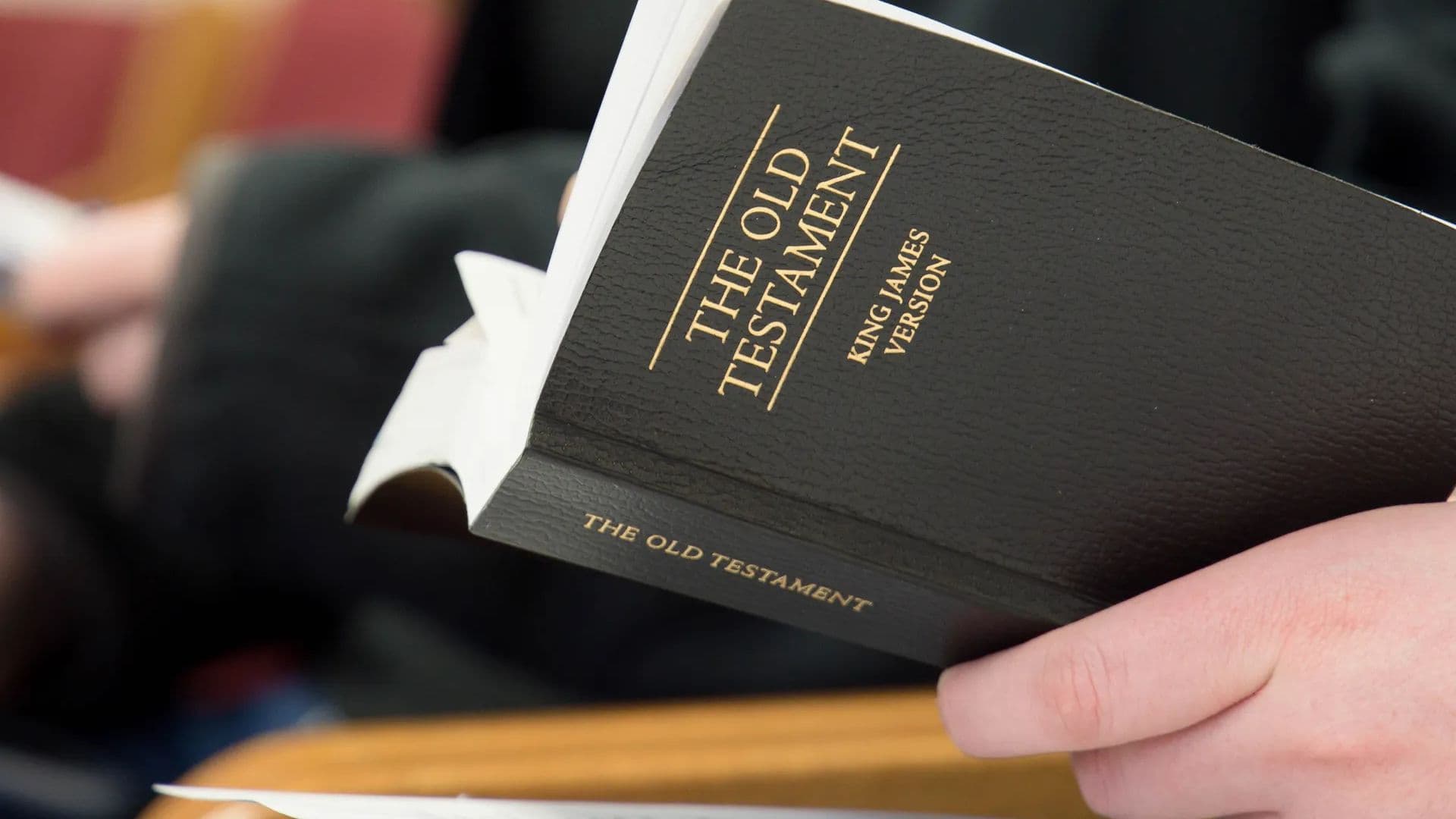
“In the sweat of thy face shalt thou eat bread, till thou return unto the ground; for out of it wast thou taken: for dust thou art, and unto dust shalt thou return.” Genesis 3:19
The Know
Every text, whether ancient or modern, can be grouped into a certain genre. Generally, people instinctively understand the nature of texts in their own cultures and read them accordingly.1 However, readers sometimes encounter a genre they are not familiar with and read it in the same way as another genre they already know. For example, many people read ancient poetry the same way they read modern novels, and find the text is difficult to understand. Instead, readers will understand texts better if they understand ancient texts on their own terms, learning what genre the text is and how to read it.2
This discussion of genres might lead one to wonder what genre the Bible is. The answer to this question is more complicated than one might think because the bible contains multiple genres. Psalms and most of Isaiah, for example, are considered a type of poetry.3 Most of Proverbs, Job, and Ecclesiastes are considered “wisdom literature.” Samuel and Kings is mostly narrative. Each book is read in a different way depending on what genre it is, and, more importantly, each genre must be understood in the way ancient people understood these genres, not the way people understand those genres today.4 Psalms and Isaiah are poetry, but one rarely finds the rhythm or rhyming (or deliberate rejection of them) in these books like one finds in modern poetry. Instead, ancient Hebrew poetry contains elements like parallelism in which the main idea in one line is paralleled by the main idea in the second line—a symmetry of meaning, not syllables.5 Even narrative texts seem to have been understood differently in ancient times than how modern people understand them today. Books like Kings and Chronicles are very similar to history in the modern sense of the term, yet even these texts are written with a level of literary artistry that one does not see in modern history writing, which means that it is difficult at times to immediately identify the genre of an ancient text.
Understanding that ancient genres operate differently than modern ones prompts a reexamination of Genesis. At first, one might assume that Genesis is like a modern history book. It appears to simply tell us things God did in ancient times and what ancient people did in response to Him. However, an ancient reader of Genesis would immediately have recognized that the early chapters of Genesis are not history in the way we would think, but are more similar to a genre the ancient Greeks referred to as mythos. But to the Greeks, myth did not connote the meaning of fantastically “untrue” like it does today. A myth was an authoritative traditional narrative, often symbolic and conveying moral ideals, relating to a god or gods that explained something about the world.6 This could explain things ranging from why the created order is the way it is to why society is arranged the way it is.
People who told and wrote ancient myths were not concerned with small details about the events they describe, like a historian would be today. They were more concerned with what the story taught people about the world and their place or purpose in the cosmos.7 For example, modern readers may want to know the kind of fruit that was on the Tree of Knowledge that Adam and Eve ate in the Garden of Eden. However, the bible never gives information like this, as the author appears to be more concerned about ideas or principles the fruit represents rather than its exact scientific classification. The story of the Fall teaches readers something more important than minutia about the trees: Adam and Eve partook of the fruit of the tree of knowledge of good and evil and therefore the world is now less than ideal. Humans experience things like pain in childbirth, a ground that does not always produce crops as easily as one might hope, and the eventual return to that ground through death and decay (Genesis 3: 16–19). This story might not teach people exactly what the tree of knowledge of good and evil looked like, but it gives insights about something much more important: why is life so hard? There are many answers to that question, but part of the answer lies in this story. The difficulties of life, including both physical and spiritual death, are at least partially related to transgressing God’s laws.8
The flood story does something similar, but in a less-obvious way. In the ancient Near East, people thought that the universe consisted of water, and that the earth was created from this watery chaotic matter.9 For these people, the earth had a dome around it, the “firmament” of Genesis 1:6, that protected the earth from the watery chaos of the universe that surrounds it.10 The creation of this dome was what happened on the second day of Creation, and what allowed the following days of Creation to take place.
According to Genesis 7:11, “the windows of heaven [the firmament] were opened” meaning that there was an opening in the firmament allowing the watery chaos of the universe to rush in again. This brought the earth back to the state it was in near the beginning of the Creation story, almost as though the earth were being unmade. The water finally receded, allowing the dry land to appear just as it had during the creation story (Genesis 8:13; compare Genesis 1:9). Noah is then told to multiply and replenish the earth just as Adam and Eve were (Genesis 9:1; compare Genesis 1:28). Thus, the Flood narrative can be seen as an unmaking and remaking of the earth, with Noah as a new Adam.11 This myth-style genre also explains the relationships between the peoples of this newly-created world, all of whom are related through Noah, as laid out in Genesis 10.
Never miss a KnoWhy
Get Scripture Central's latest research and resources delivered straight to your inbox.
The Why
Seeing some of the narratives of Genesis as myth in its ancient sense does not detract from the truthfulness of the narratives and does not eliminate the historicity they may contain. President Jeffery R. Holland said, “there was an actual Adam and Eve who fell from an actual Eden, with all the consequences that fall carried with it.”12 Yet the Fall narrative also teaches many things to readers of the Bible using symbolism and other literary devices to explain why people experience the negative things everyone experiences in life.
President Holland continues, “What a plight! The entire human race in free fall—every man, woman, and child in it physically tumbling toward permanent death, spiritually plunging toward eternal anguish.”13 Understanding this truth in this way makes it clear how necessary it is that Christ, “would come in the meridian of time to atone for the first Adam’s transgression. That Atonement would achieve complete victory over physical death, unconditionally granting resurrection to every person who has been born or ever will be born into this world. Mercifully it would also provide forgiveness for the personal sins of all, from Adam to the end of the world.”14
Thus, for the ancient authors, discursive reasoning of historical details in the Old Testament that modern readers might be interested in was not disregarded but was a secondary concern. The stories were instead told to teach readers something much more important about human’s relationships with God, others, and the world. So when reading the early chapters of the Old Testament, readers can ask themselves what the story was meant to teach, and gain new insights into these texts which continue to teach readers today.
Jeffrey M. Bradshaw, “Why and How Should We Study the Old Testament?,” KnoWhyOT L19A (May 14, 2018).
Jeffrey M. Bradshaw, “Why Was Joseph Smith Initially Prohibited from Publishing His Bible Translation?,” KnoWhyOT L05A (January 22, 2018).
“Thoughts to Keep in Mind: The Historical Books in the Old Testament,” Come, Follow Me—For Home and Church: Old Testament 2026.
Jeffrey R. Holland, “Where Justice, Love, and Mercy Meet,” April 2015 general conference.
- 1. For how people interact with various genres, see Hans Robert Jauss, 'Theory of Genres and Medieval Literature', in Toward an Aesthetic of Reception (Minneapolis: University of Minnesota Press, 1982), pp. 76-109.
- 2. For an overview of genre, see A. Fowler, Kinds of Literature: An Introduction to the Theory of Genres
- 3. For more on the genre of the Psalms, see Walter Brueggemann, “The Costly Loss of Lament”, JSOT36 (1986), pp. 57-71. For the genre of Isaiah, see Ann N. Madsen and Shon D. Hopkin, Opening Isaiah: A Harmony (Provo, UT: Religious Studies Center, Brigham Young University; Salt Lake City, UT: Deseret Book, 2018), vxii-xx.
- 4. For an in-depth discussion, see A. Rosmarin, The Power of Genre (Minneapolis: University of Minnesota Press, 1985), pp. 3-51.
- 5. For an excellent book on this topic, see James L. Kugel, The Idea of Biblical Poetry: Parallelism and its History (New Haven: Yale University Press, 1981).
- 6. For a definition, see Gentile, John S. “Prologue: Defining Myth: An Introduction to the Special Issue on Storytelling and Myth.” Storytelling, Self, Society 7, no. 2 (2011): 85–90.
- 7. For an in-depth analysis, see Ernst Cassirer, Historical-Critical Introduction to the Philosophy of Mythology. Trans. Mason Richey and Markus Zisselsberger. Foreword by Jason M. Wirth. Albany, NY: State University of New York Press 2007.
- 8. For more on the decline of early humanity in Genesis, see Dozeman, Thomas B. “Genesis.” In The Pentateuch: Introducing the Torah, 203–84 (1517 Media, 2017), 213–15.
- 9. For a delightful example, see R. O. Faulkner, The Ancient Egyptian Coffin Texts, Volume I: Spells 1–354 (Warminster, U.K.: Aris and Phillips, 1973), 83.
- 10. For an overview, see Long, R. James. “The Division of the Waters (Gn 1:6–7): The History of a Conundrum and Its Resolution by the Early Oxford Masters.” In Hagar’s Vocation, 110–33. Catholic University of America Press, 2015.
- 11. For more on the Adam and Noah connections, see Mari Jørstad. “The Ground That Opened Its Mouth: The Ground’s Response to Human Violence in Genesis 4.” Journal of Biblical Literature 135, no. 4 (2016): 705–07.
- 12. Jeffrey R. Holland, “Where Justice, Love, and Mercy Meet,” April 2015 general conference.
- 13. Jeffrey R. Holland, “Where Justice, Love, and Mercy Meet,” April 2015 general conference.
- 14. Jeffrey R. Holland, “Where Justice, Love, and Mercy Meet,” April 2015 general conference.