KnoWhy #865 | August 11, 2026
Why Does God Declare Jesus to be His Son?
Post contributed by
Scripture Central
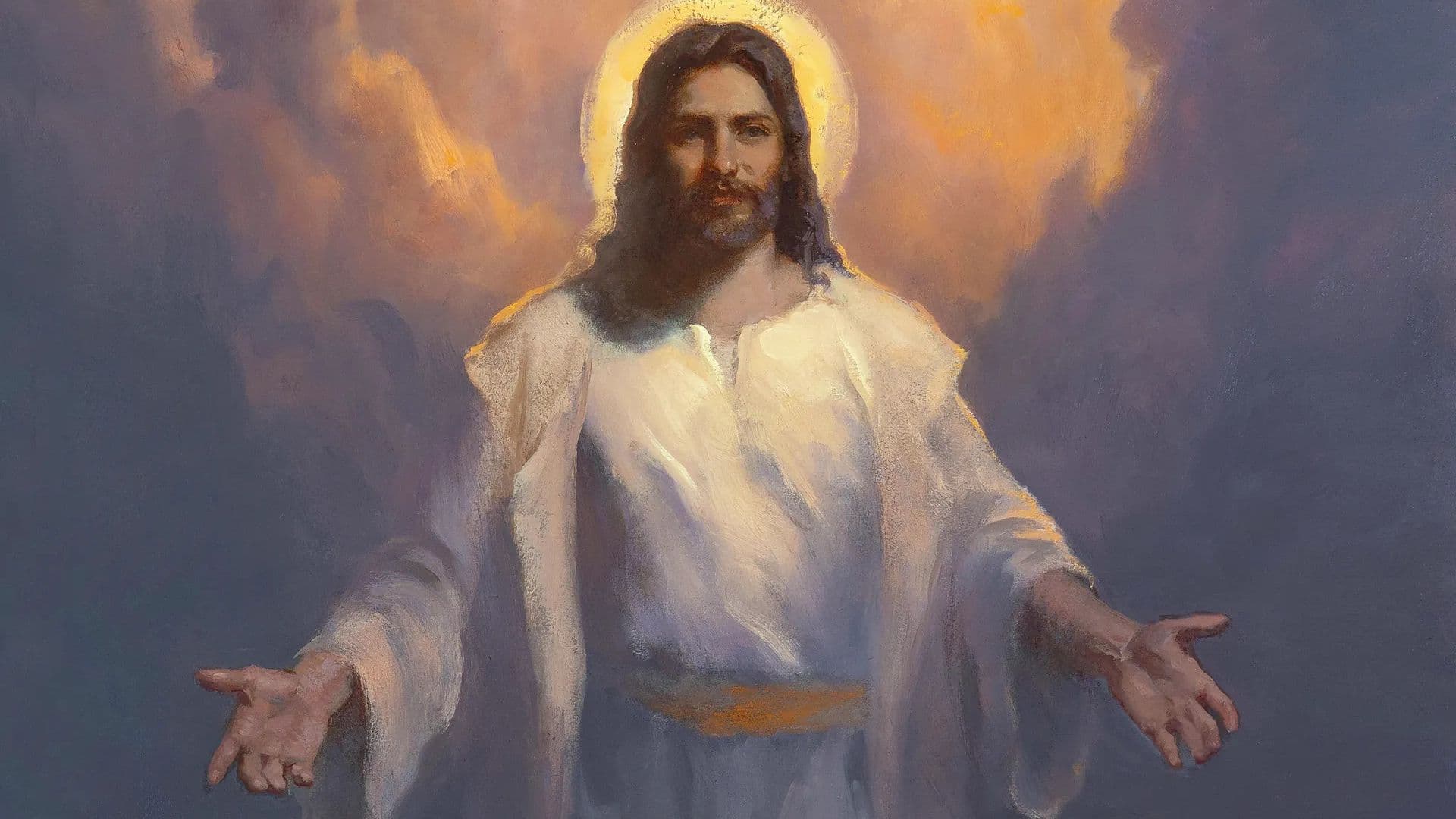
“I will declare the decree: the Lord hath said unto me, Thou art my Son; this day have I begotten thee.” Psalms 2:7
The Know
Psalm 2 contains a verse that one might gloss over at first, “I will declare the decree: the Lord hath said unto me, Thou art my Son; this day have I begotten thee” (Psalms 2:7). However, this verse proved to be significant in the history of Christianity, teaching readers of the Bible something important about the identity of Jesus as the true King of humanity.
In several verses of the Old Testament, God declares the king of Israel to be his son, showing the special relationship between God and the king. Besides Psalm 2, mentioned above, one finds something akin to this in 2 Samuel 7:14 where God promises David, concerning his seed, “I will be his father, and he shall be my son.” 1 Chronicles 28:6 similarly states, “I have chosen him to be my son, and I will be his father.” The Davidic kings are described in a similar way: “He shall cry unto me, Thou art my father, my God, and the rock of my salvation. Also I will make him my firstborn, higher than the kings of the earth” (Psalms 89:26–27).
This ancient understanding of the king of Israel as God’s son meant not only that a king would have been understood as a son of God in some sense, but also that the phrase “son of God” would have been understood as a title for the king. Thus, declaring someone to be a “son of God” would have been one way of declaring them to be the king.1
In this light, the baptism of Jesus becomes more interesting. According to Luke 3:22, when John baptized Jesus, “the Holy Ghost descended in a bodily shape like a dove upon him, and a voice came from heaven, which said, Thou art my beloved Son; in thee I am well pleased.” God’s declaration that Jesus is His son is understood to be literal as recorded in Luke 1-2. However, ancient readers also understood this statement to mean that Jesus was Israel’s king.2 Scholars are sure ancient readers connected Luke 3:22 to the verse about kingship in Psalm 2 because some scribes accidentally changed the text of Luke to match Psalm 2.3
The King James version of Luke 3:22 states, “And the Holy Ghost descended in a bodily shape like a dove upon him, and a voice came from heaven, which said, Thou art my beloved Son; in thee I am well pleased” (emphasis added). However, some New Testament manuscripts instead state, “And the Holy Ghost descended in a bodily shape like a dove upon him, and a voice came from heaven, which said, Thou art my Son; this day have I begotten thee.”4 This mistake shows that at least some ancient readers of Luke’s gospel connected God’s declaration of Jesus’ sonship with this verse from the Psalms about the King of Israel being God’s son.5 This presents the possibility that Jesus’ declaration of God’s son could have two meanings: Jesus is the literal only begotten son of God in the flesh, but He is also the true king of Israel.
Never miss a KnoWhy
Get Scripture Central's latest research and resources delivered straight to your inbox.
The Why
Jesus truly is the Son of God in two ways: the only begotten Son of God in the flesh, as well as the ultimate King.6 Unlike earthly rulers who fail, everyone can trust Christ to live up to what kings were always supposed to be. As the ultimate king, all people owe Jesus their allegiance, respect, and love, as the true ruler of the world, and the only one who will never lead humanity astray.
The earthly kings of Israel and Judah ultimately failed to do everything they were supposed to do, but Jesus would not fail as the words of Jeremiah declared, “Behold, the days come, saith the Lord, that I will raise unto David a righteous Branch, and a King shall reign and prosper, and shall execute judgment and justice in the earth. In his days Judah shall be saved, and Israel shall dwell safely: and this is his name whereby he shall be called, THE LORD OUR RIGHTEOUSNESS” (Jeremiah 23:5–6).
According to Isaiah, Jesus would be the one for whom “the government shall be upon his shoulder: and his name shall be called Wonderful, Counsellor, The mighty God, The everlasting Father, The Prince of Peace. Of the increase of his government and peace there shall be no end, upon the throne of David, and upon his kingdom” and he will rule “with judgment and with justice from henceforth even for ever” (Isaiah 9:6–7). Jesus is the king of all humanity, and the connection between the gospels and the New Testament remind everyone of this truth.
Matthew L. Bowen, "Becoming Men and Women of Understanding: Wordplay on Benjamin — An Addendum," Interpreter: A Journal of Latter-day Saint Faith and Scholarship 36 (2020): 239-280.
Matthew B. Brown, "The Handclasp, the Temple, and the King," Interpreter: A Journal of Latter-day Saint Faith and Scholarship 42 (2021): 421-426.
David Larsen, “Psalm 1-20,” in Old Testament Minute: Psalms, ed. Taylor Halverson, Vol. 19. (Book of Mormon Central, 2022).
- 1. For more on this, see John H. Eaton, Kingship and the Psalms, SBT 2/32 (Naperville, IL: Allenson, 1976), 146–49; Adela Yarbro Collins and John J. Collins, King and Messiah as Son of God: Divine, Human, and Angelic Messianic Figures in Biblical and Related Literature (Grand Rapids: Eerdmans, 2008), 1–24.
- 2. For more on this, see Peppard, Michael. “Anointed like David.” In The World’s Oldest Church: Bible, Art, and Ritual at Dura-Europos, Syria, 46–85. Yale University Press, 2016.
- 3. For an overview of the issues, see Ehrman, Bart D. 2011. The Orthodox Corruption of Scripture : The Effect of Early Christological Controversies on the Text of the New Testament. Updated and with a new afterword. New York: Oxford University Press, 62-67. Ehrman takes the connection even farther, arguing that this reading is original to Luke. This is doubtful, but either way, the connection between the testaments clearly exists.
- 4. Ehrman, Orthodox Corruption of Scripture, 62.
- 5. Ehrman, Orthodox Corruption of Scripture, 63.
- 6. Larsen, David. “Psalm 1-20.” In Old Testament Minute: Psalms, edited by Taylor Halverson, Vol. 19. Springville, UT: Book of Mormon Central, 2022, 3-4.