KnoWhy #835 | January 20, 2026
Why Does Genesis Say That Enoch “Walked with God” and That “God Took Him”?
Post contributed by
Scripture Central
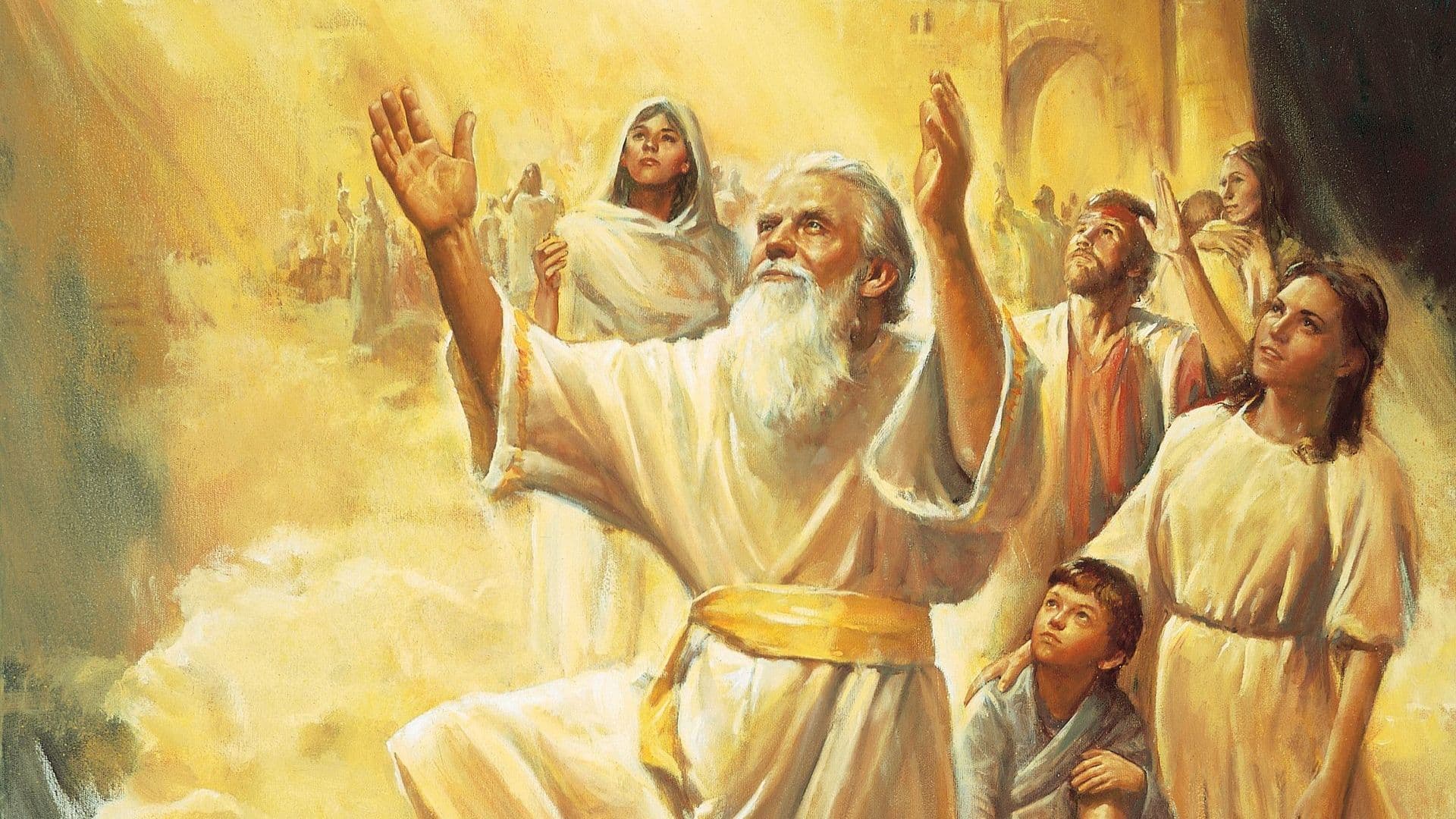
“And Enoch walked with God: and he was not; for God took him.” Genesis 5:24
The Know
The Book of Genesis contains many genealogies, most of which mention how old a person was when they had a child, and then how old they were when they died. But sometimes these genealogies break from the norm and provide additional details. In Genesis 5 the passage concerning Enoch begins as follows: “and Jared lived a hundred sixty-two years, and became the father of Enoch, and Jared lived after he became the father of Enoch eight hundred years, and had sons and daughters, and all the days of Jared were nine hundred sixty and two years, and he died. Enoch lived sixty-five years and became the father of Methuselah” (Gen. 5:18–21). But then, suddenly, Enoch’s genealogy mentions something odd as it adds: “And Enoch walked with God after he became the father of Methuselah three hundred years, and had sons and daughters, and all the days of Enoch were three hundred sixty-five years, and Enoch walked with God and he was not, for God took him” (Genesis 5:22–24). These two additional details raise some questions. For example, why does Enoch particularly receive this additional attention? Also, what does it mean that Enoch “walked with God” or “was not” because “God took him”? Although Enoch is never mentioned again in the Old Testament, he is mentioned in the New Testament (Hebrews 11:5), and beyond that, many Enochic texts and traditions appear in ancient and medieval sources, as well as in the Pearl of Great Price (see generally Moses 5:42, 6:21-8:1), that provide fascinating insights into these questions.1
Four main apocryphal books focus on Enoch particularly, namely 1 Enoch, the Book of Giants, 2 Enoch, and 3 Enoch.2 Given that the earliest of these Enoch-related texts comes from the Dead Sea Scrolls, it may be easy to assume that the Enoch traditions developed many years after Genesis 5 was written to expand the few lines about Enoch recorded there. However, given the large corpus of material concerning Enoch in the ancient world, and the many overlaps they share, it is possible that they are all reflecting a strong oral or even written tradition of Enoch that goes much farther back into antiquity. As Enoch scholar Loren T. Stuckenbruck said, “There is no reason to assume that any of the extant materials to 1 Enoch, including the fragments recovered from the Qumran caves, preserve for us anything approaching an ‘original.’”3 In other words, the Qumran texts and even the few lines in the Bible may simply be preserving parts of a much earlier tradition that has been passed down, rather than such a large tradition growing out of a few simple lines in Genesis. Although the origin of the Book of Moses is a complicated issue, it is possible that these later Enoch traditions derive from a text like the Enoch material in the Book of Moses that existed in ancient times.4
The oldest surviving apocryphal text about Enoch, 1 Enoch, was likely written over time between roughly 250 and 100 BC, probably in Aramaic.5 1 Enoch was among the texts discovered with the Dead Sea Scrolls and is part of the canon in the Ethiopian orthodox church, most of it only surviving in the ancient Ethiopian language Ge’ez.6 These texts explain the meaning of “god took him” in an interesting way. In these texts, Enoch physically goes up to heaven and stays with God, never tasting death.
The first section of 1 Enoch, called The Book of the Watchers, begins by explaining that because of his righteousness, Enoch’s eyes were opened, and he is given visions by God about the future as well as about God’s judgement of humanity. It also tells the story of a group of fallen angels, known as “Watchers” who have intercourse with women who in turn give birth to evil, half-angel giants. These giants wreak havoc on humans and animals and the great flood is called down upon the earth to kill them. This does not permanently solve the problem, however, as their spirits are then unleashed to do evil deeds on the earth until the end of time.7
The Book of the Similitudes, the second section of 1 Enoch, recounts more of Enoch’s visions and the angels who help him understand them. Enoch sees a divine being called the Son of Man who will participate in the final judgement which will condemn the wicked and justify the righteous. The third section of 1 Enoch, the Book of Astronomical Writings, contains visions of things that will happen both in heaven and on earth. It argues for a 364-day solar calendar instead of the lunar calendar (an issue which was surprisingly important during the time the book was written).8 Enoch then tells his son Methuselah about a tour of the stars which he was given by an angel named Uriel.9
Enoch continues to tell Methuselah about his visions in the fourth section of 1 Enoch, the Book of Dream Visions. One vision describes the sky falling, and the second is an allegory telling the history of humankind from beginning to end.
Another section, the Book of the Epistle of Enoch is a letter Enoch writes for people living in later times. It emphasizes the point that righteousness will be rewarded and that God will punish the wicked, trying to convince the reader to prepare for the final judgement. In this text Enoch never dies, but goes to heaven without tasting death.10
A book which is related to 1 Enoch is called the Book of Giants from the Dead Sea Scrolls. It tells the story of the “Watchers” having intercourse with human women who give birth to giants, as 1 Enoch does. These beings devastate humanity, as in 1 Enoch, but in this text they reveal the mysteries of heaven to humanity, information they were not supposed to expose. When Enoch hears about this, he tells God about it, and God tells him to preach to people to counteract the negative impact of the Watchers on humanity. God even gives divine dreams to some of the giants who then try to get their companions to repent. Troubled by the dreams, they send a giant named Mahway to Enoch, and Enoch preaches to Mahway and the Watchers continue to rebel against God.11
2 Enoch is another ancient text about Enoch, likely written sometime between 100 BC and 100 AD. Although originally written in Greek, or perhaps Aramaic, the complete text only survives in a medieval Eastern European language called Church Slavonic.12 2 Enoch builds on the earlier traditions about Enoch.
2 Enoch begins with Enoch being given a tour of heaven by two angels. In this text, heaven is divided into ten sections or levels, and Enoch gets a tour of each one. The angel Gabriel takes him to the tenth heaven where he sees God face to face and speaks with him. Enoch is then anointed by Michael and looks like an angel after this. It then recounts the story of an angel who attempts to put himself above God but is cast down for his rebellion. The angels who follow him are the ones who tempt Eve.13
Enoch is then taught all knowledge by an angel and then by God himself, finding out the full history of the earth from the creation through the flood. Enoch then teaches his sons important ethical and moral lessons such as love for all creatures, after which he is taken into heaven permanently. Finally, after Enoch leaves for heaven, the people ask Enoch's son, Methuselah as well as Methuselah’s grandson to be a priest. It then recounts the miraculous virgin birth of Melchizedek and his priestly role.14
3 Enoch is yet another Enoch text, its version was written likely from sometime between 500 and 700 AD in Hebrew. It recounts the vision of Rabbi Ishmael ben Elisha, who ascends to heaven and sees the divine chariot that God rides on. He then sees Enoch, also known as Metatron. It then explains a few things about angels, as well as giving some information about the last judgement and the heavenly court. It then goes over God’s chariot throne in more detail. Enoch reveals secrets to Rabbi Ishmael, including the names of God, as well as the names of Enoch.15
Never miss a KnoWhy
Get Scripture Central's latest research and resources delivered straight to your inbox.
The Why
These many sources collectively may help to explain the unusual words in Genesis 5 that Enoch “walked with God,” and that “God took him.” All these traditions seem to understand that the phrases “walking with God” and “God took Enoch” refer to the revelatory experiences that Enoch was given as he was taken up into heaven and shown significant things about God and the reality of God’s divine plan. This is similar to the Christian tradition which claims, “By faith Enoch was translated (metatethḕ) that he should not see death” (Hebrews 11:5 KJV). That Greek word in Hebrews 11 for “translated” is the same word (metethḕken) used in the Septuagint (the Greek Old Testament) version of Genesis to indicate that God “took him” (Genesis 5:24 KJV).16 The combined sense of all these passages is that Enoch was taken up into heaven and changed from a mortal state into a state wherein he would not experience death. This supposition is supported by texts like 2 Kings 2:11, in which Ellijah was “carried up by a whirlwind into heaven,” or Deuteronomy 34:5–6, in which Moses is buried by the Lord, understood by some to mean that he ascended without tasting death.17 Moses 7:69 in the Pearl of Great Price supports this idea: ”And Enoch … dwelt in the midst of Zion; and it came to pass that Zion was not, for God received it up into his own bosom.”
Because this understanding was widespread, it is possible that all these texts could preserve or reflect an older understanding of the phrase “walking with God” to mean something more than just physical walking but spiritually revelatory.18 The traditions about Enoch all present the possibility that, when Enoch is said to have been walking with God in the heavens, and that “God took him,” his heavenly condition eventually became permanent.
“Walking with God” can also have the metaphorical meaning of having a close relationship with God or doing things that God desires—i.e., being “in-step” with Him. Here the Septuagint or Greek version of the Old Testament renders this phrase in Genesis as Enoch was “well-pleasing to God” (euḕrestḕse tōi theōi). Noah, Abraham, and Isaac are also described as walking with God (Genesis 6:9; 17:1; 24:40; 48:15), where that phrase appears in connection with their making a covenant with God. Hence, walking with God may refer to the formal creation of a relationship with God through making and keeping sacred covenant bonds and obligations.
Even though the Bible only spends a few verses on Enoch, the many traditions about Enoch preserved in other sources help modern readers to make sense of why a simple ancient biblical genealogy went out of its way to include these additional details concerning him. The many books and traditions which later arose about Enoch show that even a seemingly-insignificant biblical character such as Enoch can be seen as being more important than casual readers might assume. Indeed, early Christians looked to Enoch as a prophet whose life and teachings were important (Hebrews 11:5; see also Jude 1:14-15); and likewise for Latter-day Saints, the Book of Moses (6:21-8:1) rightly gives important insights into his life and work that also help shed light on the divine roles of Jesus Christ and his salvific mission.
Jeffrey M. Bradshaw, David R. Seely, John W. Welch and Scott Gordon, eds., Tracing Ancient Threads in the Book of Moses: Inspired Origins, Temple Contexts, and Literary Qualities, (Orem, UT: The Interpreter Foundation; Springville, UT: Book of Mormon Central; Redding, CA: FAIR; Tooele, UT: Eborn Books, 2021).
Bradshaw, Jeffrey M., and David J. Larsen. “Ancient affinities within the LDS book of Enoch, Part One.” Interpreter: A Journal of Mormon Scripture 4 (2013): 1-27.
———. “Ancient affinities within the LDS book of Enoch, Part Two.” Interpreter: A Journal of Mormon Scripture 4 (2013): 29-74.
———. Enoch, Noah, and the Tower of Babel. In God’s Image and Likeness 2. Salt Lake City, UT: The Interpreter Foundation and Eborn Books, 2014.
Hugh W. Nibley, Enoch the Prophet (Salt Lake City: Deseret Book and Foundation for Ancient Research and Mormon Studies, 1986).
Richard D. Draper and Michael D. Rhodes, Epistle to the Hebrews (Provo, UT: BYU Studies, 2021), 611-15.
- 1. For an overview of this issue from ancient times through the Middle Ages, see Annette Yoshiko Reed, Enoch Lost and Found? Rethinking Enochic Reception in the Middle Ages (Leiden: Brill, 2023).
- 2. For an overview, see Michael A. Knibb, Essays on the Book of Enoch and Other Early Jewish Texts and Traditions (Leiden: Brill, 2009).
- 3. Loren T. Stuckenbruck, “The Book of Enoch: Its Reception in Second Temple Jewish and Christian Tradition,” Early Christianity 4, no. 1 (2013): 9.
- 4. For more on this possibility, see Jeffrey M. Bradshaw, David R. Seely, John W. Welch and Scott Gordon, eds., Tracing Ancient Threads in the Book of Moses: Inspired Origins, Temple Contexts, and Literary Qualities, (Orem, UT: The Interpreter Foundation; Springville, UT: Book of Mormon Central; Redding, CA: FAIR; Tooele, UT: Eborn Books, 2021).
- 5. For more on how the text came together, see Michael A. Knibb, “The Book of Enoch or Books of Enoch? The Textual Evidence for 1 Enoch,” in The Early Enoch Literature, ed. Gabriele Boccaccini and John J. Collins (Leiden: Brill, 2007), 21–40.
- 6. For an in-depth discussion of the Dead Sea Scrolls evidence and its relation to the Ethiopian version, see
- 7. James H. Charlesworth, ed., The Old Testament Pseudepigrapha, vol. 1 (Garden City, NY: Doubleday, 1983), 5–6.
- 8. For an overview of the controversy, see Isaac Kalimi, “The Day of Atonement in the Late Second Temple Period: Sadducees’ High Priests, Pharisees’ Norms, and Qumranites’ Calendar(s),” Review of Rabbinic Judaism 14, no. 1 (2011).
- 9. Charlesworth, Old Testament Pseudepigrapha, 1:5–6.
- 10. Charlesworth, Old Testament Pseudepigrapha, 1:5–6, 88.
- 11. For the text itself and an excellent in-depth review, see Loren T. Stuckenbruck, The Book of Giants from Qumran: Texts, Translation, and Commentary (Tübingen: Mohr Siebeck, 1997).
- 12. Macaskill, Grant. The Slavonic Texts of 2 Enoch. Leiden, The Netherlands; Brill, 2013, 3-5.
- 13. Charlesworth, Old Testament Pseudepigrapha, 1:91–100.
- 14. Charlesworth, Old Testament Pseudepigrapha, 1:91–100.
- 15. Charlesworth, Old Testament Pseudepigrapha, 1:223–253.
- 16. “Though only a connotation in the Greek, in Latter-day Saint usage, ‘translation’ refers to the process of changing someone who is mortal to a state in which they are no longer subject to pain and sickness but remain alive until the Second Coming of Christ, at which time they will be instantly changed to an immortal, resurrected state.” Richard D. Draper and Michael D. Rhodes, Epistle to the Hebrews (Provo, UT: BYU Studies, 2021), 614.
- 17. See, for example, Assumption of Moses 11:5–8.
- 18. See, for example, Assumption of Moses 11:5–8.