KnoWhy #829 | December 9, 2025
Why Did the Church Issue the Family Proclamation?
Post contributed by
Scripture Central
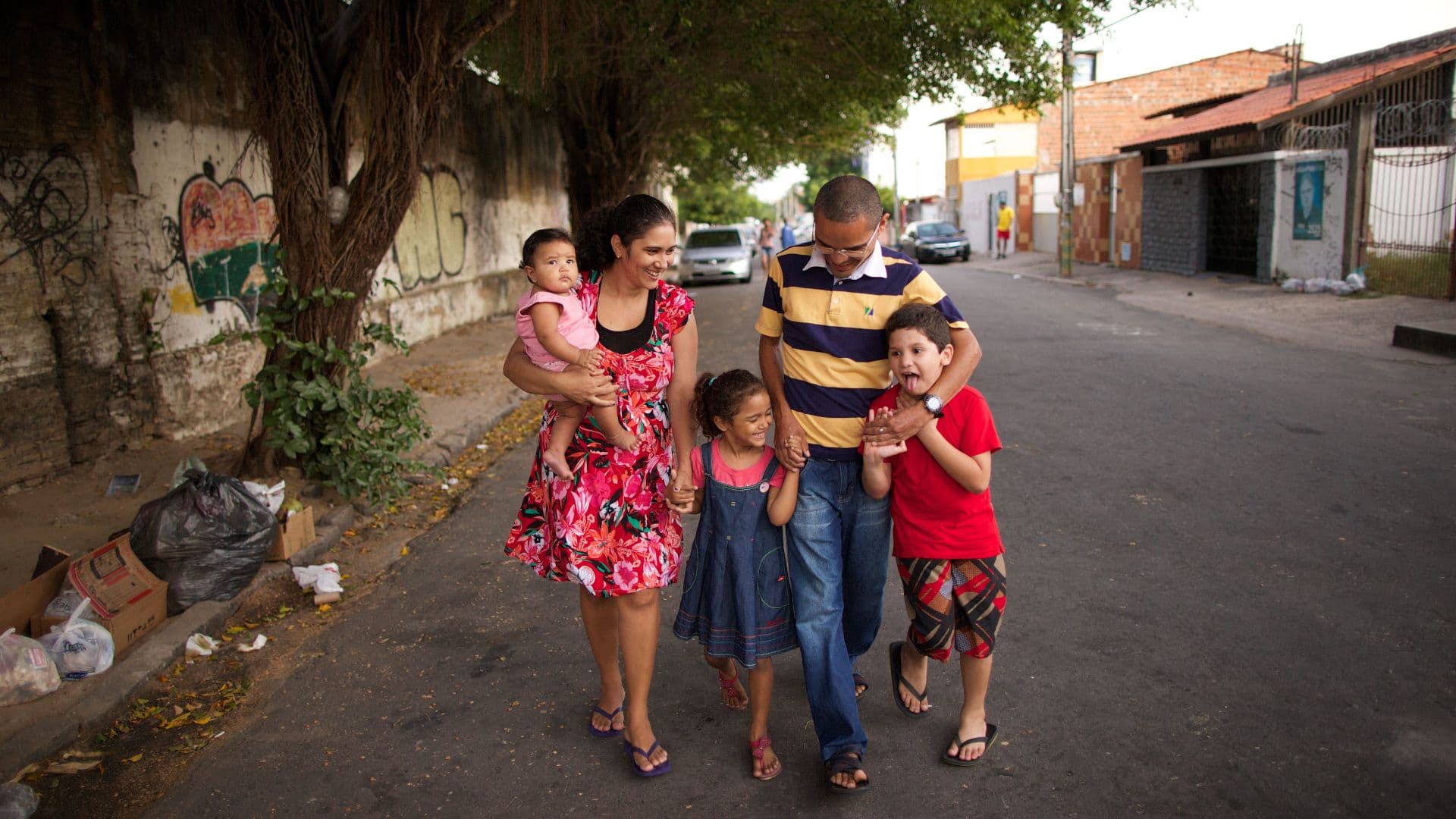
"We, the First Presidency and the Council of the Twelve Apostles of The Church of Jesus Christ of Latter-day Saints, solemnly proclaim that marriage between a man and a woman is ordained of God and that the family is central to the Creator’s plan for the eternal destiny of His children." The Family: A Proclamation to the World
The Know
Thirty years ago, during the October 1995 general conference, President Gordon B. Hinckley authoritatively read, for the first time The Family: A Proclamation to the World. Without a doubt, this official proclamation of the Church has been highly impactful. As Michael A. Goodman and W. Justin Dyer have observed, “[The Family Proclamation] has been cited more than 250 times in general conference, hangs on the walls of many Latter-day Saint homes, and is presented to leaders throughout the world.”1
While certainly influential, the Family Proclamation did not introduce new doctrine. Rather, its teachings had been repeatedly taught by prophets and apostles for many years prior to its publication. Even as President Hinckley first read this inspired document, he stated it was “a declaration and reaffirmation of standards, doctrines, and practices relative to the family, which the prophets, seers, and revelators of this church have repeatedly stated throughout its history.”2 This consolidated reaffirmation had become a necessity in years leading up to 1995, and its prominence as only the fifth official proclamation issued by the First Presidency and Quorum of the Twelve has further cemented it as a helpful statement of core doctrinal truths regarding the family and the purposes of human life—truths that the leaders of the Church knew would continue to come under attack.
As Goodman and Dyer have recently noted, “The past half century has seen the most rapid and fundamental changes in history to Western marriage laws and cultural understanding.”3 Beginning in the 1960s and 1970s with the so-called sexual revolution in America, traditional values regarding marriage and procreation especially began to be questioned. “Where premarital and extramarital sex had previously been viewed as at least morally questionable if not objectionable, it became much more common for such objections to be seen as outdated and even oppressive.”4 Similarly, the rise of what some might call “expressive individualism” challenged the values that give meaning to marriage and to the family as a cooperative unit with everlasting importance to humanity. More and more, individuals in recent years have begun focusing on “self-actualization, self-esteem, and self-acceptance” rather than the “virtues of altruism, self-sacrifice, and sympathy for others.”5
Moreover, “In the wake of the sexual revolution, individuals began to desire the marriages they found most interpersonally appealing, not simply the ones that met religious, economic, and extended family goals (common previous bases of marriage). Gratification of the individual, and that individual’s expressions, became the primary moral concern.” This dramatic shift has caused both conservative and progressive social scientists to recognize “increased fragility in family relationships” as people focus on the individual, rather than the family unit as a whole.6
The rates of divorce, children born out of wedlock, and cohabitating (rather than married) couples increased at shockingly high rates in the 1970s and 1980s, and legislation began to challenge many principles regarding the family that were once held as universal truths.7 During that time, the Church thus focused its attention on strengthening the family more than ever, noting that the family unit was under attack in the October 1970 General Conference.8 In 1994, discussions regarding the family were so pressing that the United Nations held two conferences on the topic that September, and another was announced that would be held in Salt Lake City, Utah.9
These factors, among many others, led the Quorum of the Twelve to boldly and clearly proclaim the Church’s position on the family.10 As President Dallin H. Oaks recalls, “We felt the confirmation and we went to work. Subjects were identified and discussed by members of the Quorum of the Twelve for nearly a year. Language was proposed, reviewed, and revised. Prayerfully we continually pleaded with the Lord for His inspiration on what we should say and how we should say it.”11
The initial draft of the Family Proclamation was written by “a committee consisting of Elders James E. Faust, Neal A. Maxwell, and Russell M. Nelson.”12 After each of these three apostles composed a draft, they were then compared, reviewed, and added to by the other members of the Quorum of the Twelve before submission to the First Presidency for review. After the First Presidency further refined the document, it was unanimously ratified by the Apostles and First Presidency and prepared for publication. Much of the wise, powerful language used in the Family Proclamation can also be found in previous general conference addresses.13 As such, it has rightly been called an inspired declaration that teaches clearly the revealed and eternal doctrine of the Church.14
As the document was first read in 1995, President Hinckley stated many of the reasons why he and the Apostles felt this document was necessary. He said, “With so much of sophistry that is passed off as truth, with so much of deception concerning standards and values, with so much of allurement and enticement to take on the slow stain of the world, we have felt to warn and forewarn.”15 As further attacks on the doctrine taught in the Family Proclamation have come in the past three decades, this warning has become even more evident as prophetic guidance for the latter days.
Never miss a KnoWhy
Get Scripture Central's latest research and resources delivered straight to your inbox.
The Why
The Family: A Proclamation to the World teaches and emphasizes many divine scriptural truths regarding the family and its place in society. Beginning with the assertion that “marriage between a man and a woman is ordained of God and that the family is central to the Creator’s plan for the eternal destiny of His children,” the Proclamation goes on to teach the world about the eternal nature of our spirits, the roles that husbands and wives, fathers and mothers, play, and the warnings that a dissolution of the family will bring about God’s disfavor. It is a document that stands as a banner of divine truths regarding our identities as children of God and our divine potential to become like Him through the ordinances of the Gospel, from baptismal covenants to temple sealings.
Because the Family Proclamation was written and presented in a time when it was seen as especially needful, some might claim that the Family Proclamation was simply a temporary policy statement that does not declare enduring doctrine for the Church and for the world. Such a claim is not compelling, as revelation is never given in a vacuum of thought or need. As President Russell M. Nelson taught, “Good inspiration is based upon good information.”16 Similarly, regarding the way the nineteenth-century context of Joseph Smith’s revelations functioned, Steven C. Harper has observed, “Some critics … assert that because [they] addressed the circumstances of Joseph Smith’s world, [they] must not be real revelation. This logic is simplistic and flawed. Its first error is to assume that any revelation that answers timely questions is somehow suspect. What good is an irrelevant revelation?”17
Moreover, as Goodman and Dyer observe, “A more accurate understanding of the cultural and political context that created the original need and prompted the prophetic process by which the family proclamation was created can help members gain a greater understanding of the way that God directs his prophets based on the circumstances and needs of his children today.”18 By understanding not only the context of the Family Proclamation but even more its content, Latter-day Saints can better appreciate how the Family Proclamation valuably answers timely needs that the world as a whole and also every person individually faces today.19
As Bonnie C. Oscarson declared,
When President Gordon B. Hinckley first read “The Family: A Proclamation to the World” 20 years ago this year, we were grateful for and valued the clarity, simplicity, and truth of this revelatory document. Little did we realize then how very desperately we would need these basic declarations in today’s world as the criteria by which we could judge each new wind of worldly dogma coming at us from the media, the Internet, scholars, TV and films, and even legislators. The proclamation on the family has become our benchmark for judging the philosophies of the world, and I testify that the principles set forth within this statement are as true today as they were when they were given to us by a prophet of God nearly 20 years ago.20
Further Reading
Ronald A. Rasband, “The Family Is Ordained of God,” BYU Devotional, September 23, 2025.
Michael A. Goodman and W. Justin Dyer, “The Family Proclamation: The Secular and Spiritual Context,” Religious Educator 24, no. 2 (2023): 106–33.
Dallin H. Oaks, “The Plan and the Proclamation,” General Conference of The Church of Jesus Christ of Latter-day Saints, October 2017.
Gordon B. Hinckley, “Stand Strong against the Wiles of the World,” General Conference of The Church of Jesus Christ of Latter-day Saints, October 1995.
Larry J. Nelson and Sarah M. Coyne, Family Life: Scholarly Insights on Sacred Truths (BYU Studies; School of Family Life, Brigham Young University, 2024).
Alan J. Hawkins, David C. Dollahite, and Thomas W. Draper, eds., Successful Marriages and Families: Proclamation Principles and Research Perspectives (BYU Studies; School of Family Life, Brigham Young University, 2012).
David C. Dollahite, ed., Strengthening Our Families: An In-Depth Look at the Proclamation on the Family (Bookcraft; School of Family Life, Brigham Young University, 2000).
Footnotes
- 1. Michael A. Goodman and W. Justin Dyer, “The Family Proclamation: The Secular and Spiritual Context,” Religious Educator 24, no. 2 (2023).
- 2. Gordon B. Hinckley, “Stand Strong against the Wiles of the World,” October 1995 general conference.
- 3. Goodman and Dyer, “The Family Proclamation: The Secular and Spiritual Context.”
- 4. Goodman and Dyer, “The Family Proclamation: The Secular and Spiritual Context.”
- 5. Goodman and Dyer, “The Family Proclamation: The Secular and Spiritual Context;” citing Steven Pope, “Expressive Individualism and True Self-Love: A Thomistic Perspective,” Journal of Religion 71, no. 3 (1991): 384.
- 6. Goodman and Dyer, “The Family Proclamation: The Secular and Spiritual Context.”
- 7. Goodman and Dyer, “The Family Proclamation: The Secular and Spiritual Context,” observes: “The 1970s showed a 50 percent increase in the divorce rate and a doubling of the rate of out-of-wedlock childbirths. From 1970 to 1980, the number of cohabitating couples more than tripled, the percentage of children born to unmarried women nearly doubled, the marriage rate dropped 15 percent, and the divorce rate increased by 52 percent. Legislation and policies recognizing same-sex partnerships and marriages began to increase, though legal changes in this area were slow.”
- 8. Boyd K. Packer, in Conference Report, October 1970, 118.
- 9. Goodman and Dyer, “The Family Proclamation: The Secular and Spiritual Context;” Boyd K. Packer, “The Instrument of Your Mind and the Foundation of Your Character” (Church Educational system fireside for young adults, February 2, 2003.
- 10. Packer, “The Instrument of Your Mind and the Foundation of Your Character;” Dallin H. Oaks, “The Plan and the Proclamation,” October 2017 general conference; Sheri L. Dew, Insights from a Prophet’s Life: Russell M. Nelson (Deseret Book, 2019), 208–09.
- 11. Oaks, “The Plan and the Proclamation.”
- 12. Goodman and Dyer, “The Family Proclamation: The Secular and Spiritual Context;” see also Dew, Insights from a Prophet’s Life, 208–09.
- 13. See, for instance, Goodman and Dyer, “The Family Proclamation: The Secular and Spiritual Context;” FAIR Latter-day Saints, “Have the doctrines in the document ‘The Family: A Proclamation to the World’ long been taught in the Church?” FAIR Answers.
- 14. Goodman and Dyer, “The Family Proclamation: The Secular and Spiritual Context;” FAIR Latter-day Saints, “Is the document ‘The Family: A Proclamation to the World’ official doctrine?” FAIR Answers; Lloyd D. Newell, “The Proclamation: A Guide, a Banner, and a Doctrinal Summary of the Church’s Emphasis on the Family,” in Successful Marriages and Families: Proclamation Principles and Research Perspectives, ed. Alan J. Hawkins, David C. Dollahite, and Thomas W. Draper (BYU Studies; School of Family Life, Brigham Young University, 2012), 313–18; David C. Dollahite, “The Proclamation as Prophetic Guidance for Strengthening the Family,” in Strengthening Our Families: An In-Depth Look at the Proclamation on the Family, ed. David C. Dollahite (Bookcraft; School of Family Life, Brigham Young University, 2000), 1–6.
- 15. Hinckley, “Stand Strong against the Wiles of the World.”
- 16. Russell M. Nelson, “Revelation for the Church, Revelation for Our Lives,” General Conference April 2018.
- 17. Steven C. Harper, Making Sense of the Doctrine and Covenants: A Guided Tour Through Modern Revelation (Deseret Book, 2008), 332.
- 18. Goodman and Dyer, “The Family Proclamation: The Secular and Spiritual Context.”
- 19. Indeed, for studies on how the principles taught in the Family Proclamation are supported by social sciences, see Hawkins, Dollahite, and Draper, Successful Marriages and Families; Dollahite, Strengthening Our Families; and Larry J. Nelson and Sarah M. Coyne, Family Life: Scholarly Insights on Sacred Truths (BYU Studies; School of Family Life, Brigham Young University, 2024).
- 20. Bonnie L. Oscarson, “Defenders of the Family Proclamation,” General Conference April 2015.