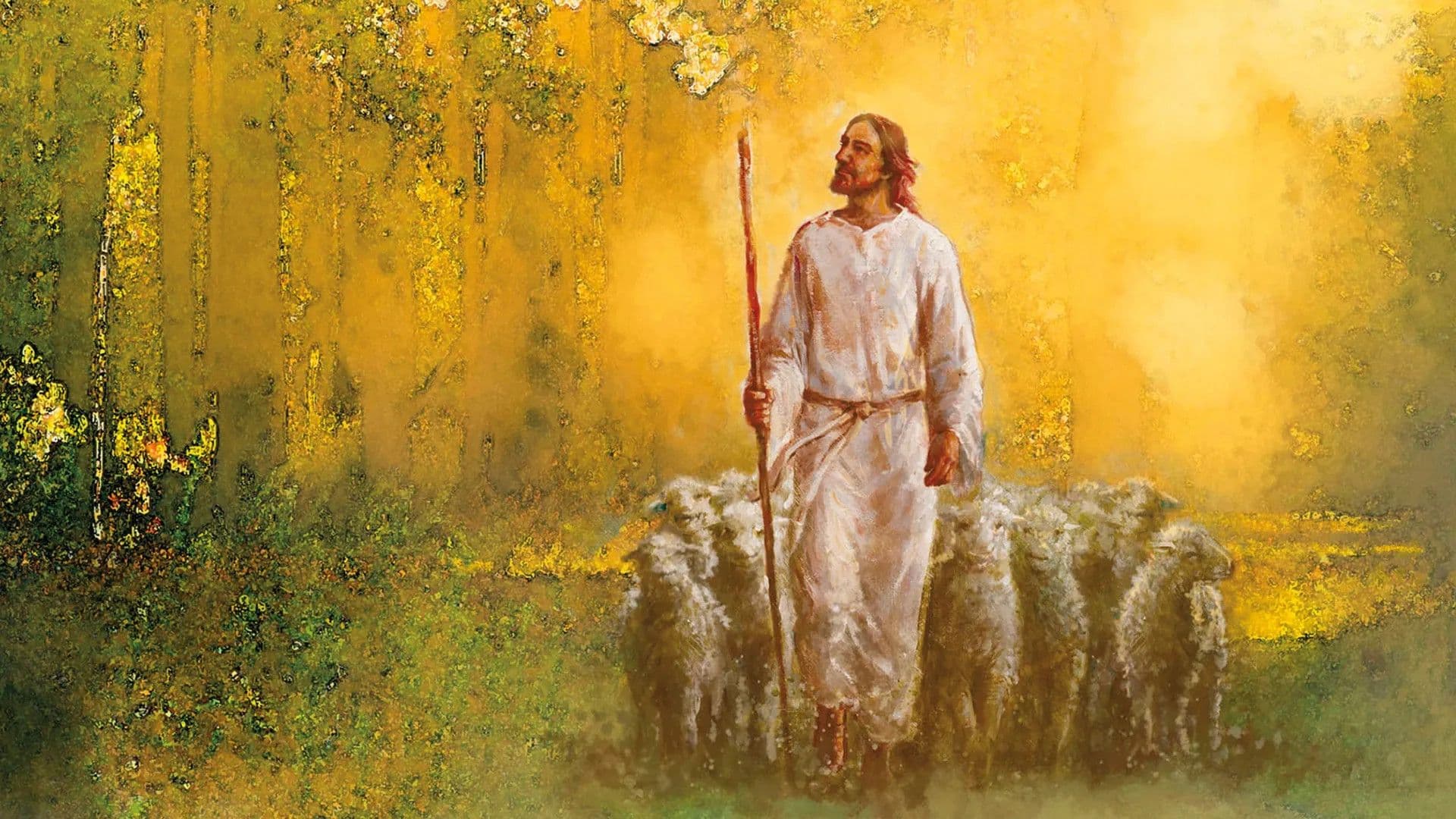
Psalms 1-2, 8, 19-33, 40, 46
“The Lord Is My Shepherd”
August 17 - August 23
scriptures
quote
The Lord's Answer to the Psalmist's Question
<p>The psalmist wrote, “When I consider thy heavens, the work of thy fingers, the moon and the stars, which thou hast ordained;</p> <p>“What is man, that thou art mindful of him? and the son of man, that thou visitest him?</p> <p>“For thou hast made him a little lower than the angels, and hast crowned him with glory and honour” (Ps. 8:3–5)</p> <p>The Lord gave an answer to the psalmist’s question; it is recorded in the book of Moses: “For mine own purpose have I made these things. …</p> <p>“And by the word of my power, have I created them. …</p> <p>“For behold, this is my work and my glory—to bring to pass the immortality and eternal life of man” (Moses 1:31–32, 39)</p>
M. Russell Ballard, “God's Love for His Children,” April 1988 General Conference
commentaries
Psalms 1–2: Introduction to the Book of Psalms
<p>Many scholars, both ancient and modern, as well as many ancient Jewish religious writings viewed Psalms 1 and 2 as a single unit, placed together at the beginning of the book of Psalms to serve as an introduction to the entire collection of one hundred and fifty psalms that we now find in the Old Testament. According to this tradition, the themes, messages, and language of Psalms 1 and 2 are seen as overlapping and were given their current place by the editors of the collection’s final form so that these themes would establish what they understood to be the overarching message of the book of Psalms.</p> <p>In light of this understanding, it is important for readers who study and desire to grasp the meaning of the Psalms to seek insight into the message of these two introductory psalms. Psalm 1 presents a beatitude, declaring that “blessed” (or “happy”) is the “man” who does not follow in the ways of the ungodly and sinners. This righteous man delights in the law (Hebrew <em>torah</em>) of the Lord, meditating on it day and night (1:1–2). In Psalm 2 (verses 1–2), the heathen kings of the earth have gathered to rebel against the Lord and against His anointed (Hebrew <em>mashiah</em>, “messiah”). The Lord declares that He has “set my king upon my holy hill of Zion” (2:6–7). The anointed king, or Messiah, then announces the decree that the Lord has given him: “The Lord hath said unto me, Thou art my Son; this day have I begotten thee.”</p> <p>Many commentators have seen a connection between the righteous man of Psalm 1 and the anointed king of Psalm 2, suggesting that they are one and the same—the chosen Messiah who loves and follows the law of the Lord. He is the ideal king, an example for all humankind to emulate. Following this interpretation and viewing Psalms 1 and 2 as the introduction to the rest of the Psalms collection, David C. Mitchell argued, “The theme of how [the Lord’s] <em>mashiah</em> will conquer all opposition and rule the world from Zion must be considered as one of the broad, overarching themes of the Psalms, in whose light all the ensuing lyrics . . . should be interpreted.”<a href="#_ftn1" name="_ftnref1">[1]</a></p> <h3>Related verses</h3> <p>Deuteronomy 17:14–20; Joshua 1:5–8</p> <p> </p> <p><a href="#_ftnref1" name="_ftn1">[1]</a> David C. Mitchell, <em>The Message of the Psalter</em> (Newton Mearns, UK: Campbell Publications, 2003), 245.</p> <p> </p> <p><strong>Author:</strong> David J. Larsen<br /><strong>General Editor:</strong> Taylor Halverson<br /><strong>Associate Editor:</strong> Morgan Tanner<br /><strong>Senior Editor:</strong> Sarah Whitney Johnson<br /><strong>Assistant Editor:</strong> Sam Lofgran<br /><strong>Assistant Editor:</strong> Verlanne Johnson</p>
Old Testament Minute: Psalms by BMC
Psalm 2:2, 6–7
<p>Psalm 2 is the first psalm in the collection that is labeled a royal psalm, a category delineated by modern scholars to identify those psalms that feature discussion of, or speech from, the Israelite monarch or that celebrate the office of human kingship. Many of these royal psalms are also recognized as messianic psalms. Early Christian thinkers, including some of the authors of the New Testament, saw many of these royal psalms, including Psalm 2,<a href="#_ftn1" name="_ftnref1">[1]</a> as containing prophecies of Christ.</p> <p>Many scholars interpret Psalm 2 to be about the enthronement, or coronation, of a historical Israelite king on Mount Zion in Jerusalem. It is noteworthy to mention that Psalm 2 would likely have been placed in its current position in the introduction to the book of Psalms in a later period, after the time of the Davidic monarchy, when there were no more kings being enthroned. In this post-monarchic, postexilic period, Psalm 2 was often understood eschatologically and messianically. Discussing the placement of Psalm 2 as the introduction to the postexilic compilation of psalms, M. A. Vincent commented:</p> <blockquote> <p>Victory for God and his son/king is promised and asserted, <em>at a time when there was no king</em>, and when the nation had little political significance. To this king God promises the nations and the uttermost part of the world as his inheritance. . . . Reading the Psalter from the perspective of its final form and taking into account the editorial decision made in placing this psalm in this position we are forced into understanding it eschatologically, whatever its origins may have been.<a href="#_ftn2" name="_ftnref2"><sup>[2]</sup></a></p> </blockquote> <p>In other words, those who put together the book of Psalms in its final form would have understood Psalm 2 to be looking forward prophetically to the coming of a future messianic king who would be considered the begotten Son of God and who would come to rule the heathen nations with a “rod of iron” and to reign over “the uttermost parts of the earth” (Psalm 2:1, 8–9; see Revelation 2:26–27).</p> <h3>Related verses</h3> <p>Acts 4:25–28; 13:33; Hebrews 1:5; Revelation 2:26–27</p> <p> </p> <p><a href="#_ftnref1" name="_ftn1">[1]</a> See also, for example, Acts 4:25–28; 13:33; Hebrews 1:5.</p> <p><a href="#_ftnref2" name="_ftn2">[2]</a> M. A. Vincent, “The Shape of the Psalter: An Eschatological Dimension?,” in <em>New Heaven and New Earth: Prophecy and the Millennium, Essays in Honour of Anthony Gelston</em>, ed. Peter J. Harland and C. T. Robert Hayward (Leiden, Netherlands: Brill, 1999), 66; emphasis in original.</p> <p> </p> <p><strong>Author:</strong> David J. Larsen<br /><strong>General Editor:</strong> Taylor Halverson<br /><strong>Associate Editor:</strong> Morgan Tanner<br /><strong>Senior Editor:</strong> Sarah Whitney Johnson<br /><strong>Assistant Editor:</strong> Sam Lofgran<br /><strong>Assistant Editor:</strong> Verlanne Johnson</p>
Old Testament Minute: Psalms by BMC
Psalm 8:4–6
<p>Psalm 8 is an important psalm that is quoted numerous times in the New Testament. It is seen as a messianic psalm and is considered a hymn of praise as well as a Creation psalm due to its discussion of God’s creation of the cosmos and all living creatures.</p> <p>“Jehovah our Lord” is praised for His mighty works in the Creation, next to which humankind seems so insignificant. Nevertheless, the psalmist notes, God is mindful of humans, having made them “a little lower than the angels” and “crowned [them] with glory and honour” (verse 5). Note that the Hebrew word translated here as “angels” is <em>elohim</em>, which can also be rendered as “God” or “gods.” So, verse 5 may be saying that humans were created to be only a little lower than God, which makes sense in conjunction with verse 6: “Thou madest him to have dominion over the works of thy hands; thou hast put all things under his feet.” Compare this with God’s own declaration in the Creation: “God said, Let us make man in our image, after our likeness: and let them have dominion over the fish of the sea” (Genesis 1:26).</p> <p>Jesus quoted verse 2 of this psalm in Matthew 21:16 and after His Resurrection. The Church interpreted the psalm––verses 5 and 6 in particular––to refer specifically to Christ Himself. Hebrews 2 takes the “son of man” from Psalm 8:4 as a reference to Jesus, “who was made a little lower than the angels” when he condescended to come to earth “for the suffering of death,” for which he was “crowned with glory and honour” (Hebrews 2:6–9). The language in Psalm 8:6 regarding having dominion and all things put under his feet is interpreted as Christ’s ultimate victory and sovereignty over all Creation.<a href="#_ftn1" name="_ftnref1">[1]</a></p> <h3>Related verses</h3> <p>Genesis 1:26–28; Psalm 110:1; Daniel 7:13–14; Matthew 28:18; 1 Corinthians 15:24–27; Ephesians 1:20–22; Hebrews 2:6–9</p> <p> </p> <p><a href="#_ftnref1" name="_ftn1">[1]</a> See Hebrews 2:8; 1 Corinthians 15:27; Ephesians 1:22.</p> <p> </p> <p><strong>Author:</strong> David J. Larsen<br /><strong>General Editor:</strong> Taylor Halverson<br /><strong>Associate Editor:</strong> Morgan Tanner<br /><strong>Senior Editor:</strong> Sarah Whitney Johnson<br /><strong>Assistant Editor:</strong> Sam Lofgran<br /><strong>Assistant Editor:</strong> Verlanne Johnson</p>
Old Testament Minute: Psalms by BMC