Genesis 18-23
“Is Any Thing Too Hard for the Lord?”
February 23 - March 1
scripture
quote
Is Any Thing Too Hard for the Lord?
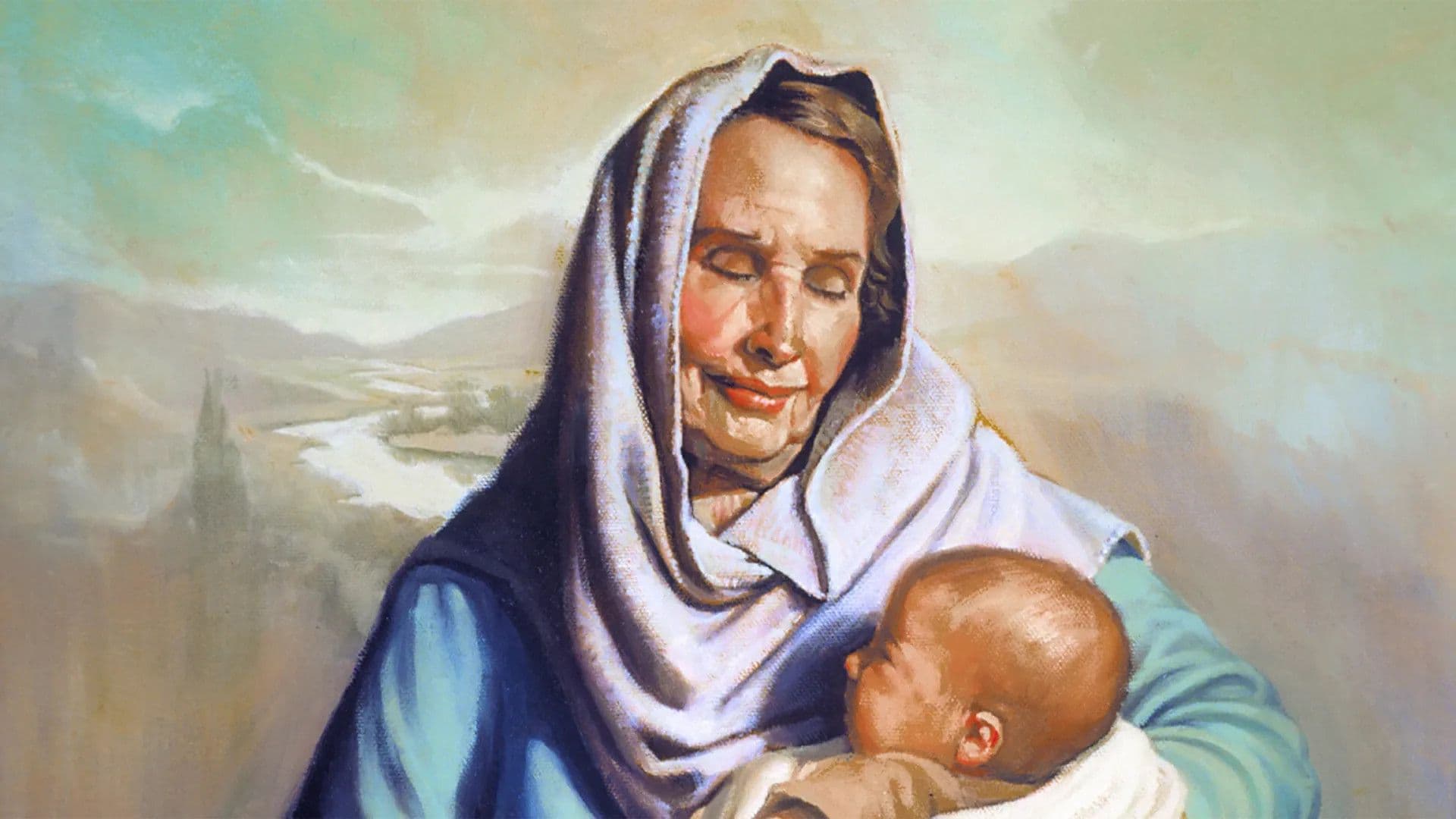
<p>I feel impressed to counsel those engaged in personal challenges to do right. In particular, my heart reaches out to those who feel discouraged by the magnitude of their struggle. Many shoulder heavy burdens of righteous responsibility which, on occasion, seem so difficult to bear. I have heard those challenges termed impossible. ... To teach His people, the Lord employs the unlikely. ... Everyone “knows” that old women do not bear children. So upon whom did the Lord call to bear Abraham’s birthright son? Sarah, at age ninety! When told this was to be, she asked a logical question: “Shall I [which am old] of a surety bear a child?” (Gen. 18:13) From heaven came this reply: “Is any thing too hard for the Lord?”</p>
Russell M. Nelson, “‘With God Nothing Shall Be Impossible,’” April 1988 General Conference
commentary
Genesis 18–20 Overview. Abraham’s Welcome, Sodom’s Wickedness, and Abimelech’s Repentance
<p>In these three chapters, we encounter the story of Abraham’s welcome of the three visitors who confirmed and definitively announced the arrival of Abraham and Sarah’s long-awaited son, Isaac. Then, after Abraham pled to the Lord to spare Sodom and Gomorrah from destruction, the messengers proceeded to those notorious cities to see the situation for themselves—at the same time testing Lot’s family to see their welcome and faithfulness compared to that of Abraham and Sarah. Finally, in chapter 20, we meet Abimelech, the second king in Genesis who aspired to marry Sarah.</p> <p>A key to understanding what ties all three of these stories together is the Hebrew verb <em>yāda‘ </em>(“to know”) and the related noun <em>da‘at</em> (“knowledge”). After a brief exploration of the rich and powerful meanings of these terms in Hebrew, we will look carefully to see how they apply in Genesis 18–20.</p> <p>In the Bible, <em>yāda‘</em> and <em>da‘at</em> combine two Hebrew concepts: knowing something with the mind or heart and knowing something physically.<a href="#_ftn1" name="_ftnref1">[1]</a> When used to talk about people, the terms imply a relationship; when God or a marriage partner is involved, they often imply a covenant relationship.<a href="#_ftn2" name="_ftnref2">[2]</a> If I have calculated correctly, these two terms appear twenty-two times in the first twenty chapters of Genesis, and significantly, eight of these occur within chapters 18–20.<a href="#_ftn3" name="_ftnref3">[3]</a></p> <p>The first biblical appearance of the Hebrew terms for knowing is in Genesis 2:9, when we are introduced to the tree of knowledge of good and evil. The French Bible scholar André Chouraqui translated this as the “tree of penetration of good and evil.”<a href="#_ftn4" name="_ftnref4">[4]</a> The English word <em>penetration</em> is a helpful translation because it simultaneously expresses both the intellectual and physical meanings of the original Hebrew term. In other words, when Adam and Eve transgressed and obtained the insights that resulted from eating the fruit, they not only <em>cognitively</em> penetrated the tree (in the old English sense of “gaining intellectual or spiritual access”<a href="#_ftn5" name="_ftnref5">[5]</a>) but also <em>physically</em> penetrated the sacred, symbolic boundary of the garden where the tree was planted so as to pluck its fruit.<a href="#_ftn6" name="_ftnref6">[6]</a></p> <p>After the story of the Fall, the next appearance of the word is in Genesis 4:1, when “Adam <em>knew</em> Eve his wife” and their son Cain was conceived (emphasis added). Because Adam and Eve were faithful to their covenants, their act of mutual knowing was not only physical but also covenantal in nature. Indeed, the act itself honored the covenants the couple made with God to cleave together as one and to “multiply and replenish the earth” (Genesis 1:28; 2:24). Indeed, a happy covenantal marriage relationship is often used in scripture as a model of the covenant relationship between God and His people. As a husband and wife strive to be one in all things, so those who keep their covenants with God strive to know and become one with Him (John 17:3, 20–23; 1 Corinthians 6:17).</p> <p>With similar symbolism, in His account of the final judgment, Jesus described the tragedy of those who, by unfaithfulness to their covenants, alienated themselves from His love (see Joseph Smith Translation, Matthew 7:31). To those individuals, He said, “I never knew you” (Matthew 7:21–23).<a href="#_ftn7" name="_ftnref7">[7]</a> By this, we are meant to understand that the Lord knows only those individuals who have received and kept His covenants.<a href="#_ftn8" name="_ftnref8">[8]</a> Elder Bruce R. McConkie further explained, “Jesus is saying: ‘Ye never knew me so fully as to be sealed up unto eternal life with your callings and elections made sure, and since you did not magnify your callings in the priesthood, you shall be cast out and be as though I never knew you.’”<a href="#_ftn9" name="_ftnref9">[9]</a></p> <p>Using an analogy to the Jewish law specifying that an “advocate cannot represent a client whom he or she does not know personally,”<a href="#_ftn10" name="_ftnref10">[10]</a> Jesus is saying that He cannot act as a mediator for such a person and that if, on that day of final judgment they are found to have “[wasted] the days of [their] probation” (2 Nephi 9:27), they must be “cast out” from His presence.</p> <p>With the understanding of the covenant meaning of <em>yāda‘</em> as context, we can better appreciate what the Lord said of Abraham in Genesis 18:19: “For I <em>know</em> him, that he will command his children and his household . . . , and they shall keep the way of the Lord” (emphasis added). By way of contrast, Lot, “Abraham’s nephew (Genesis 12:5) who, at first and laudably, joins his uncle in the latter’s wanderings but, finally and less laudably, settles among the worst evildoers [that is, in Sodom], is quite an ambivalent figure and therefore rightly called Lot, [related to the Hebrew word for] ‘veiled.’”<a href="#_ftn11" name="_ftnref11">[11]</a> In the context of the events of Genesis 19, Lot’s “veiling” signifies, among other things, that unlike Abraham, Lot had cut himself off from divine knowledge.<a href="#_ftn12" name="_ftnref12">[12]</a> Going further, it also suggests that at the last day, Lot will not be received into the presence of the Lord.<a href="#_ftn13" name="_ftnref13">[13]</a> Finally, in a physical sense, after his daughters incestuously “la[id] with” their father” (note that scripture deliberately avoided describing their act with the Hebrew covenantal word for <em>knowing</em>), the inspired author underlined the same lesson in saying that Lot was drunken and “perceived [<em>yāda‘</em>] <em>not</em>” what his daughters had done (Genesis 19:33, 35).</p> <p>By the time we reach chapter 20, we are prepared by these previous stories to understand that King Abimelech, who was not then part of Jehovah’s covenant people, was more righteous than Lot, who forsook the covenant he had been privileged to receive. For, despite Abimelech’s grievous offense in kidnapping Sarah to become one of the women in his harem, God freely forgave him, saying to him in a dream: “I <em>know</em> that thou didst this in the integrity of thy heart” (Genesis 20:6; emphasis added). The God that Abimelech did not know knew him. Afterward, Abraham prayed for Abimelech, and his household was blessed (see Genesis 20:17–18).</p> <p>With these three stories as an introduction to the Old Testament concept of <em>knowing</em>, we are ready for chapters 21 and 22, where Abraham came to <em>know</em> God through a supreme test of faith. His trial reminds us of the stirring account of handcart pioneer Francis Webster: “We became acquainted with [God] in our extremities.”<a href="#_ftn14" name="_ftnref14">[14]</a> Through Abraham’s near-sacrifice of Isaac, Abraham came to know firsthand the depth of love described in John 3:16: “For God so loved the world, that he gave his only begotten Son, that whosoever believeth in him should not perish, but have everlasting life.”</p> <h3>Source</h3> <p>Book of Genesis Minute by Jeffrey M. Bradshaw, adapted from “Abraham’s Hebron: Then and Now part 5: Mamre - Jeffrey M. Bradshaw,” video, 21:22, February 20, 2018, https://youtube.com/watch?v=MNvHd5MzIoc&t=7s (among other things, this video features Hugh Nibley recounting the story of Abraham’s encounter with the three messengers in Genesis 18).</p> <h3>Related verses</h3> <p>Genesis 18–20</p> <p> </p> <p><a href="#_ftnref1" name="_ftn1">[1]</a> See Francis Brown, S. R. Driver, and Charles A. Briggs, <em>The Brown-Driver-Briggs Hebrew and English Lexicon</em> (Peabody, MA: Hendrickson Publishers, 2005), 393–395; Ludwig Koehler et al., <em>The Hebrew and Aramaic Lexicon of the Old Testament</em>, 4 vols. (Leiden, Netherlands: Brill, 1994), 1:390–393.</p> <p><a href="#_ftnref2" name="_ftn2">[2]</a> John W. Welch, <em>The Sermon at the Temple and the Sermon on the Mount</em> (Salt Lake City, UT: Deseret Book, 1990), 77. See also John W. Welch, <em>The Sermon on the Mount in the Light of the Temple</em> (Farnham, England: Ashgate, 2009), 178–179. God’s covenant with Israel is frequently compared to a marriage relationship in scripture (see Isaiah 54:5–17; Jeremiah 3:20; 31:31–33; Ezekiel 16; Hosea 2:20–21).</p> <p><a href="#_ftnref3" name="_ftn3">[3]</a> See Genesis 2:9, 17; 3:5, 7, 22; 4:1, 9, 17, 25; 8:11; 9:24; 12:11; 15:8, 13; 18:19, 21; 19:5, 8, 33, 35; 20:6–7. The two meanings of <em>know</em> will also be key to some of the later stories of Genesis (see, for example, Genesis 21:26; 22:12; 24:14, 16, 21; 25:27; 27:2; 28:16; 29:5; 30:26, 29; 31:6, 32; 33:13; 38:9, 16, 26; 39:6, 39:8; 41:21, 31, 39; 42:23, 33–34; 43:7, 22; 44:15, 27; 45:1; 47:6; 48:19).</p> <p><a href="#_ftnref4" name="_ftn4">[4]</a> André Chouraqui, ed., <em>La Bible</em> (Paris, France: Desclée de Brouwer, 2003), 21, Genesis 2:9.</p> <p><a href="#_ftnref5" name="_ftn5">[5]</a> “Penetrate,” Online Etymology Dictionary, accessed February 12, 2022, https://etymonline.com/word/penetrate#etymonline_v_12617. See also Jacob 2:15 and Moses 7:36, where the Lord’s eye is described as an instrument of “piercing,” confirming His ability to “reach or penetrate with the sight or the mind to see thoroughly into; discern” (J. A. Simpson and E. S. C. Weiner, <em>The Compact Oxford English Dictionary</em>, 2nd ed. [Oxford, England: Oxford University Press, 2004], s.v. “pierce,” sense 4). Also compare Moses 6:32, where the Lord says to Enoch, “No man shall pierce thee,” to this 1640 example: “My lord, learn of me, that there is none of you all, that can pierce the king” (Simpson and Weiner, <em>Compact </em><em>OED</em>, s.v. “pierce,” sense 4).</p> <p><a href="#_ftnref6" name="_ftn6">[6]</a> See Jeffrey M. Bradshaw, “The Tree of Knowledge as the Veil of the Sanctuary,” in<em> Ascending the Mountain of the Lord: Temple, Praise, and Worship in the Old Testament, </em>ed. David Rolph Seely, Jeffrey R. Chadwick, and Matthew J. Grey (Provo, UT: Religious Studies Center, Brigham Young University; Salt Lake City, UT: Deseret Book, 2013), 49–65.</p> <p><a href="#_ftnref7" name="_ftn7">[7]</a> Here, as in the majority of occurrences of <em>yāda‘</em> in the Greek Septuagint version of the Old Testament, the Hebrew term is translated by the Greek <em>ginōskō</em>.</p> <p><a href="#_ftnref8" name="_ftn8">[8]</a> See Amos 3:2: “You only <em>have I known</em> of all the families on earth: therefore I will punish you for all your iniquities” (emphasis added). See also Welch, <em>Sermon at the Temple and the Sermon on the Mount</em>, 77–78.</p> <p><a href="#_ftnref9" name="_ftn9">[9]</a> Bruce R. McConkie, <em>Doctrinal New Testament Commentary</em>, 3 vols. (Salt Lake City, UT: Bookcraft, 1973), 1:255.</p> <p><a href="#_ftnref10" name="_ftn10">[10]</a> Hans Dieter Betz and Adela Yarbro Collins, eds., <em>The Sermon on the Mount: A Commentary on the Sermon on the Mount, including the Sermon on the Plain (Matthew 5:3–7:27 and Luke 6:20–49)</em> (Minneapolis, MN: Fortress Press, 1995), 551n23.</p> <p><a href="#_ftnref11" name="_ftn11">[11]</a> Yehuda Thomas Radday, “Humour in Names,” in<em> On Humour and the Comic in the Hebrew Bible</em>, ed. Yehuda Thomas Radday and Athalaya Brenner (Sheffield, England: Almond Press, 1990), 63.</p> <p><a href="#_ftnref12" name="_ftn12">[12]</a> See, for example, Isaiah 25:7; 2 Corinthians 3:13–16; Alma 19:6; Ether 4:15; Doctrine and Covenants 38:8; 67:10; 110:1; Moses 7:26, 56, 61.</p> <p><a href="#_ftnref13" name="_ftn13">[13]</a> See, for example, Ether 12:19, 21; Doctrine and Covenants 38:8; 101:23.</p> <p><a href="#_ftnref14" name="_ftn14">[14]</a> Chad M. Orton, “Francis Webster: The Unique Story of One Handcart Pioneer’s Faith and Sacrifice,” <em>BYU Studies Quarterly</em> 45, no. 2 (2006): 140. Importantly, William R. Palmer reported that these words attributed to Webster were not verbatim, though they were correct “in substance.”</p> <p> </p> <p><strong>Author:</strong> Jeffrey M. Bradshaw<br /><strong>General Editor:</strong> Taylor Halverson<br /><strong>Associate Editor:</strong> Morgan Tanner<br /><strong>Senior Editor:</strong> Sarah Whitney Johnson<br /><strong>Assistant Editor:</strong> Sam Lofgran<br /><strong>Assistant Editor:</strong> Verlanne Johnson</p>
Old Testament Minute: Genesis by BMC