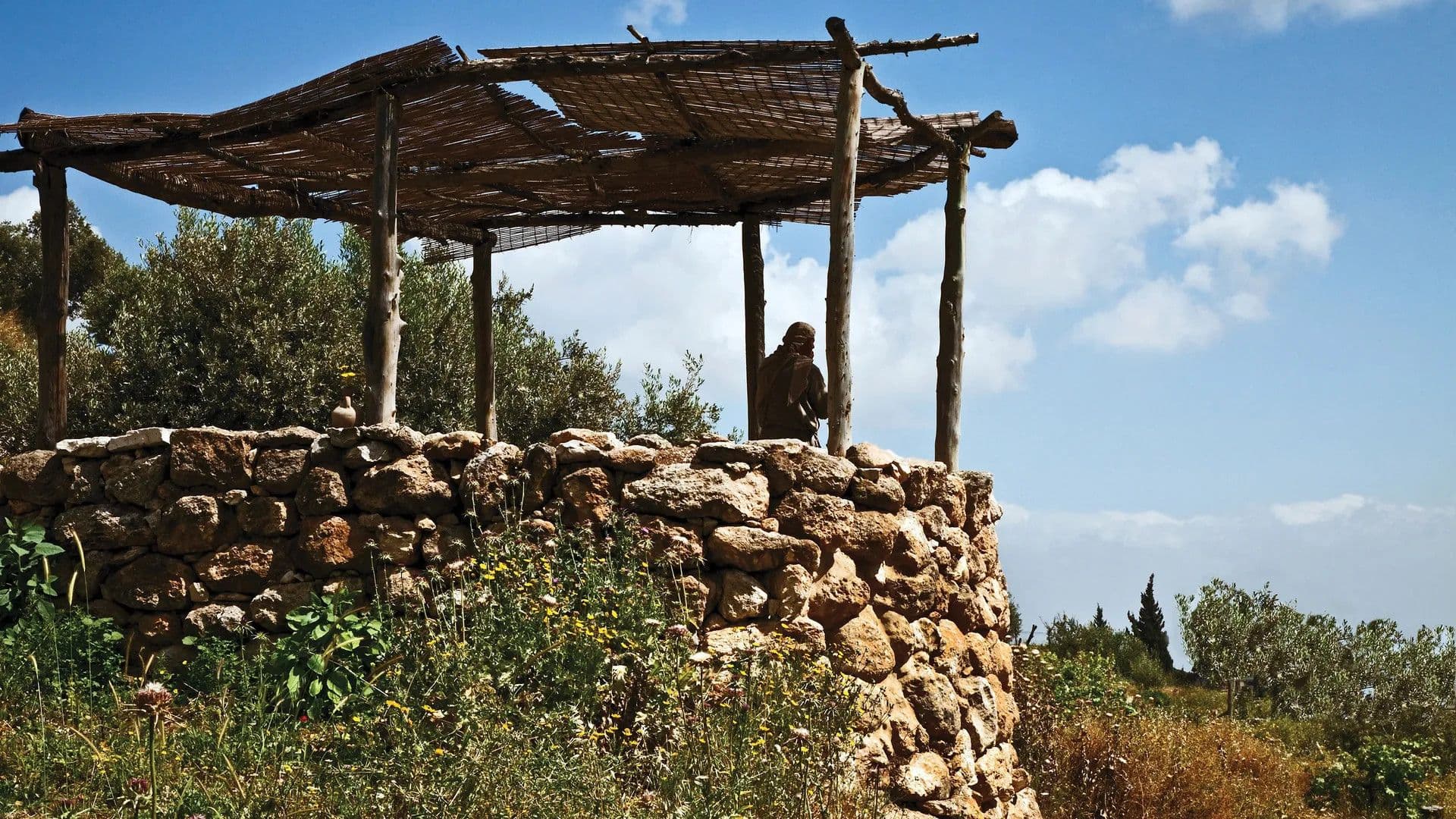
Ezekiel 1-3, 33-34, 36-37, 47
“A New Spirit Will I Put within You”
November 2 - November 8
scripture
commentaries
Historical Context
<p>The setting for the book of Ezekiel is Mesopotamia, northeast of Jerusalem. The prophet was one of the exiled, living in a community in the land of Babylon. Ezekiel found himself by the river Chebar (spelled Kebar on modern maps) near a town called Tel-abib (Ezekiel 3:15). Ezekiel wrote before and after the destruction of Jerusalem, even narrating how he found out about it (Ezekiel 33:21). His ministry may have extended from 593 to 571 BC.<a href="#_ftn1" name="_ftnref1">[1]</a> Judging from the early dates offered by the text, the sixth year of captivity (8:1) and the twenty-fifth year of captivity (40:1), the prophet’s ministry may have lasted around eighteen years. A predominant theme in this book is the Lord’s glory, where it has gone, and when it will return.</p> <p> </p> <p><a href="#_ftnref1" name="_ftn1">[1]</a> Joseph Blenkinsopp, <em>Ezekiel </em>(Louisville, KY: Westminster John Knox, 1990), 15.</p> <p> </p> <p><strong>Author:</strong> Noé Correa<br /><strong>General Editor:</strong> Taylor Halverson<br /><strong>Associate Editor:</strong> Morgan Tanner<br /><strong>Senior Editor:</strong> Sarah Whitney Johnson<br /><strong>Assistant Editor:</strong> Sam Lofgran<br /><strong>Assistant Editor:</strong> Verlanne Johnson</p>
Old Testament Minute: Ezekiel by BMC
Ezekiel 1:1–3
<p>Ezekiel 1, which is not chronologically the first chapter (see 8:1), begins in the thirteenth year among the captives. This detail comes from Ezekiel himself. Verses 2–3 were written in third person—that is, someone else was writing about Ezekiel. This alone tells the reader that this book comes both from the prophet and a scribe or school of followers. Whoever this editor or amanuensis was, they corresponded the date provided by Ezekiel to the fifth year of King Jehoiachin’s exile. Adjusting to today’s calendar, the “fourth month, in the fifth day of the month” was probably July 31, 593 BC.<a href="#_ftn1" name="_ftnref1">[1]</a></p> <p>Ezekiel, like others before him, was of a priestly line. Jeremiah was priest (see Jeremiah 1:1). Isaiah was inside the temple, a place designated to priests alone (Isaiah 6:1). Isaiah had been preaching when the temple priests were somewhat obedient (2 Kings 19:2). During Jeremiah’s times, the temple and priests were corrupt (see Jeremiah 6:13; 7:1–3). During his ministry, Ezekiel, a priest, would no longer be in the promised land. Therefore, in these three major prophetic books, the reader can see how the people were progressively getting worse.</p> <p> </p> <p><a href="#_ftnref1" name="_ftn1">[1]</a> 2 Kings 24:12, 15. Margaret S. Odell, <em>Ezekiel</em> (Macon, GA: Smyth & Hewlys, 2005), 15.</p> <p> </p> <p><strong>Author:</strong> Noé Correa<br /><strong>General Editor:</strong> Taylor Halverson<br /><strong>Associate Editor:</strong> Morgan Tanner<br /><strong>Senior Editor:</strong> Sarah Whitney Johnson<br /><strong>Assistant Editor:</strong> Sam Lofgran<br /><strong>Assistant Editor:</strong> Verlanne Johnson</p>
Old Testament Minute: Ezekiel by BMC
Ezekiel 1:4-14
<p>Babylon is in the northeast, but there was no direct route through the desert. The known route at that time was to travel directly north and then go east toward Babylon. The whirlwind or stormy wind was proceeding from this northern route. Although this could be a representation of the oncoming armies to Jerusalem, it could also be a symbol of God’s presence. Clouds, fire, and stormy weather were symbols of God’s power and glory in the Exodus story (Ezekiel 1:28; Exodus 19:9, 18).</p> <p>The four living creatures have been the topic of much discussion. In the Church, some may associate them with the beasts of Revelation 4, which the Lord described in Doctrine and Covenants 77:2–4. However, a historical contextual approach may render a better understanding. Today, in the Metropolitan Museum of Art in New York or in the British Museum in London are Assyrian sculptures that each have a human’s face, a bird’s wings, and a bull’s body. Some of them also have lion claws, and others display other unique features.<a href="#_ftn1" name="_ftnref1">[1]</a> These creatures were representations of power. Assyria was Babylon’s Mesopotamian neighbor, the previous dominant empire. Although these sculptures are not identical to the beasts described in Ezekiel, they do provide a reference to the culture in Mesopotamia where the prophet found himself. These wonderfully organized and tamed creatures, representing the Mesopotamian world, appeared to be under God’s command. The following verses finish the picture.</p> <p> </p> <p><a href="#_ftnref1" name="_ftn1">[1]</a> See “Early Excavations in Assyria,” Heilbrunn Timeline of Art History, Metropolitan Museum of Art, last updated August 2021, https://metmuseum.org/toah/hd/rdas/hd_rdas.htm; “Assyrian Sculpture and Balawat Gates,” British Museum, <a href="https://britishmuseum.org/collection/galleries/assyrian-sculpture-and-balawat-gates">https://britishmuseum.org/collection/galleries/assyrian-sculpture-and-balawat-gates</a>.</p> <p> </p> <p><strong>Author:</strong> Noé Correa<br /><strong>General Editor:</strong> Taylor Halverson<br /><strong>Associate Editor:</strong> Morgan Tanner<br /><strong>Senior Editor:</strong> Sarah Whitney Johnson<br /><strong>Assistant Editor:</strong> Sam Lofgran<br /><strong>Assistant Editor:</strong> Verlanne Johnson</p>
Old Testament Minute: Ezekiel by BMC
Ezekiel 1:15-25
<p>Along with the four living creatures, Ezekiel also saw four wheels. Although Latter-day Saint author-poet Henry W. Naisbitt compared the multiple wheels to family connections as the foundation of community,<a href="#_ftn1" name="_ftnref1">[1]</a> there may be a better reading of this imagery. A more accurate reading for the time would be that the four wheels represent God’s chariot, where His divine throne sits.<a href="#_ftn2" name="_ftnref2">[2]</a> Chariots were described in other texts from the ancient Near East and Mesopotamia.<a href="#_ftn3" name="_ftnref3">[3]</a> When all of these symbols are combined, the four Mesopotamian creatures pulled the Lord’s divine chariot of glory. They were not taking the Lord away but were being utilized by the Lord to transport Him where He wished. It was God who commanded them.</p> <p> </p> <p><a href="#_ftnref1" name="_ftn1">[1]</a> Henry W. Naisbitt, in <em>Journal of Discourses</em>, 26 vols. (London, UK: Latter-day Saints’ Book Depot, 1854–1886), 26:114.</p> <p><a href="#_ftnref2" name="_ftn2">[2]</a> Ezekiel 1:26. Shawn Zelig Aster, “Ezekiel’s Adaptation of Mesopotamian <em>Melammu</em>,” <em>Die Welt des Orients</em> 45, no. 1 (2015): 10–21.</p> <p><a href="#_ftnref3" name="_ftn3">[3]</a> For texts from Ugarit describing divine chariots, see Cuneiform Alphabetic Texts (CTA) 4.4.8; 19.1.43–44.</p> <p> </p> <p><strong>Author:</strong> Noé Correa<br /><strong>General Editor:</strong> Taylor Halverson<br /><strong>Associate Editor:</strong> Morgan Tanner<br /><strong>Senior Editor:</strong> Sarah Whitney Johnson<br /><strong>Assistant Editor:</strong> Sam Lofgran<br /><strong>Assistant Editor:</strong> Verlanne Johnson</p>
Old Testament Minute: Ezekiel by BMC
Ezekiel 1:26-28
<p>Sapphire is used often in the Old Testament in reference to God’s presence (Exodus 24:10). The deep blue color of sapphire is a symbol of the heavens, where God’s throne sits (Psalm 11:4). Fire is often used to describe God’s power as well (Deuteronomy 4:24; 9:3). Scripture occasionally provides the interpretation of visionary symbols. This entire vision (chariot and throne) represented “the glory of the Lord,” clearly stated in verse 28. Therefore, the imagery here and later (Ezekiel 8:4) progressively depicts the Lord and His glory leaving Jerusalem, controlling the powers of Mesopotamia at His will, as He accompanied His exiled people into a foreign land (Ezekiel 11:23).</p> <p> </p> <p><strong>Author:</strong> Noé Correa<br /><strong>General Editor:</strong> Taylor Halverson<br /><strong>Associate Editor:</strong> Morgan Tanner<br /><strong>Senior Editor:</strong> Sarah Whitney Johnson<br /><strong>Assistant Editor:</strong> Sam Lofgran<br /><strong>Assistant Editor:</strong> Verlanne Johnson</p>
Old Testament Minute: Ezekiel by BMC