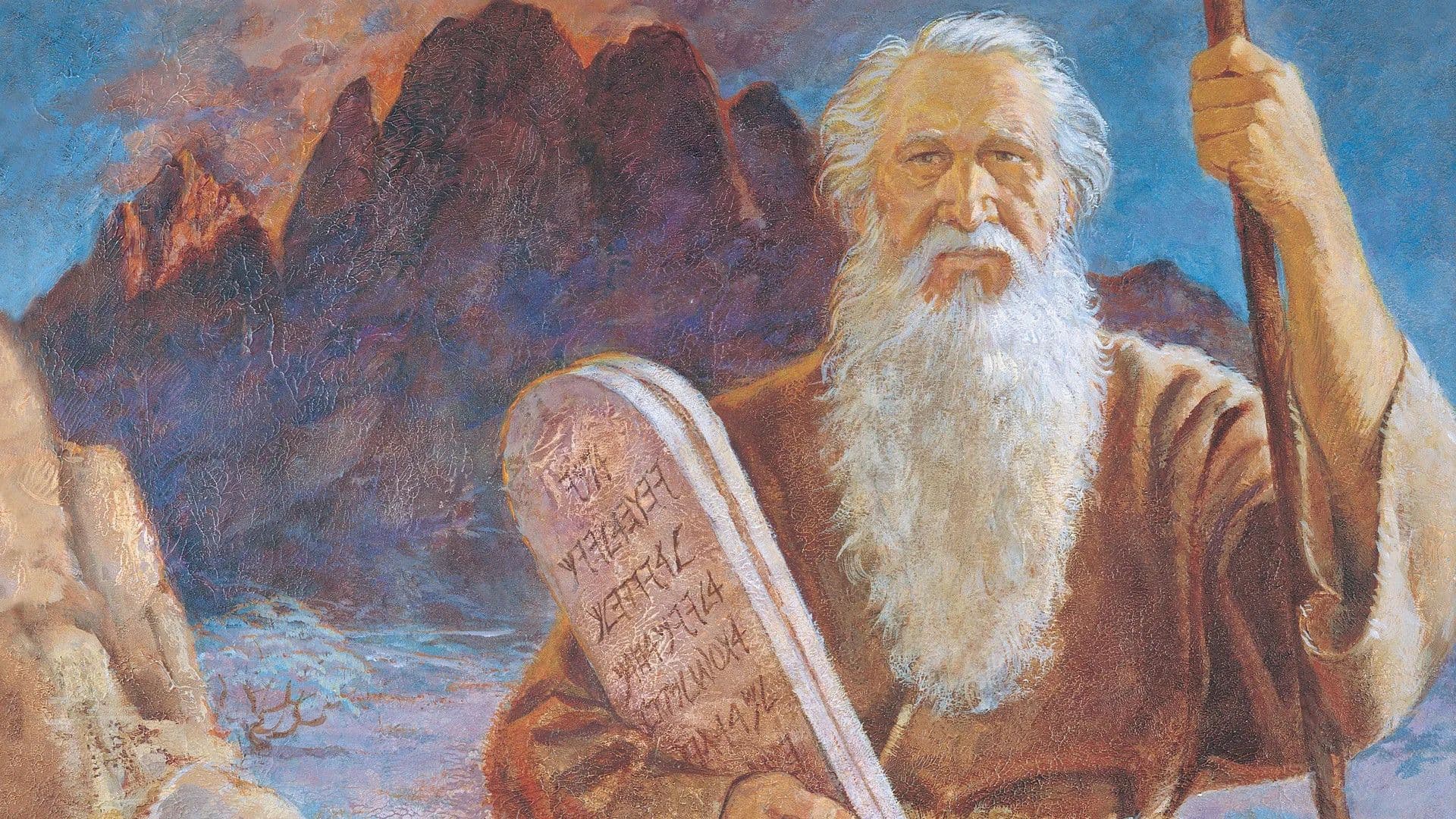
Exodus 19-20, 24, 31-34
“All That the Lord Hath Spoken We Will Do”
April 20 - April 26
scripture
quotes
A Peculiar Treasure
<p>A modern dictionary defines peculiar as “unusual,” “eccentric,” or “strange.” ... But the term peculiar as used in the scriptures is quite different. In the Old Testament, the Hebrew term from which peculiar was translated is segullah, which means “valued property,” or “treasure.” In the New Testament, the Greek term from which peculiar was translated is peripoiesis, which means “possession,” or “an obtaining.” Thus, we see that the scriptural term peculiar signifies “valued treasure,” “made” or “selected by God.” For us to be identified by servants of the Lord as his peculiar people is a compliment of the highest order.</p>
Russell M. Nelson, “Children of the Covenant,” April 1995 General Conference
The Meaning and Significance of a Covenant
<p>Perhaps we should define the meaning and significance of a covenant. In a spiritual application a covenant is a solemn, binding compact between God and man whereby man agrees to keep God's commandments and serve him in righteousness and in truth unto the end. The gospel covenants and obligations bind Church members to obedience to laws and principles given of God which lead to happiness, love, and eternal joy. A covenant then is an agreement which includes obligations and is given as a principle with promise of blessings for obedience.</p> <p>The Lord revealed to Moses that if the Children of Israel would obey his voice and keep his covenant, they should be a peculiar treasure unto him above all people (Ex. 19:5).</p> <p>Belonging to the house of Israel, we today are also a covenant people to whom the choice promises of God apply. Blessings, however, are predicated upon faithfulness in keeping the commandments of God.</p>
Delbert L. Stapley, “Keeping the Covenants,” April 1959 General Conference
Walk in Paths of Virtue and Holiness
<p>When we join the Church and receive the priesthood, we are expected to forsake many of the ways of the world and live as becometh saints. We are no longer to dress or speak or act or even think as others too often do. Many in the world use tea, coffee, tobacco, and liquor, and are involved in the use of drugs. Many profane and are vulgar and indecent, immoral and unclean in their lives, but all these things should be foreign to us. We are the saints of the Most High. We hold the holy priesthood.</p> <p>To ancient Israel, by the mouth of Moses, the Lord said: “… if ye will obey my voice indeed, and keep my covenant, then ye shall be a peculiar treasure unto me above all people: for all the earth is mine:</p> <p>“And ye shall be unto me a kingdom of priests, and an holy nation” (Ex. 19:5–6).</p> <p>This promise is ours also. If we will walk in paths of virtue and holiness, the Lord will pour out his blessings upon us to a degree we have never supposed possible. We shall be in very deed, as Peter expressed it, “a chosen generation, a royal priesthood, an holy nation, a peculiar people” (1 Pet. 2:9). And we will be peculiar because we will not be like other people who do not live up to these standards.</p>
Joseph Fielding Smith, “Our Responsibilities as Priesthood Holders”, April 1971 General Conference
commentary
Exodus 19:3–6
<p>Moses went to Mount Sinai to communicate with God. God would visit the mountain when He needed to speak with Moses or His people (who are referred to as both the house of Jacob and the children of Israel). Therefore, Mount Sinai represented God’s temple for the children of Israel. Conversely, the Lord’s temples are also referred to as the mountains of the Lord in reference to Mount Sinai. See Isaiah 2:3, for example: “And many people shall go and say, Come ye, and let us go up to the mountain of the Lord, to the house of the God of Jacob.”</p> <p>Exodus 19:4 holds beautiful imagery: God spoke to Moses and said, “I bare you on eagles’ wings, and brought you unto myself.” We see this imagery again in Deuteronomy 32:11 in reference to Moses: “As an eagle stirreth up her nest, fluttereth over her young, spreadeth abroad her wings, taketh them, beareth them on her wings: So the Lord alone did lead him.”</p> <p>In Exodus 19:5–6, the Lord instructed Moses on how to prepare his people to receive new covenants. If they obeyed the covenants, the children of Israel would become a holy nation and a “peculiar treasure.” The word <em>peculiar</em> in Hebrew also means “special.” In Deuteronomy 14:2 we read, “For thou [the children of Israel] art an holy people unto the Lord thy God, and the Lord hath chosen thee to be a peculiar people unto himself, above all the nations.”</p> <h3>Source</h3> <p>Book of Exodus Minute by W. Breitenstein</p> <p> </p> <p><strong>Author:</strong> Wally Breitenstein<br /><strong>General Editor:</strong> Taylor Halverson<br /><strong>Associate Editor:</strong> Morgan Tanner<br /><strong>Senior Editor:</strong> Sarah Whitney Johnson<br /><strong>Assistant Editor:</strong> Sam Lofgran<br /><strong>Assistant Editor:</strong> Verlanne Johnson</p>
Old Testament Minute: Exodus by BMC
video
Why Does God Set Boundaries? (Exodus 19)
<p>Taylor Halverson, “Why Does God Set Boundaries? (Week 175, Part 5/7) Exodus 18–20 | Apr 18 - 24,” Book of Mormon Central Video, 2022.</p>
Taylor Halverson