Exodus 1-6
“I Have Remembered My Covenant”
March 23 - March 29
scripture
commentaries
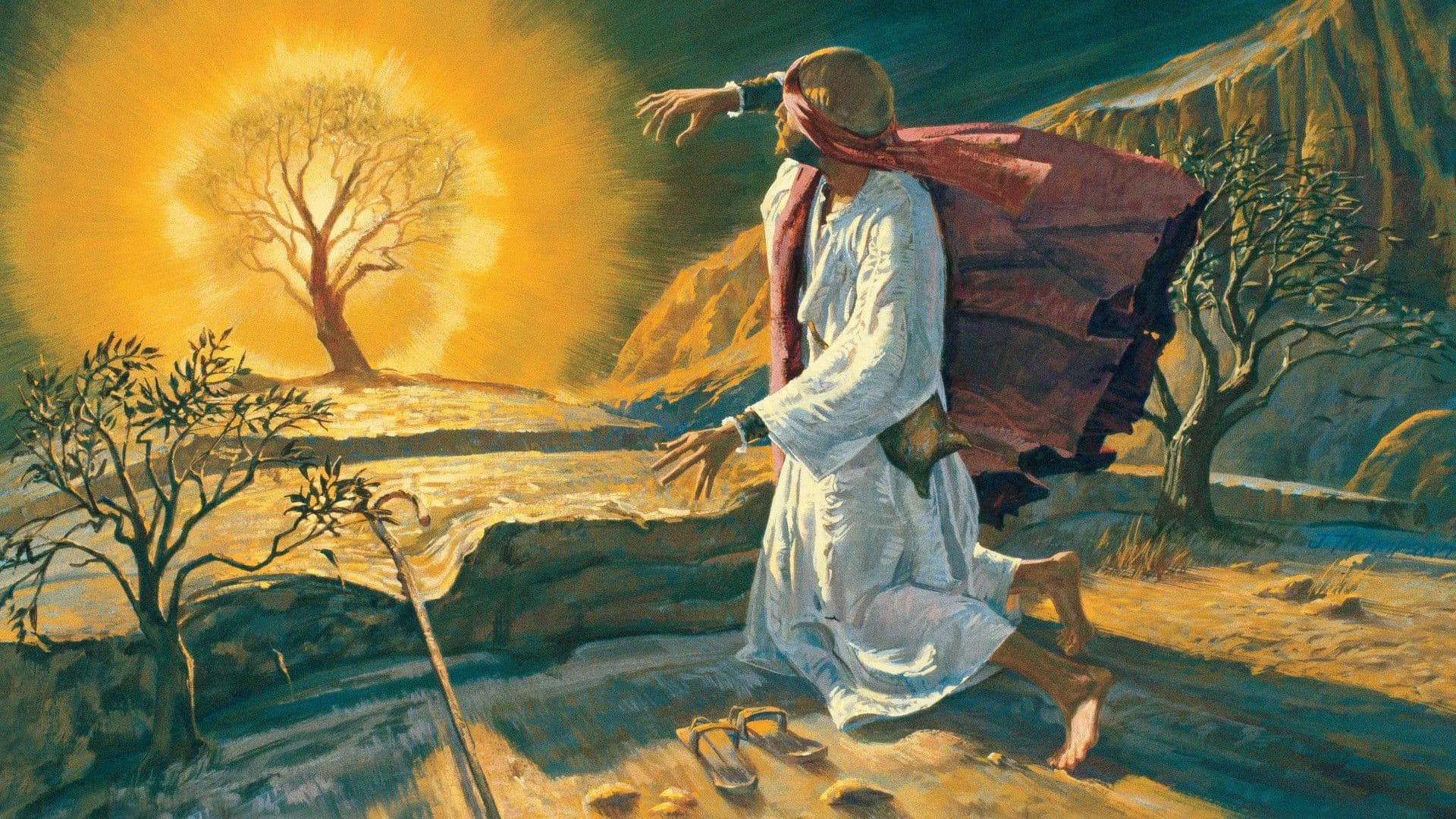
Introduction to Exodus
<p>There are five books that make up the books of Moses, also known as the Torah or Pentateuch. The second of those five books is Exodus, following the book of Genesis. In Hebrew, the title of this second book is the equivalent of “And these are the names of,” which is taken from the beginning of the first verse. Take note of the first word in that title: “and.” This is an indication that Exodus picks up where Genesis ends. Exodus is the Greek name of the book and means “departure” or “exit.” This book tells us of the departure, or exodus, of the Hebrews out of Egypt. Scholars mostly agree that Moses was the writer of the book. Chapters 2 and 3 of Exodus recount Moses’s birth, how Moses became a prophet, and how he delivered the people of Israel out of Egyptian bondage.</p> <p>The first half of the book of Exodus (chapters 1–18) is primarily historical, while the second half deals with laws and covenants. The first verses of chapter 1 take us back about 430 years to when Jacob and the children of Israel traveled to Egypt. At another point in Genesis, God commanded Abraham and his family to leave Abraham’s homeland for Egypt. God then promised Abraham that he and his seed would become a great nation (Genesis 12:3). Genesis showed us the beginning of the fulfillment of this promise as it followed Abraham and his next three generations (Isaac, Jacob, and Joseph) to that goal.</p> <h3>Source</h3> <p>Book of Exodus Minute by W. Breitenstein</p> <p> </p> <p><strong>Author:</strong> Wally Breitenstein<br /><strong>General Editor:</strong> Taylor Halverson<br /><strong>Associate Editor:</strong> Morgan Tanner<br /><strong>Senior Editor:</strong> Sarah Whitney Johnson<br /><strong>Assistant Editor:</strong> Sam Lofgran<br /><strong>Assistant Editor:</strong> Verlanne Johnson</p>
Old Testament Minute: Exodus by BMC
Exodus 1:1–6
<p>At the beginning of the book of Exodus, we read that Jacob took himself, his family, his servants, and his livestock to Egypt with the Pharaoh’s approval. In addition to needing to escape a famine, Jacob wanted to see Joseph, his son and governor over all of Egypt, before Jacob died. Verses 4–6 list the sons of Jacob, minus Joseph since he was, of course, already in Egypt. The offspring of these twelve sons became the twelve tribes of Israel. The text states that seventy people made the trip, though scholars generally believe that there were many more, including spouses, children, other relatives, and servants. Jacob lived in Egypt seventeen years, until the end of his life. Joseph served a total of eighty years as governor of Egypt before he died. Many of Joseph’s descendants had passed on by the time the book of Exodus was written.</p> <p>In verse 1, notice the use of the phrase “children of Israel.” As mentioned in Genesis 32:28, God appeared to Jacob and declared to him, “Thy name shall be called no more Jacob, but Israel” (see also Genesis 35:10).</p> <h3>Source</h3> <p>Book of Exodus Minute by W. Breitenstein</p> <p> </p> <p><strong>Author:</strong> Wally Breitenstein<br /><strong>General Editor:</strong> Taylor Halverson<br /><strong>Associate Editor:</strong> Morgan Tanner<br /><strong>Senior Editor:</strong> Sarah Whitney Johnson<br /><strong>Assistant Editor:</strong> Sam Lofgran<br /><strong>Assistant Editor:</strong> Verlanne Johnson</p>
Old Testament Minute: Exodus by BMC
Exodus 1:7–10
<p>Verse 7 tells us that the children of Israel multiplied while in Egypt, stating it five times, in one way or another. This is an example of repetitive phrasing, which is a writing style common in Old Testament times. We see it a lot in the book of Isaiah. While repetition has multiple purposes in scripture, here it is used to emphasize that the Lord was fulfilling His promise to His people.</p> <p>In verse 8, a new king that did not know of Joseph came into power. Some scholars believe that the new king didn’t know Joseph because he was part of a different dynasty than Joseph had served under. These scholars use the reasoning that the previous king was of a Semitic clan, as was Joseph (which explains why Joseph was easily appointed governor of Egypt). Scholars believe that when the new king took over the Egyptian throne, he possibly suppressed Hebrew history in Egypt or even ordered all records destroyed from the previous dynasty. Therefore, no records of Joseph are be found in Egyptian records.</p> <p>Since the population of Israel grew rapidly after Joseph’s death, the new king may have tried to slow that growth down. He probably feared that if a future war broke out in Egypt, the Hebrews would eventually join with Egypt’s enemies.</p> <p>We will see as we read on that the Hebrews were oppressed and put in bondage by the Egyptians.</p> <h3>Source</h3> <p>Book of Exodus Minute by W. Breitenstein</p> <p> </p> <p><strong>Author:</strong> Wally Breitenstein<br /><strong>General Editor:</strong> Taylor Halverson<br /><strong>Associate Editor:</strong> Morgan Tanner<br /><strong>Senior Editor:</strong> Sarah Whitney Johnson<br /><strong>Assistant Editor:</strong> Sam Lofgran<br /><strong>Assistant Editor:</strong> Verlanne Johnson</p>
Old Testament Minute: Exodus by BMC
Exodus 1:11–14
<p>Egyptian taskmasters imposed a harsh workload on the Hebrews. And the more the Hebrews were oppressed, the more they multiplied. That worried the Egyptians so much that they placed the Hebrews in bondage, ordering them to labor in the fields and to build the cities of Pithom and Raamses for Pharaoh. These were “treasure cities,” where Pharaoh stored grain and other things of value. These cities were located in Goshen, a fertile part of Egypt where the Hebrews were believed to have settled. The city of Raamses is commonly recognized as the location where the later Exodus out of Egypt began. Pithom is thought to be the first stopping place as the Exodus progressed.</p> <h3>Source</h3> <p>Book of Exodus Minute by W. Breitenstein</p> <p> </p> <p><strong>Author:</strong> Wally Breitenstein<br /><strong>General Editor:</strong> Taylor Halverson<br /><strong>Associate Editor:</strong> Morgan Tanner<br /><strong>Senior Editor:</strong> Sarah Whitney Johnson<br /><strong>Assistant Editor:</strong> Sam Lofgran<br /><strong>Assistant Editor:</strong> Verlanne Johnson</p>
Old Testament Minute: Exodus by BMC
Exodus 1:15–19
<p>As was noted previously, the children of Israel multiplied very quickly, and Pharaoh wanted to slow that down. He spoke to many Hebrew midwives, two of them being Shiphrah and Puah. He ordered them to kill all the newborn Hebrew sons but to spare all the daughters, which would weaken the people of Israel for at least a generation. However, the midwives wanted to obey God more than Pharaoh, so they decided to save the male children. When asked by Pharaoh why they did not obey him, their ostensible reason was that Hebrew women were healthier than Egyptian women and always seemed to deliver their children before a midwife could attend to them. In other words, the Hebrew midwives could not perform Pharaoh’s request if they were not present at the child’s delivery.</p> <h3>Source</h3> <p>Book of Exodus Minute by W. Breitenstein</p> <p> </p> <p><strong>Author:</strong> Wally Breitenstein<br /><strong>General Editor:</strong> Taylor Halverson<br /><strong>Associate Editor:</strong> Morgan Tanner<br /><strong>Senior Editor:</strong> Sarah Whitney Johnson<br /><strong>Assistant Editor:</strong> Sam Lofgran<br /><strong>Assistant Editor:</strong> Verlanne Johnson</p>
Old Testament Minute: Exodus by BMC
Exodus 1:20–22
<p>Because of the Hebrew midwives’ good deed in saving the sons of Israel at birth, the numbers of the Hebrew people only increased. These midwives feared and obeyed God and as such were blessed with their own household, perhaps giving birth to their own children. Pharaoh realized he could not rely on the Hebrews to kill their own children, so, as verse 22 tells us, he asked that his own people, the Egyptians, do it.</p> <p>We will see in the next chapter that a special child named Moses was born, a child that would become the liberator of the children of Israel. Some scholars believe that through divination, Pharaoh learned of the impending birth of that child and therefore wanted him killed. However, since some Israelite prophets (for instance, Abraham, Jacob, and Joseph) lived and taught in Egypt, it is possible that this pharaoh was aware of their prophetic teachings (see Genesis 15:13–16; 46:3–4).</p> <h3>Source</h3> <p>Book of Exodus Minute by W. Breitenstein</p> <p> </p> <p><strong>Author:</strong> Wally Breitenstein<br /><strong>General Editor:</strong> Taylor Halverson<br /><strong>Associate Editor:</strong> Morgan Tanner<br /><strong>Senior Editor:</strong> Sarah Whitney Johnson<br /><strong>Assistant Editor:</strong> Sam Lofgran<br /><strong>Assistant Editor:</strong> Verlanne Johnson</p>
Old Testament Minute: Exodus by BMC