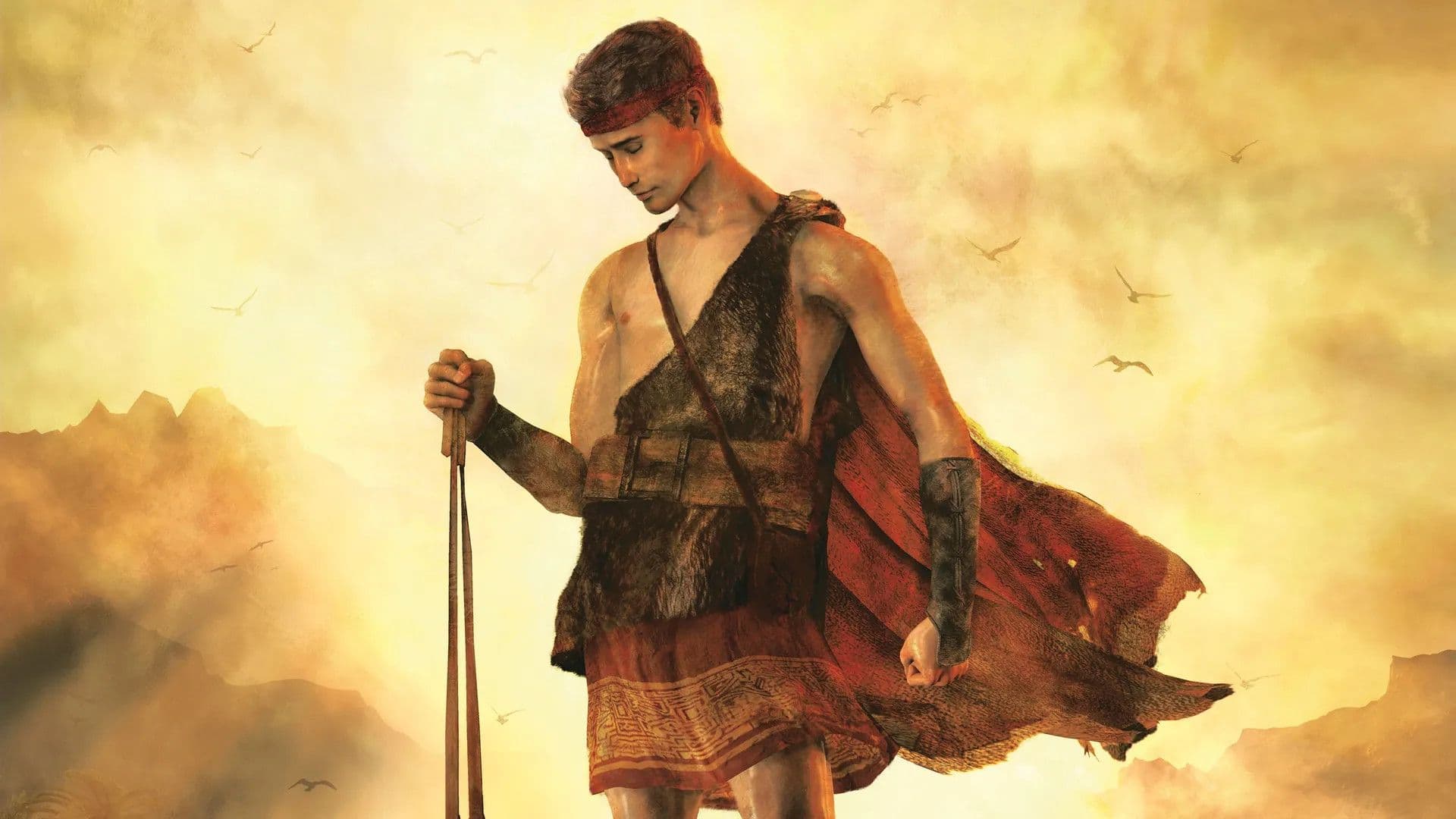
1 Samuel 17-18, 24-26; 2 Samuel 5-7
“The Battle Is the Lord's”
June 15 - June 21
scripture
quote
Let Christ Author Your Story
<p>Frankly, few of us would probably write into our stories the trials that refine us. But don’t we love the glorious culmination of a story we read when the protagonist overcomes the struggle? Trials are the elements of the plot that make our favorite stories compelling, timeless, faith promoting, and worthy of telling. The beautiful struggles written into our stories are what draw us closer to the Savior and refine us, making us more like Him.</p> <p>For David to overcome Goliath, the boy had to take on the giant. The comfortable narrative for David would have been a return to tending sheep. But instead he reflected upon his experience saving lambs from a lion and a bear. And building on those heroic feats, he mustered the faith and courage to let God write his story, declaring, “The Lord that delivered me out of the paw of the lion, and out of the paw of the bear, he will deliver me out of the hand of this Philistine” (1 Samuel 17:37). With a desire to let God prevail, with an ear to the Holy Ghost and a willingness to let the Savior be the author and finisher of his story, the boy David defeated Goliath and saved his people.</p> <p>The sublime principle of agency does, of course, allow us to write our own stories—David could have gone home, back to tending sheep. But Jesus Christ stands ready to use us as divine instruments, sharpened pencils in His hand, to write a masterpiece! He is mercifully willing to use me, a scrawny pencil, as an instrument in His hands, if I have the faith to let Him, if I will let Him author my story.</p>
Camille N. Johnson, “Invite Christ to Author Your Story,” October 2021 General Conference
commentaries
1 Samuel 17:31–33
<p>The story of David and Goliath represents several motifs: the Lord, through His righteous servants, accomplishes miracles; the Lord is a Divine Warrior whom His people can trust; and the Lord remembers His covenant with His people, even if the people have forgotten it.</p> <p>The battle between David and Goliath also represents the archetype of the hero who conquers despite the odds. Even today, the phrase “David and Goliath” alludes to the underdog who overcomes great obstacles eventually to prevail.</p> <p> </p> <p><strong>Author:</strong> Morgan W. Tanner<br /><strong>General Editor:</strong> Taylor Halverson<br /><strong>Associate Editor:</strong> Morgan Tanner<br /><strong>Senior Editor:</strong> Sarah Whitney Johnson<br /><strong>Assistant Editor:</strong> Sam Lofgran<br /><strong>Assistant Editor:</strong> Verlanne Johnson</p>
Old Testament Minute: 1 Samuel by BMC
1 Samuel 17:34–37
<p>David recounted his own story of killing a lion and a bear. The story alluded to the heroic deeds of the Hebrew judges, especially Samson. David’s purpose, however, was not to compare himself to the judges but to acknowledge that the Lord had delivered him and would do so again.</p> <p>David’s assurance in the strength of the Lord is a major theme throughout scripture. It is through the Lord’s strength and purpose that a young shepherd could kill a large and mighty man of war in order to save God’s people.</p> <p> </p> <p><strong>Author:</strong> Morgan W. Tanner<br /><strong>General Editor:</strong> Taylor Halverson<br /><strong>Associate Editor:</strong> Morgan Tanner<br /><strong>Senior Editor:</strong> Sarah Whitney Johnson<br /><strong>Assistant Editor:</strong> Sam Lofgran<br /><strong>Assistant Editor:</strong> Verlanne Johnson</p>
Old Testament Minute: 1 Samuel by BMC
1 Samuel 17:42–46
<p>Boasting and taunting enemies were common practices between armies that stood across from each other with the battlefield between them. In this narrative, however, Goliath boasted of his own strength, but David boasted of the Lord.<a href="#_ftn1" name="_ftnref1">[1]</a> The two pre-battle speeches couldn’t have been more different.</p> <p> </p> <p><a href="#_ftnref1" name="_ftn1">[1]</a> For other examples, see 2 Corinthians 10:17; Jeremiah 9:23; and Alma 26:16.</p> <p> </p> <p><strong>Author:</strong> Morgan W. Tanner<br /><strong>General Editor:</strong> Taylor Halverson<br /><strong>Associate Editor:</strong> Morgan Tanner<br /><strong>Senior Editor:</strong> Sarah Whitney Johnson<br /><strong>Assistant Editor:</strong> Sam Lofgran<br /><strong>Assistant Editor:</strong> Verlanne Johnson</p>
Old Testament Minute: 1 Samuel by BMC
1 Samuel 17:47
<p>Even though David and Goliath would fight with traditional weapons, David noted that the Lord “saveth” without weapons of war. The Hebrew <em>yehoshia‘</em> not only connotes saving from physical harm such as during a battle but also connotes that God would redeem and save His people spiritually. David’s message, like that of Samuel the prophet, was that the people needed to trust in the Lord and not in kings or the weapons of war.</p> <p> </p> <p><strong>Author:</strong> Morgan W. Tanner<br /><strong>General Editor:</strong> Taylor Halverson<br /><strong>Associate Editor:</strong> Morgan Tanner<br /><strong>Senior Editor:</strong> Sarah Whitney Johnson<br /><strong>Assistant Editor:</strong> Sam Lofgran<br /><strong>Assistant Editor:</strong> Verlanne Johnson</p>
Old Testament Minute: 1 Samuel by BMC