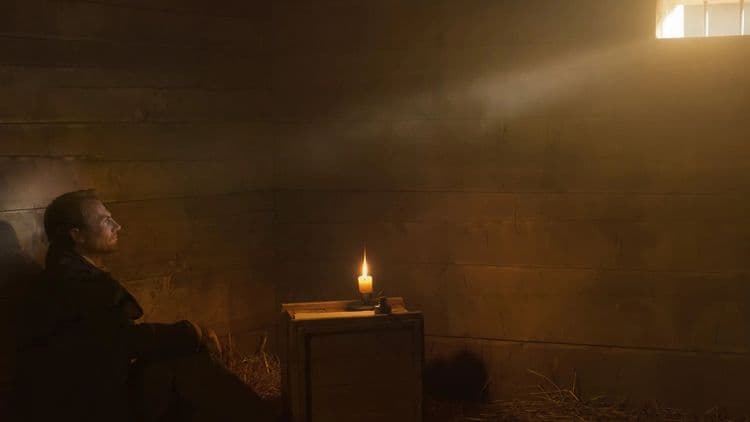
Doctrine and Covenants 121-123
“O God Where Art Thou”
October 20 - October 26
scripture
commentaries
Commentary on D&C 121:11–16
<p>In Doctrine and Covenants 121:11–16, the Lord directly addresses the fate of the Saints’ persecutors. For example, the Lord compares their prospects to “hoar frost” (verse 11). <em>Hoar </em>is an Old English word that simply means “white,” and the term <em>hoar frost</em> refers to the morning frost that is quickly swept away by the sun’s light and warmth.<a href="#_ftn1" id="_ftnref1" title="" class="see-footnote">[1]</a> The Lord places many curses upon the Saints’ persecutors in verses 11–16. These curses are direct, but appropriate for the crimes these persecutors committed against the Saints in Missouri. Even though the Lord discourages contention (3 Nephi 11:27), some actions, such as the robbery, sexual assault, and outright murder some Saints suffered in Missouri, call for a stern rebuke.</p> <p>Before the Prophet and his cohort were taken to Liberty Jail, they spent some time in the Richmond jail. Parley P. Pratt, who was present at the jail, recorded this exchange between Joseph Smith and their guards in Richmond: </p> <blockquote> <p>In one of those tedious night we had lain as if in sleep, till the hour of midnight had passed, and our ears and hearts had been pained, while we had listened for hours to the obscene jests, the horrid oaths, the dreadful blasphemies, and filthy language of our guards, Col. Price at their head, as they recounted to each other their deeds of rapine, murder, robbery, etc., which they had committed among the “<em>Mormons</em>,” while at Far West, and vicinity. They even boasted of defiling by force, wives, daughters, and virgins, and of shooting or dashing out the brains of men, women, and children. </p> <p>I had listened till I became so disgusted, shocked, horrified, and so filled with the spirit of indignant justice, that I could scarcely refrain from rising upon my feet and rebuking the guards, but had said nothing to Joseph, or any one else, although I lay next to him and knew he was awake. On a sudden he arose to his feet and spoke in a voice of thunder, or as the roaring lion, uttering, as near as I can recollect, the following words: </p> <p>SILENCE—<em>Ye fiends of the infernal pit. In the name of Jesus Christ I rebuke you, and command you to be still; I will not live another minute, and hear such language. Cease such talk, or you or I die </em>THIS MINUTE. </p> <p>He ceased to speak. He stood erect in terrible majesty. Chained, and without a weapon, —calm, unruffled and dignified as an angel, he looked down upon the quailing guards, whose weapons were lowered or dropped to the ground; whose knees smote together, and who, shrinking into a corner, or crouching at his feet, begged his pardon, and remained quiet till a change of guards.<a href="#_ftn2" id="_ftnref2" title="" class="see-footnote">[2]</a> </p> </blockquote> <p>As a coda to this striking exchange, Parley reflected on what true majesty was in the face of persecution: “I have seen the ministers of justice, clothed in magisterial robes, and criminals arraigned before them, while life was suspended upon a breath, in the courts of England; I have witnessed a Congress in solemn session to give laws to nations; I have tried to conceive of kings, of royal courts, of thrones, and crowns; and of emperors assembled to decide the fate of kingdoms, but dignity and majesty have I seen but <em>once</em>, as it stood in chains, at midnight, in a dungeon, in an obscure village of Missouri.” </p> <div class="footnotes"> <p class="footnote"><a href="#_ftnref1" id="_ftn1" title="" class="footnote-label">[1]</a> Stephen E. Robinson and H. Dean Garrett, <em>A Commentary on the Doctrine and Covenants, </em>2005, 4:153.</p> <p class="footnote"><a href="#_ftnref2" id="_ftn2" title="" class="footnote-label">[2]</a> Parley P. Pratt to Willard Richards, November 7, 1853, published in the <em>Deseret News</em>, November 12, 1853, 3, quoted in Alexander L. Baugh, “‘Silence, Ye Fiends of the Infernal Pit!’: Joseph Smith’s Incarceration in Richmond, Missouri, November 1838,” <em>Mormon Historical Studies, </em>vol. 12, nos. 1–2 (Spring/Fall 2012), 144, emphasis in original. </p> </div>
Doctrine and Covenants Minute by Casey Paul Griffiths
Commentary on D&C 121:17–25
<p>Doctrine and Covenants 121:17–25 appears to be addressed to “those who swear falsely against my servants” (D&C 121:18), or apostates who turned against Joseph Smith and the Saints during the persecutions in Missouri. Those who could be included in this group are Apostles Thomas B. Marsh, Orson Hyde, and William McLellin, as well as close associates like William W. Phelps. Thomas B. Marsh actually swore out an affidavit claiming that “the plan of said Smith, the Prophet, is to take this State; and he professes to his people to intend taking the United States, and ultimately the whole world . . . that he would make it one gore of blood from the Rocky Mountains to the Atlantic Ocean.”<a href="#_ftn1" id="_ftnref1" title="" class="see-footnote">[1]</a> Orson Hyde swore out a similar affidavit against the Prophet. In response to this group’s apostasy, the Lord declares they are cut off from the “ordinances of mine house” (D&C 121:19) and lose their right and that of their posterity to the power of the priesthood (D&C 121:21).</p> <p>In an 1834 letter sent to the Church, Joseph Smith and other leaders reflected on the persecutions inflicted on the faithful by former members of the faith: </p> <blockquote> <p>From apostates the faithful have received the severest persecutions: Judas was rebuked, and immediately betrayed his Lord into the hands of his enemies, because <em>Satan</em> entered into him. There is a supreme intelligence bestowed upon such as obey the gospel with full purpose of heart, which, if sinned against, the apostate is left <em>naked</em> and destitute of the Spirit of God, and they are in truth, nigh unto cursing, and their end is to be burned. When once that light which was in them is taken from them, they become as much darkened as they were previously enlightened. And then, no marvel, if all their power should be enlisted against the truth, and they, Judas like, seek the destruction of those who were their greatest benefactors!<a href="#_ftn2" id="_ftnref2" title="" class="see-footnote">[2]</a></p> </blockquote> <p>We must remember that many of those who apostatized in Missouri, such as Orson Hyde, William W. Phelps, and Thomas B. Marsh, later repented and returned to the faith. Sadly, others, such as William McLellin, Sampson Avard, and George Hinkle, never returned. </p> <div class="footnotes"> <p class="footnote"><a href="#_ftnref1" id="_ftn1" title="" class="footnote-label">[1]</a> Affidavits of Apostles Thomas B. Marsh and Orson Hyde accessed June 8, 2021, <a href="http://www.mormonismi.net/jamesdavid/swornaff.htm">http://www.mormonismi.net/jamesdavid/swornaff.htm</a>. </p> <p class="footnote"><a href="#_ftnref2" id="_ftn2" title="" class="footnote-label">[2]</a> Letter to the Church, circa April 1834, p. 152, JSP, emphasis in original.</p> </div>
Doctrine and Covenants Minute by Casey Paul Griffiths