KnoWhy #841 | March 3, 2026
Why is the Judah and Tamar Story in the Middle of the Joseph Story?
Post contributed by
Scripture Central
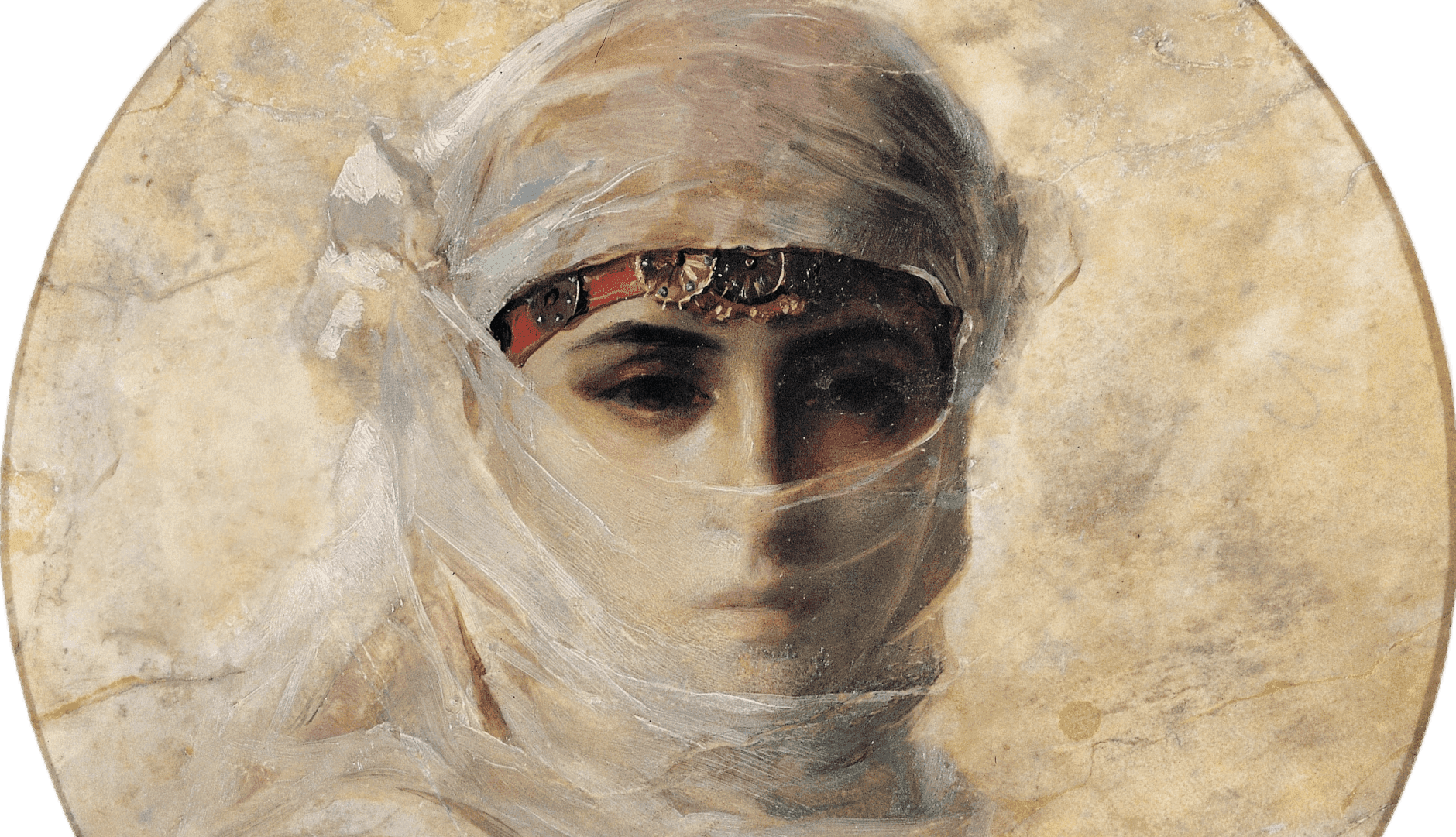
"Discern, I pray thee, whose are these, the signet, and bracelets, and staff." Genesis 38:25
The Know
When reading the Old Testament, one sometimes finds sections of it that seem out of place. One such section is Genesis 38. Genesis 37 tells the story of Joseph being sold into slavery by his brothers, and Genesis 39 continues this story, but Genesis 38 is a seeming non-sequitur about Judah. One might wonder why this section is here. Some people might assume that this is simply an example of poor editing on the part of the biblical redactor who was putting together the various sources at his disposal.1 However, this Judah narrative fits better within the Joseph narrative than one might initially think.
In Genesis 37, Joseph’s brothers realize that they must deceive their father so he does not suspect them, so they kill a goat, put the blood of the goat on Joseph’s coat, and claim that Joseph was killed by a wild animal. In the supposedly unrelated Genesis 38, Judah marries his son to a woman named Tamar. When this son dies, Judah causes his next son to marry her—an ancient custom known as levirate marriage wherein the children of this second marriage are counted as the seed of the deceased brother.2 When this second son dies, Judah tells Tamar to go back to her family until his third son is old enough, but then he never follows through, leaving Tamar a childless widow.
Tamar decides to take matters into her own hands by veiling herself and placing herself at the city gate along the road, as prostitutes often did. Judah sees her and, not knowing who she is, asks to sleep with her. She obliges so that she could fulfill the covenant of producing an heir for her and her husband. Judah leaves some personal items with Tamar as collateral promising future payment, but when he returns to deliver said payment, Tamar is gone. When Tamar is later found to be pregnant, Judah demands that she be executed for her unfaithfulness, but Tamar reveals the father by showing Judah his identifying items. Judah realizes that he was the one who caused all this to happen by neglecting to grant Tamar another levirate marriage and declares that she had been “more righteous” than he had been.
Although these episodes are seemingly unrelated, a significant phrase binds the narratives together. In Genesis 37:32, Jacob’s sons brought him the blood-stained coat and asked him to “please recognize” if it was Joseph’s coat. This is the exact same Hebrew phrase used in Genesis 38:25, when Tamar asks Judah to “please recognize” the items he had left with her.3 These are the only two places this phrase appears in the Hebrew Bible, which is a good indication that these scenes are meant to be read together.4 Ancient readers noticed this as well. Genesis Rabbah 85:11 states: “The Holy One, blessed be He, said to Judah: ‘You said to your father, Know, please; as you live, Tamar will say to you, Know, Please.’” In an ironic reversal, the same phrase Judah used with his brothers to deceive their father was the same phrase Tamar used to expose Judah as the father of her child.
Ancient readers noticed even more subtle similarities between these stories. Genesis Rabbah 84:21 notes that Jacob refuses to be “comforted” after Joseph’s supposed demise in Genesis 37:35, but that Judah is “comforted” after his wife’s death in Genesis 38:12. Genesis Rabbah 85:9 also notes that Judah and his brothers deceive Jacob with blood from the kid of a goat (Genesis 37:31). Similarly, Genesis 38:17 relates that the kid of a goat was the promised payment to Tamar.5
The jarring insertion of Genesis 38 prompts the reader to ask why the narrative was put in the middle of the Joseph narrative, and not somewhere else. Ancient readers clearly thought of such contrasts this way. Genesis Rabbah 85:2 indicates, “The verse only needed to state, ‘And Joseph was brought down to Egypt’ (Genesis 39:1),” noting the apparently unnecessary insertion of Genesis 38.6 It was because the transition was so jarring that the ancient readers read both narratives carefully and made connections between the two.7
The Why
This method of reading may help to answer a question about the narrative. In Genesis 37, Judah is the one who suggests they sell Joseph into slavery (see verse 27), but in Genesis 44, it is Judah who volunteers to become a slave in Egypt so that his younger brother Benjamin could go free (see verse 33). Genesis 38 might help explain the change that is occurring in Judah.
Judah, along with the other brothers, deceived his father about the death of Joseph. But perhaps the reader is meant to assume that when he himself is deceived during the Tamar story, it caused him to rethink his past actions. This may have made him willing to give up his freedom on behalf of his half-brother, perhaps thinking he could somehow make up for the pain he had caused his father when he sold the other son of Jacob and Rachel so many years before.
It is impossible to know for sure how to understand Judah’s actions in the narrative, but this reading of the text helps to see Judah in a new way and reminds readers that reading the text as a unity can help readers gain greater insight into the biblical narratives.
Robert Alter, The Art of Biblical Narrative, 2nd ed. (Basic Books, 2011), 9-11.
Neal Rappleye, “Genesis 38,” in Old Testament Minute: Genesis, ed. Taylor Halverson, (Book of Mormon Central, 2022).
Camilla Fronk Olson, “The Matriarchs: Administrators of God’s Covenantal Blessings,” in From Creation to Sinai: The Old Testament through the Lens of the Restoration, ed. Daniel L. Belnap and Aaron P. Schade (Deseret Book; Religious Studies Center, Brigham Young University, 2021), 412-418.
- 1. For more on how much or how little the biblical redactor changed his source text, see Thomas Römer, “The Invention of History in Ancient Judah and the Formation of the Hebrew Bible,” Die Welt des Orients 45.2 (2015): 255–72. See also Joshua A. Berman, Inconsistency in the Torah: Ancient Literary Convention and the Limits of Source Criticism (Oxford University Press: 2017) who demonstrates that apparent inconsistencies or oddities in the texts of the Hebrew Bible do not necessarily justify theories about multiple sources behind the received text.
- 2. For more on levirate marriage, see Rachel Adelman, “Seduction and Recognition in the Story of Judah and Tamar and the Book of Ruth,” Nashim: A Journal of Jewish Women’s Studies & Gender Issues, no. 23 (2012): 87–109.
- 3. Robert Alter, The Art of Biblical Narrative, 2nd ed. (Basic Books, 2011), 10.
- 4. For more on this way of reading, see Jerome T. Walsh, Old Testament Narrative: A Guide to Interpretation (Westminster John Knox, 2009), 92.
- 5. Robert Alter, The Art of Biblical Narrative, 9-11.
- 6. Jacob Neusner, Genesis and Judaism: The Perspective of Genesis Rabbah. An Analytical Anthology, BJS 108 (Scholars Press, 1985), 5.
- 7. Jacob Neusner, Genesis and Judaism, 8.