KnoWhy #876 | November 11, 2026
Why Does Hosea Use an Unusual Name for God?
Post contributed by
Scripture Central
Then said God, Call his name Lo-ammi: for ye are not my people, and I will not be your God. Hosea 1:9
The Know
Hosea 1:9 contains an unusual reference to God. When Hosea’s wife had a son, God said, “Call his name Lo-ammi: for you are not my people, and I will not be your God.” Lo-ammi in Hebrew literally means “not my people.” What is unusual about this verse is that the phrase translated “I will not be your God” does not actually contain the word Elohim or similar word for “God.” More literally it can be translated “I will not be for you” or “I am not ʾEhyeh to you.”1 A careful examination of the name ʾEhyeh in its broader context can teach readers of the Bible something important about God.
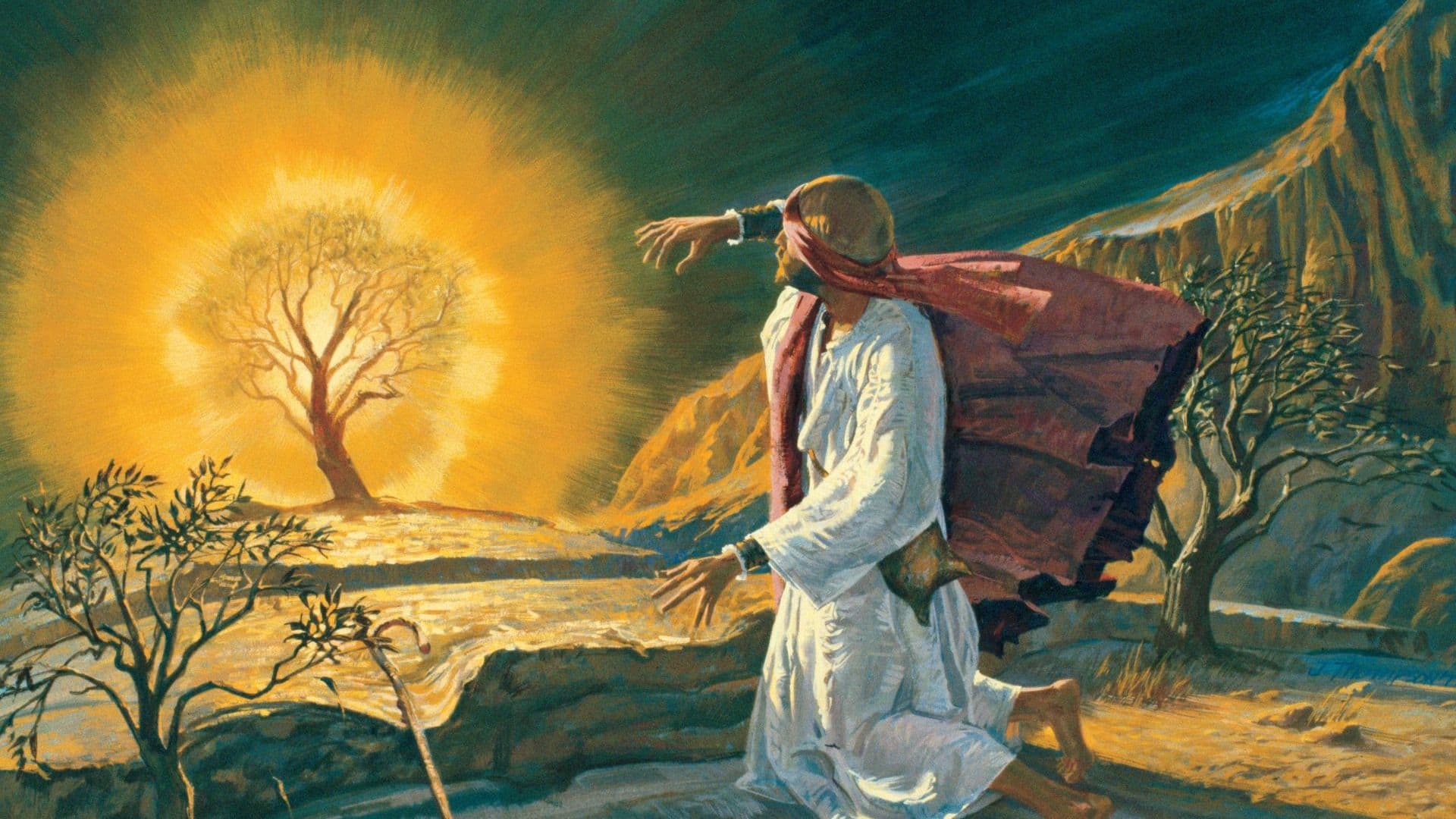
The proper name ʾEhyeh appears not only in Hosea, but in Exodus as well. Understanding it in Exodus can help readers understand it in Hosea. In Exodus God tells Moses to return to Egypt to help deliver the Israelites, and Moses questions his ability with the Pharaoh and with the people (Exodus 3:10–12). One thing he expresses concern about is whether the people will accept him as God’s representative: “When I come to the children of Israel and say to them, ‘The God of your fathers sent me to you,’ and they say to me, ‘What is his name?’ what should I say to them?” God responds to Moses saying, “‘I AM THAT I AM,’ and he said, ‘This is what you will say to the children of Israel, I AM sent me to you’” (Exodus 3:13–14).
God’s initial answer to Moses’s question can be rendered “I am who I am” or “I will be who I will be,” and it is impossible to know exactly which way it should be rendered.2 Either way, the statement appears at first to be a refusal to answer the question. This is often what happens in the Old Testament when someone asks for a divine name. In Genesis 32:29, for example, when Jacob asks God his name, he responds, “Why are you asking about my name?” Similarly, in Judges, when Manoah asks the angel Jehovah his name, he responds, “Why do you ask my name? It is too wonderful” (Judges 13:18). In other words, God’s response to Moses appears, at first, to be his usual reply when people ask about his name: “I am who I am, do not ask me my name.”3
However, this initial response is immediately followed by God telling Moses to tell the people his name is “I AM” or ʾEhyeh. One might think that it would be odd for God to have Moses tell the Israelites this name, as most people have heard that the name for God in the Old Testament was Yahweh, not ʾEhyeh. However, Yahweh and ʾEhyeh are, respectively, the third-person and first-person forms of the same Semitic root for the verb "to be" / "to exist.”4 When the people or the text refer to God by name, they say Yahweh (“He is/will be/causes to be”), when God refers to himself by name He often says ʾEhyeh (“I am/will be”).
This suggests that God’s response to Moses is not a simple evasion. It would make little sense to avoid answering the question one second and respond to it the next. In fact, earlier patriarchs built altars and called out to Yahweh (Genesis 12:8; 22:14), and the Lord even revealed his name to Jacob (Genesis 28:13), though he refers to himself as Yahweh in this verse. Moses was to tell the people that he was sent by and represents Jehovah.
Explaining I AM as meaning something like “the one who exists” can appear like taking later Neo-Platonic thought and super-imposing it on the Bible.5 However, the notion that a god could be associated with existence goes back to the time of Moses and Hosea and can be found not in ancient Greece, but ancient Egypt.
The ancient Egyptian God Khepri represented the rising sun, but his name shares the same root as the ancient Egyptian verb kheper, which means "to come into existence.”6 This god was known in ancient Egypt from the age of the Pyramids, well before 2,000 BC.7 However, he is still known well after the time of Moses, meaning this concept of a god associated with existence would almost certainly have been understood during the days of both Moses and Hosea.8 In addition, Khepri was known as a creator god, similar to the way God is depicted in the Old Testament.
Never miss a KnoWhy
Get Scripture Central's latest research and resources delivered straight to your inbox.
The Why
This understanding makes the words of Hosea even more impactful. God reveals his name to the people in Moses’s day to affirm their covenant relationship, but in Hosea’s day they have rejected that covenant, so God negates his name to them. But there is still hope. Immediately after saying he will not be “I Am” for the people, God immediately states, “Yet the number of the children of Israel shall be as the sand of the sea, which cannot be measured nor numbered; and it shall come to pass that in the place where it was said unto them, Ye are not my people, there it shall be said unto them, Ye are the sons of the living God” (Hosea 1:10). That the living God surely exists and that He desires to renew relationships with us gives hope to any who have fallen away and desire to return.
Breitenstein, Wally. Old Testament Minute: Hosea. Edited by Taylor Halverson. Old Testament Minute. Vol. 28. Springville, UT: Book of Mormon Central, 2022.
Breitenstein, Wally. “Exodus 1-6.” In Old Testament Minute: Exodus, edited by Taylor Halverson. Springville, UT: Book of Mormon Central, 2022.
Rasmussen, Ellis T. “Hosea: a Prophet to Northern Israel.” The Instructor 97, no. 4 (1962).
Scripture Central, Evidence #539, “JST Evidence: Affirmation by Exclamatory Negation” (April 1, 2026)
- 1. Waltke, Bruce K, and Michael Patrick O’Connor. An Introduction to Biblical Hebrew Syntax. Winona Lake, Ind: Eisenbrauns, 1990, 93.
- 2. For an engaging overview, see Seeskin, Kenneth. “The Name of God: Exodus 3:14.” In Thinking about the Torah: A Philosopher Reads the Bible, University of Nebraska Press, 2016, 71–84.
- 3. Propp, William Henry. Exodus : A New Translation with Introduction and Commentary. 1st ed. New York: Doubleday, 1999, 225.
- 4. Waltke, Bruce K, and Michael Patrick O’Connor. An Introduction to Biblical Hebrew Syntax. Winona Lake, Ind: Eisenbrauns, 1990, 93.
- 5. A variety of Greek-speakers saw the text this way, relying on how the LXX renders it. See Philo, Life of Moses 1:65–67, Wisdom 13:1 and Sibylline Oracles 1:137–40.
- 6. For more on Khepri, see Liszka, Kate. “Scarab Amulets in the Egyptian Collection of the Princeton University Art Museum.” Record of the Art Museum, Princeton University, vol. 74, 2015, 4–19.
- 7. Popielska-Grzybowska, Joanna. "The concept of ḫprr in Old Kingdom religious texts". Old Kingdom, New Perspectives. Oxbow Books. pp. 230–234
- 8. Berman, Lawrence M., and Kenneth J. Bohač. Catalogue of Egyptian Art: The Cleveland Museum of Art. Cleveland, OH: Cleveland Museum of Art, 1999, 375-376.