KnoWhy #860 | July 7, 2026
Why Do Extra-Biblical Sources Matter?
Post contributed by
Scripture Central
“The king of Babylon made Mattaniah his father’s brother king in his stead, and changed his name to Zedekiah.” 2 Kings 24:17
The Know
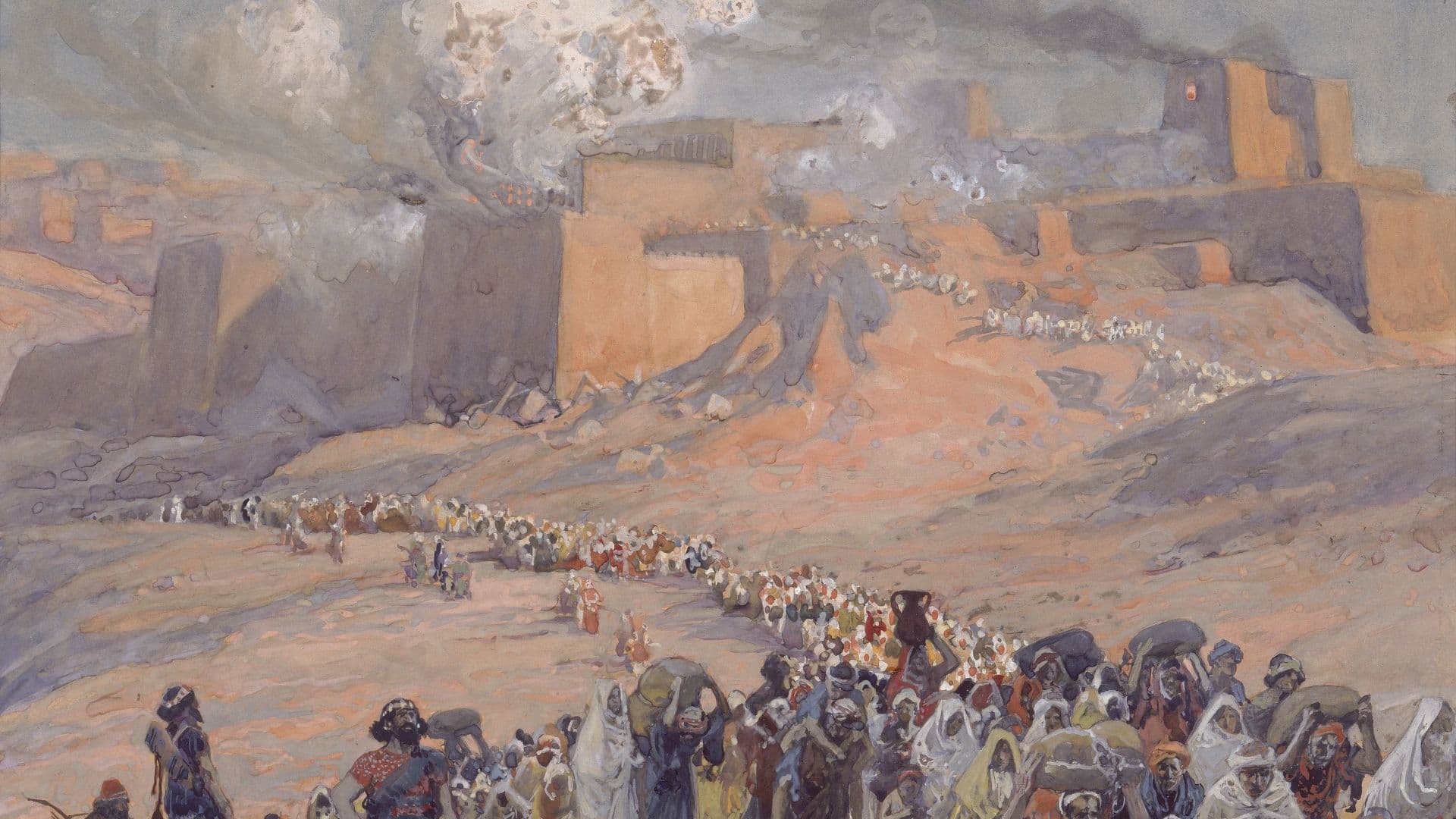
According to 2 Kings 24, King Nebuchadnezzar’s Babylonian army attacked Jerusalem due to King Jehoiakim’s refusal to continue paying tribute to this superpower. Just as the siege began, Jehoiakim died and a few months later the Babylonians finished their complete capture of Jerusalem. Judah’s newly installed king, Jehoiachin, was taken captive and cast into prison.
The Babylonian Chronicles, various clay tablets written in ancient cuneiform and discovered in the late 1800s and early 1900s, provide extra-biblical corroboration of these events. They record that the Babylonian king “camped against the city of Judah and on the second day of the month of Adar he took the city and captured the king.”1 In the early 1900s, an archaeologist named Robert Koldewey discovered other clay tablets, most of which were seemingly insignificant administrative documents.2 Some of these tablets listed how much food should be given to various prisoners, and one of these tablets listed the rations for King Jehoiachin himself: “ten sila of oil to Jehoiachin, king of Judah . . . and to the sons of the king.”3 There is something poignant about these ancient documents which connect directly to a king of Judah, even showing how much ration he was given as a prisoner. Documents like this make it easier to see these biblical narratives as real accounts about real human beings.
According to 2 Kings 24:10–11: “At that time the servants of Nebuchadnezzar king of Babylon came up against Jerusalem, and the city was besieged. And Nebuchadnezzar king of Babylon came against the city, and his servants did besiege it.” The name of one of these servants is known to modern readers, thanks to Jeremiah which states that a man named “Nebo-Sarsekim the chief officer” was with king Nebuchadnezzar of Babylon when he sacked Jerusalem (see Jeremiah 39:1–3). A cuneiform tablet from what is today Iraq states that Nebo-Sarsekim had donated 1.5 minas of gold to the temple of a Babylonian god in the tenth year of Nebuchadnezzar, shortly before he went with his king to sack Jerusalem.4
2 Kings 24:12–13 indicates that at the time Jehoiachin surrendered, the king of Babylon “carried out thence all the treasures of the house of the Lord, and the treasures of the king’s house, and cut in pieces all the vessels of gold which Solomon king of Israel had made in the temple of the Lord, as the Lord had said.” The Babylonian Chronicle does not note any religious significance of the loot taken from Jerusalem, simply remarking the king “took its heavy tribute and brought them to Babylon.”5 The Bible, however, provides the gut-wrenching detail that much of the tribute consisted of the golden vessels and treasures from the Temple of Solomon—vessels that were clearly sacred.
The Babylonian Chronicle also states that the king of Babylon “appointed a king of his own choice there.”6 This is described in 2 Kings 24:17, “the king of Babylon made Mattaniah his father’s brother king in his stead, and changed his name to Zedekiah.” The Babylonian Chronicle gives the exact date all this transpired: March 16, 597 BC.7
The Why
The events of the Old Testament can seem distant to modern readers, having taken place so many centuries ago. However, extra-biblical records like ration cards or receipts from temples can give the text life. From the sources cited above, one can see more clearly that the Babylonian captivity of Jerusalem was experienced by real people who really lived and really died. This in turn allows the divine lessons the scriptures attempt to portray in connection with this event to be more impactful in the lives of its readers.
Certainly one’s faith is more deeply impacted when scriptural stories are connected with real events and real people. Like a spirit having a mortal experience in a body of flesh and bone, the narratives of scripture are richer and fuller when we allow them to be the testimonies of real people having real experiences. Extra-biblical sources often supply the flesh to such stories.
While every detail in the narratives may not have a precise historical corollary, given the nature of writing in the ancient world as well as human creativity and error, it is important to give the writers a benefit of the doubt, not just when they record the mundane but when they record the miraculous or divine as well. Allowing for the possibility of and even assuming historicity as a starting premise anchors our faith in something deeper, something real, not just in inspired myths or parables which do not have the full ability to help one endure through difficult times.
Aaron P. Schade, “The Kingdom of Judah: Politics, Prophets, and Scribes in the Late Preexilic Period,” in Glimpses of Lehi’s Jerusalem, ed. John W. Welch, David Rolph Seely, and Jo Ann H. Seely (Foundation for Ancient Research and Mormon Studies [FARMS], 2004), 299–336.
David Rolph Seely and Robert D. Hunt, “Dramatis Personae: The World of Lehi (ca. 700–562 B.C.),” in Welch, Seely, and Seely, Glimpses of Lehi’s Jerusalem, 41–64.
John W. Welch, “Culturegram: Jerusalem 600 BC,” in Welch, Seely, and Seely, Glimpses of Lehi’s Jerusalem, 1–40.
- 1. Joseph M. Holden and Norman Geisler, The Popular Handbook of Archaeology and the Bible (Harvest House Publishers, 2013), 271.
- 2. Holden and Geisler, The Popular Handbook of Archaeology and the Bible, 271-272.
- 3. Holden and Geisler, The Popular Handbook of Archaeology and the Bible, 272.
- 4. For more information, see “tablet” Museum #114789, The British Museum, London, UK.
- 5. Holden and Geisler, The Popular Handbook of Archaeology and the Bible, 271.
- 6. Holden and Geisler, The Popular Handbook of Archaeology and the Bible, 271.
- 7. Holden and Geisler, The Popular Handbook of Archaeology and the Bible, 271.