KnoWhy #827 | November 25, 2025
Why Did the Lord Show Joseph F. Smith a Vision of the Salvation of the Dead?
Post contributed by
Scripture Central
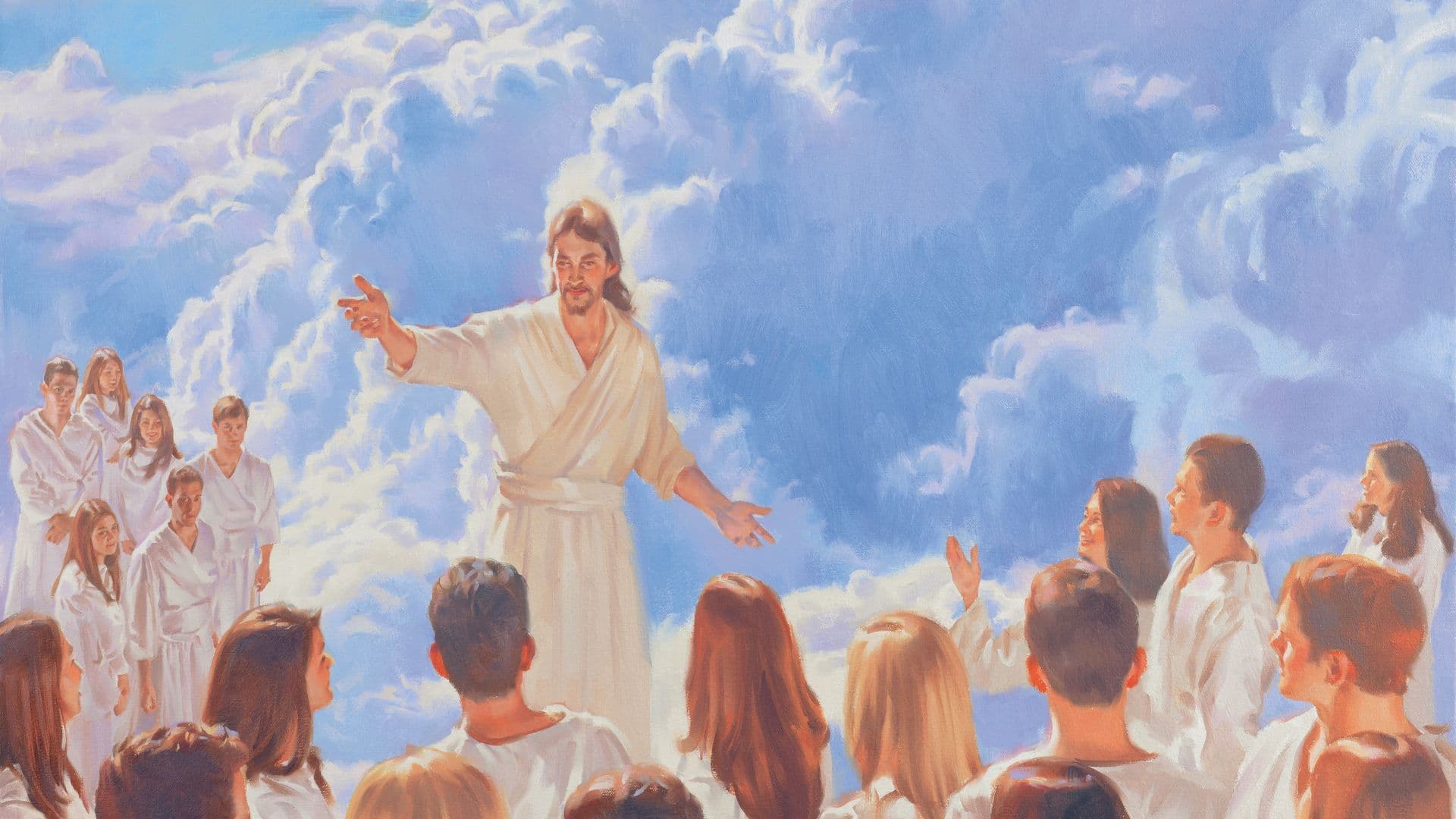
As I pondered over these things which are written, the eyes of my understanding were opened, and the Spirit of the Lord rested upon me, and I saw the hosts of the dead, both small and great. Doctrine and Covenants 138:11
The Know
On October 4, 1918, President Joseph F. Smith stood before the body of the Saints in a general conference. Many did not expect to see him at the conference, let alone preaching, as he had been terribly sick for the past five months. Though brief, his remarks that day hinted at great spiritual manifestations he had received that he wanted to share with the Saints as soon as his health would permit: “I shall postpone until some future time, the Lord being willing, my attempt to tell you some of the things that are in my mind, and that dwell in my heart. I have not lived alone these five months. I have dwelt in the spirit of prayer, of supplication, of faith and of determination; and I have had my communication with the Spirit of the Lord continuously.”1
One of those spiritual manifestations had come just the day before, on October 3, 1918. Having pondered on the Atonement and sacrifice of Jesus Christ, President Smith recorded that he was drawn to 1 Peter 3:18–20 and 1 Peter 4:6—two passages from the Bible that spoke about Christ’s descent to the world of the dead and his ministry to the departed spirits.2 Though this event had been spoken about by prophets such as Joseph Smith, the uncle of Joseph F. Smith, there had not yet been any revelation or vision regarding what may have happened during this time, or what this ministry may have looked like.3
“As I pondered over these things which are written,” President Smith wrote, “the eyes of my understanding were opened, and the Spirit of the Lord rested upon me, and I saw the hosts of the dead, both small and great” (Doctrine and Covenants 138:11). Jesus visited them in spirit after his crucifixion and “they were filled with joy and gladness, and were rejoicing together because the day of their deliverance was at hand,” for Jesus preached to them the resurrection from the dead (vv. 15–19). Furthermore, “from among the righteous, [Jesus] organized his forces and appointed messengers, clothed with power and authority, and commissioned them to go forth and carry the light of the gospel to them that were in darkness, even to all the spirits of men; and thus was the gospel preached to the dead” (v. 30). Through this means, all mankind would have the opportunity to hear the gospel preached to them, where they could all choose to make and keep covenants with God and attain all the blessings He has prepared for His children.
President Joseph F. Smith dictated the revelation to his son and future prophet, Joseph Fielding Smith, at the close of the 1918 October general conference. That month, it was also read to the First Presidency, Quorum of the Twelve and the Church Patriarch, and was accepted by all. Shortly thereafter, the Church printed and distributed this vision in multiple Church publications and newspapers to get it into the hands and minds of the Saints.4 President Smith died just a month and a half later, on November 19, 1918.
This vision came at a time when the message of salvation for the dead was especially pertinent, not only for the Church but for the world at large. By October 1918, the First World War had lasted for over four years, and another month of the war was still on the horizon before the peace treaty was signed.5 Many countries in Europe were severely struck by the casualties of war, both among the soldiers and the civilians. It is estimated that “more than nine million men in uniform and countless legions of civilians perished in the battlefields, battleships, and bombed-out byways of World War I. Another twenty-one million were permanently scarred and disfigured” from the harrowing conflict.6 To make matters worse, the Spanish influenza pandemic of 1918–1919 was still present, and by the time the pandemic ended, as many as 100 million people would die from this disease.7 “In the month of October 1918 alone,” Casey Paul Griffiths observed, “there would be more deaths than in any previous month in American history, largely due to the pandemic.”8
Joseph F. Smith was no stranger to death, himself. As a young boy, he saw his father Hyrum Smith and his uncle, Joseph the Prophet, ride to Carthage where they would be brutally murdered by a frenzied mob. President M. Russell Ballard noted, “During his lifetime, President Smith lost his father, his mother, one brother, two sisters, two wives, and thirteen children. He was well acquainted with sorrow and losing loved ones.”9 Some of these tragic deaths, including the loss of his eldest son and his wife, occurred in 1918 prior to the reception of this vision.10 This vision, in which he saw his martyred uncle and father, would have been especially meaningful and inspiring to him (Doctrine and Covenants 138:53).
Although Joseph F. Smith’s vision would be referenced a handful of times in general conferences since, it was not until 1976 that this vision was canonized by a vote of common consent for the Church of Jesus Christ of Latter-day Saints as established in section 87 of the Doctrine and Covenants. This vision, alongside a vision Joseph Smith had received in the Kirtland Temple regarding those who died before having an opportunity to hear the Gospel, were initially added to the Pearl of Great Price. In 1981, these two visions were moved to the Doctrine and Covenants as sections 137 and 138.11 Since that time, it has not only made this vision more accessible to the Saints, but it cemented its place as a foundational revelation for the Church of Jesus Christ of Latter-day Saints.
The Why
This vision was received at a time of great uncertainty in the world. War, disease, and other hardships plagued the nations, and it was truly a time of sorrow and mourning throughout the world. Joseph F. Smith, no stranger to the sorrows that death brings, was in a position to especially feel the effects that Word War I and the Spanish influenza were having on God’s children. He was, in a very real way, prepared to receive this vision and recognize its importance.
As Mary Jane Woodger has observed, President Smith’s “vision . . . answered many questions that had perplexed not only Latter-day Saint communities but the entire Christian world.”12 Even with the sweeping vision of the three degrees of glory and other revelations pertaining to the salvation for the dead, many did not recognize the full import of Jesus’s visit to the world of spirits following His crucifixion. This vision provided significant answers for questions of the soul that millions were asking in 1918, and millions have since asked, including what happens to the dead who have not heard the good news of the gospel of Jesus Christ.
Furthermore, Christ’s ministry to the world of spirits would have significant and long-lasting consequences in the ages to come. As four church historians have noted regarding the meaning of this vision, “The harvest would not be quantified in the brief period between his death and resurrection. Instead, his visit would organize the work that would subsequently last for millennia.”13 Christ’s visit to the spirit world allowed Him to divinely organize the missionary force that would enable others to repent and accept the Gospel. Or, as Steven C. Harper described, “He mustered an army to wage war with death and hell.”14 Thus, rather than simply being a footnote in His ministry, this vision emphasizes how important Christ’s post-mortal ministry truly was.
Though many in the wider Christian world today still do not grasp this ministry’s full import, some have recognized that this is an event that is worth especial care and observation. As the Eastern Orthodox Archbishop Hilarion Alfeyev noted, Christ’s ministry to the spirit world was an event of universal significance whose effects extend “not only to past generations but also to all those who followed. … The teaching that Christ granted to all the possibility of salvation and opened for all the doors to paradise should also be considered general church doctrine.”15

In this large, dramatic portrayal (detail below), the resurrected Jesus Christ is shown bringing Adam and Eve, by their hands, up out of their opened tombs. Below the feet of Jesus, the broken gates of hell opened wide along with the earthly keys and locks are scattered, in contrast to the eternal keys extended by the hands of Christ. Such scenes, especially in Eastern Christian iconography, depict Jesus going into the realm of the dead to proclaim the gospel "unto the spirits in prison" (1 Peter 3:19). The Chora Church, Parekklesion, the Anastasis. Photo by John W. Welch. The Chora Church in Istanbul was built in 414 AD. Its numerous wall paintings show that many important early Christian doctrines were still remembered. For a superb website, see https://churchofchora.com/

For Latter-day Saints, “Section 138 of the Doctrine and Covenants now serves as one of the foundational documents for the current practices and doctrines of the vicarious temple ordinances for The Church of Jesus Christ of Latter-day Saints.”16 As President Smith wrote, the spirits in prison “were taught faith in God, repentance from sin, vicarious baptism for the remission of sins, the gift of the Holy Ghost by the laying on of hands, and all other principles of the gospel that were necessary for them to know in order to qualify themselves that they might be judged according to men in the flesh, but live according to God in the spirit” (Doctrine and Covenants 138:33–34; emphasis added). Through the temple, these vicarious baptisms and other saving ordinances could be performed, thus helping these spirits truly receive all blessings of the Gospel. This last section in today’s Doctrine and Covenants affirm in a big way what is stated in the opening verses of that book: “For verily the voice of the Lord is unto all men, and there is none to escape; and there is no eye that shall not see, neither ear that shall not hear, neither heart that shall not be penetrated (Doctrine and Covenants 1:2).
M. Russell Ballard, “The Vision of the Redemption of the Dead,” October 2018 general conference.
Steven C. Harper, Doctrine and Covenants Contexts (BYU Studies, 2021), 265–68.
Mary Jane Woodger, “From Obscurity to Scripture: Joseph F. Smith's Vision of the Redemption of the Dead,” in You Shall Have My Word: Exploring the Text of the Doctrine and Covenants, ed. Scott C. Esplin, Richard O. Cowan, and Rachel Cope (Religious Studies Center, Brigham Young University; Deseret Book, 2012), 234–54.
David L. Paulsen, Judson Burton, Kendel J. Christensen, and Martin Pulido, “Redemption of the Dead: Continuing Revelation after Joseph Smith,” Journal of the Book of Mormon and Other Restoration Scripture 20, no. 2 (2011): 52–69.
Casey Paul Griffiths, Scripture Central Commentary on the Doctrine and Covenants, vol. 4 (Cedar Fort, 2024), 323–39.
George S. Tate, “‘The Great World of the Spirits of the Dead’: Death, the Great War, and the 1918 Influenza Pandemic as Context for Doctrine and Covenants 138,” BYU Studies 46, no. 1 (2007): 5–40.
Richard E. Bennett, “‘And I Saw the Hosts of the Dead, Both Small and Great’: Joseph F. Smith, World War I, and His Visions of the Dead,” in By Study and by Faith: Selections from the Religious Educator, ed. Richard Neitzel Holzapfel and Kent P. Jackson (Religious Studies Center, Brigham Young University, 2009), 395–416.
- 1. Joseph F. Smith, in Conference Report, October 1918, 2.
- 2. For a discussion on these passages and early Christian beliefs regarding this event, see Scripture Central, “Why Did Jesus Preach to the Dead? (1 Peter 4:6),” KnoWhy 700 (November 21, 2023).
- 3. For a discussion of how prophets were teaching about this event prior to October 3, 1918, see David L. Paulsen, Judson Burton, Kendel J. Christensen, and Martin Pulido, “Redemption of the Dead: Continuing Revelation after Joseph Smith,” Journal of the Book of Mormon and Other Restoration Scripture 20, no. 2 (2011): 52–62.
- 4. Mary Jane Woodger, “From Obscurity to Scripture: Joseph F. Smith's Vision of the Redemption of the Dead,” in You Shall Have My Word: Exploring the Text of the Doctrine and Covenants, ed. Scott C. Esplin, Richard O. Cowan, and Rachel Cope (Religious Studies Center, Brigham Young University; Deseret Book, 2012), 237–38; Casey Paul Griffiths, Scripture Central Commentary on the Doctrine and Covenants, vol. 4 (Cedar Fort, 2024), 324–25; Steven C. Harper, Doctrine and Covenants Contexts (BYU Studies, 2021), 268.
- 5. For a full discussion on how the first World War gave context to President Smith’s vision, see George S. Tate, “‘The Great World of the Spirits of the Dead’: Death, the Great War, and the 1918 Influenza Pandemic as Context for Doctrine and Covenants 138,” BYU Studies 46, no. 1 (2007): 5–40; Richard E. Bennett, “‘And I Saw the Hosts of the Dead, Both Small and Great’: Joseph F. Smith, World War I, and His Visions of the Dead,” in By Study and by Faith: Selections from the Religious Educator, ed. Richard Neitzel Holzapfel and Kent P. Jackson (Religious Studies Center, Brigham Young University, 2009), 395–416. For other excellent discussions on the context and meaning of this vision, see M. Russell Ballard, “The Vision of the Redemption of the Dead,” October 2018 general conference; Harper, Doctrine and Covenants Contexts, 265–68; Griffiths, Scripture Central Commentary on the Doctrine and Covenants, 323–25; Steven C. Harper, Making Sense of the Doctrine and Covenants: A Guided Tour Through Modern Revelations (Deseret Book, 2008), 508–13.
- 6. Bennett, “‘And I Saw the Hosts of the Dead, Both Small and Great,’” 396–97; Ballard, “The Vision of the Redemption of the Dead.”
- 7. Ballard, “The Vision of the Redemption of the Dead.”
- 8. Griffiths, Scripture Central Commentary on the Doctrine and Covenants, 324; see also Paulsen et al., “Redemption of the Dead,” 62; Harper, Doctrine and Covenants Contexts, 265.
- 9. Ballard, “The Vision of the Redemption of the Dead.”
- 10. Griffiths, Scripture Central Commentary on the Doctrine and Covenants, 324–25; Ballard, “The Vision of the Redemption of the Dead.”
- 11. See Woodger, “From Obscurity to Scripture,” 239–43.
- 12. Woodger, “From Obscurity to Scripture,” 235.
- 13. Paulsen et al., “Redemption of the Dead,” 63.
- 14. Harper, Doctrine and Covenants Contexts, 267.
- 15. Hilarion Alfeyev, Christ the Conqueror of Hell: The Descent into Hades from an Orthodox Perspective (Crestwood, NY: St. Vladimir’s Seminary Press, 2009), 205, 208; italics in original. He also notes on page 205, “The idea that all the dead received the opportunity to be saved is quite widespread among Eastern Christian writers, and it was only in the West where some authors labeled it heretical.”
- 16. Woodger, “From Obscurity to Scripture,” 236.